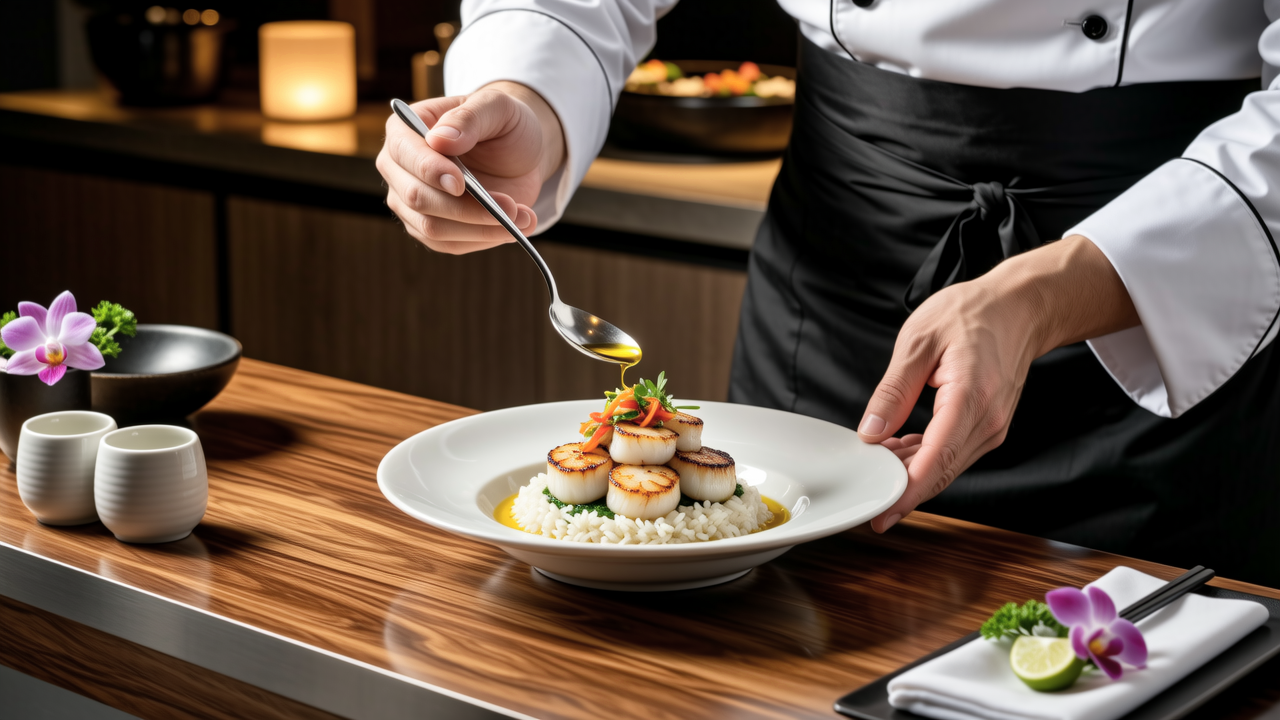
Tokyo, 24 June — At an exclusive restaurant in Tokyo's famous Ginza district, a Japanese chef is collaborating with a chef from Kuala Lumpur to create a dish that is a symphony of two different culinary traditions. A rich umami-packed miso soup is enhanced with aromatic rendang slices. Sashimi is served with a smooth yet fiery belacan chili sauce. This is the world of Japanese-ASEAN fusion cuisine, a new culinary genre that is shaking up the world of gastronomy.
This phenomenon arises from the increasingly close cultural exchanges between Japan and Southeast Asian countries, accelerated by government-sponsored chef exchange programs and active gastronomic tourism initiatives. Chefs who participate in these exchange programs return with expanded perspectives and bags full of ingredients and spices not found in their home countries.
What makes this fusion so intriguing is the surprising harmony between the philosophy of Japanese cuisine and the traditions of Southeast Asian cooking. Japanese cuisine emphasizes fresh ingredients, precise techniques, and aesthetic presentation. Southeast Asian cuisine, on the other hand, is rich in complex flavors derived from layers of spices and fermented sauces that build depth of taste. Combining both approaches results in dishes that are simultaneously clean and complex, subtle yet impactful.
Japanese-ASEAN fusion restaurants are now emerging not only in Tokyo, Osaka, Kuala Lumpur, and Singapore, but also in Paris, New York, and Sydney, indicating that this trend is not just a regional phenomenon but truly global. Reviews from renowned global food media such as Bon Appétit and Eater have praised this new genre as one of the most exciting developments in the culinary world in recent decades.
Chefs involved in this movement emphasize that their goal is not to replace or dilute their respective culinary traditions, but to create a dialogue between two rich culinary heritages, producing something new and unique while respecting the cultural roots that shaped them.
Culinary Transformation: Japanese-Asian Fusion Cuisine Emerges as a Global Gastronomic Trend. Chefs from Japan and Southeast Asia collaborate to create a new fusion cuisine genre that combines precise Japanese cooking techniques with the rich spice flavors of Southeast Asian cuisine, sparking a gastronomic phenomenon worldwide.. Tokyo, 24 June — At an exclusive restaurant in Tokyo's famous Ginza district, a Japanese chef is collaborating with a chef from Kuala Lumpur to create a dish that is a symphony of two different culinary traditions. A rich umami-packed miso soup is enhanced with aromatic rendang slices. Sashimi is served with a smooth yet fiery belacan chili sauce. This is the world of Japanese-ASEAN fusion cuisine, a new culinary genre that is shaking up the world of gastronomy.
This phenomenon arises from the increasingly close cultural exchanges between Japan and Southeast Asian countries, accelerated by government-sponsored chef exchange programs and active gastronomic tourism initiatives. Chefs who participate in these exchange programs return with expanded perspectives and bags full of ingredients and spices not found in their home countries.
What makes this fusion so intriguing is the surprising harmony between the philosophy of Japanese cuisine and the traditions of Southeast Asian cooking. Japanese cuisine emphasizes fresh ingredients, precise techniques, and aesthetic presentation. Southeast Asian cuisine, on the other hand, is rich in complex flavors derived from layers of spices and fermented sauces that build depth of taste. Combining both approaches results in dishes that are simultaneously clean and complex, subtle yet impactful.
Japanese-ASEAN fusion restaurants are now emerging not only in Tokyo, Osaka, Kuala Lumpur, and Singapore, but also in Paris, New York, and Sydney, indicating that this trend is not just a regional phenomenon but truly global. Reviews from renowned global food media such as Bon Appétit and Eater have praised this new genre as one of the most exciting developments in the culinary world in recent decades.
Chefs involved in this movement emphasize that their goal is not to replace or dilute their respective culinary traditions, but to create a dialogue between two rich culinary heritages, producing something new and unique while respecting the cultural roots that shaped them.