AI
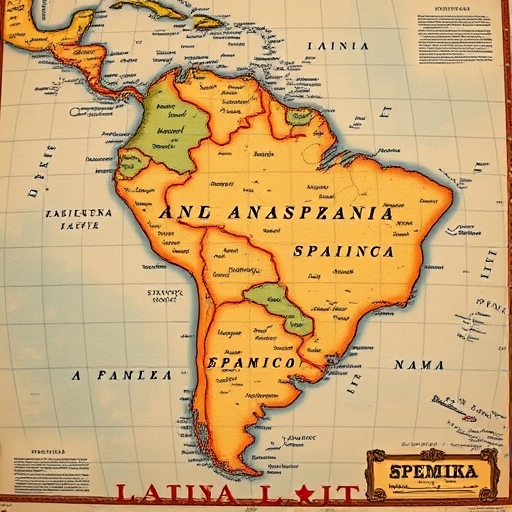
The Legacy of Colonization: Why Spanish Dominates Latin America. Since the 16th century, Spanish colonization has left a strong linguistic legacy, making Spanish the lingua franca in almost all of Latin America.. Spanish Colonization and the Formation of a Linguistic Zone
Amercia Latin's history cannot be separated from the era of Spanish colonization. In 1494, the Tordesillas Treaty divided the world between Spain and Portugal, giving Spain exclusive rights to the western continent of America. After the conquest of the Aztecs and Incas, Spanish conquerors established administrative centers, churches, and schools that used Spanish as the official language.
Spanish as a Tool of Government and Religion
Institutions of religion played a crucial role in the spread of the language. Catholic missionaries established schools and churches that taught liturgy in Spanish, forcing the indigenous population to learn the language. Colonial policies that prioritized Spanish in official documents, taxes, and laws ensured it became the lingua franca in everyday life.
Cultural and Economic Invasions
In addition to administrative functions, Spanish became a language of trade. As stated in the study Artifacts and Regulations in the Zone of Prokisamal Development in Spanish Writing Ismail, 2016 , Spanish not only monopolized the trade of goods such as silver, gold, and agricultural products, but also became the primary language in commercial networks between colonial regions. Sellers, merchants, and migrant workers naturally adopted Spanish to facilitate business transactions.
Legacy of Education and Legal Systems
After independence in the 19th century, new countries retained Spanish as their national language. The education system inherited from the colonizers emphasized a Spanish-language curriculum, while codification of laws remained based on the Spanish Civil Code . This decision was not just nostalgia, but a strategy to maintain national unity and facilitate diplomatic and economic relations with other Spanish-speaking countries.
Linguistic Diversity and Social Dynamics
Although Spanish dominates, indigenous language diversity never disappeared. Quechua, Nahuatl, Guaraní, and other languages are still spoken by millions of people. However, in the context of urbanization and mass media, Spanish functions as a language intermediary between different ethnic groups. This phenomenon has reinforced its status as the primary language in education, media, and politics.
Contemporary Implications
Today, almost 90% of Latin America's population uses Spanish in their daily lives, making it one of the largest Spanish-speaking regions in the world after Spain itself. The language's ability to adapt to technological, scientific, and pop culture terms has demonstrated its flexibility, facilitating global integration. At the same time, efforts to preserve indigenous languages are gaining support, indicating a balance between colonial heritage and local identity.
A Historical Conclusion that Shapes Language
The combination of political, religious, economic, and educational factors since the 16th century has embedded Spanish in the social structure of Latin America. The legacy of colonization is not just a historical footnote; it has become the foundation of a continuously evolving linguistic identity in the era of globalization. Understanding this origin helps explain why, to this day, Spanish remains the primary connector in a continent rich in cultural diversity.