Indonesia, the country with the largest Muslim population in the world, is leveraging its demographic advantage to become the number one halal tourism destination on the planet. The Indonesia Halal Tourism Program launched by the Ministry of Tourism and Creative Economy is changing the way the country promotes itself to over two billion Muslims worldwide.
Halal tourism does not only mean the availability of halal food, although that is its foundation. It encompasses the entire travel experience that aligns with the values and needs of Muslim travelers — from prayer facilities at airports and hotels, to tour arrangements sensitive to prayer times, to bathing and cleanliness facilities that meet ritual requirements, to entertainment that does not conflict with Islamic values.
Indonesia has extraordinary potential in this segment. With unmatched natural resources, rich cultural diversity, and mature tourism infrastructure at major destinations, Indonesia only needs to add a halal layer to its existing tourism products to effectively compete in the global Muslim traveler market.
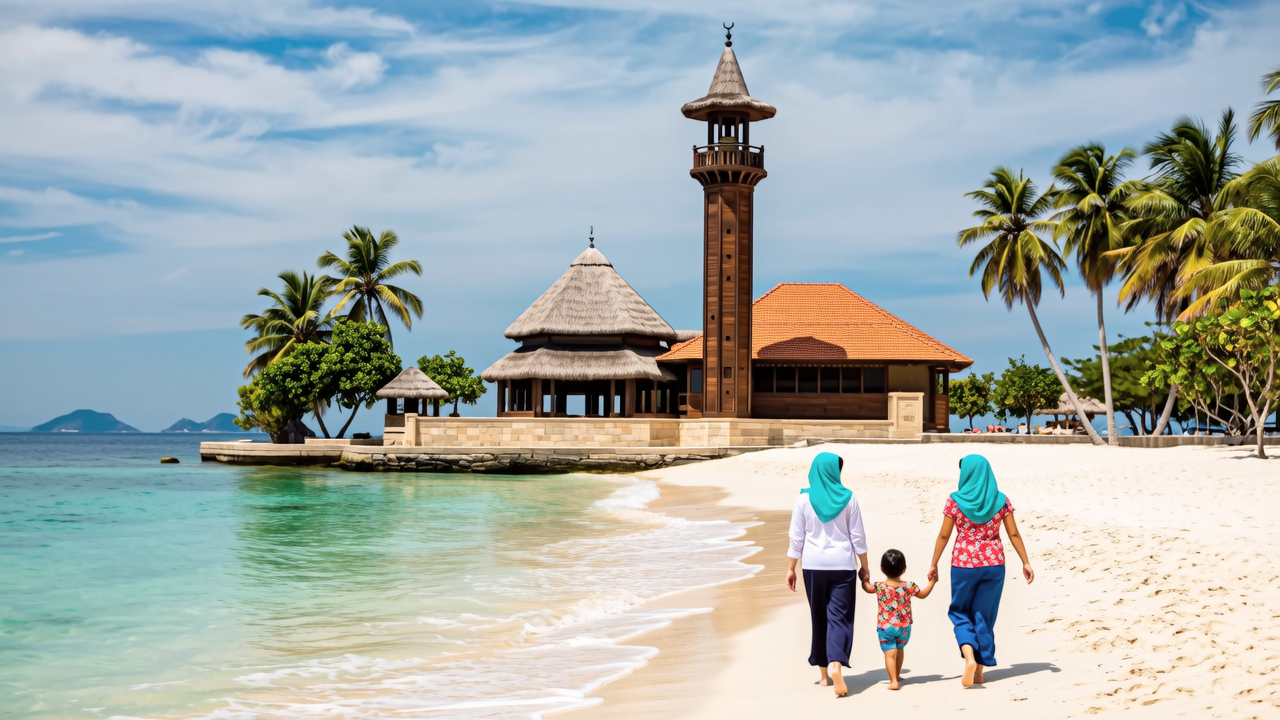
Lombok in West Nusa Tenggara, long known as the 'Thousand Mosque Island,' has been developed as the main hub for Indonesian halal tourism. The island offers a beautiful combination of beautiful beaches and clear seas with a very Muslim-friendly social environment. Premium resorts meeting the highest halal standards have been built there, attracting wealthy travelers from the Gulf region seeking luxurious alternatives to Dubai and Maldives.
Technology also plays a role in this development. The 'HalalTrip Indonesia' application helps Muslim travelers plan their trips with comprehensive information about certified halal restaurants, nearest mosques, and suitable tourist attractions, all filterable according to specific user needs.
Industry analysts forecast that the global halal tourism market will reach USD 300 billion by 2030, and Indonesia is determined to secure a significant share of this large market.
Halal Tourism in Indonesia: A Global Muslim Travel Destination Approaching 2027. Indonesia is actively developing a comprehensive halal tourism infrastructure and ecosystem to attract tens of millions of Muslim travelers from around the world, continuously competing with Malaysia and UAE.. Indonesia, the country with the largest Muslim population in the world, is leveraging its demographic advantage to become the number one halal tourism destination on the planet. The Indonesia Halal Tourism Program launched by the Ministry of Tourism and Creative Economy is changing the way the country promotes itself to over two billion Muslims worldwide.
Halal tourism does not only mean the availability of halal food, although that is its foundation. It encompasses the entire travel experience that aligns with the values and needs of Muslim travelers — from prayer facilities at airports and hotels, to tour arrangements sensitive to prayer times, to bathing and cleanliness facilities that meet ritual requirements, to entertainment that does not conflict with Islamic values.
Indonesia has extraordinary potential in this segment. With unmatched natural resources, rich cultural diversity, and mature tourism infrastructure at major destinations, Indonesia only needs to add a halal layer to its existing tourism products to effectively compete in the global Muslim traveler market.
Lombok in West Nusa Tenggara, long known as the 'Thousand Mosque Island,' has been developed as the main hub for Indonesian halal tourism. The island offers a beautiful combination of beautiful beaches and clear seas with a very Muslim-friendly social environment. Premium resorts meeting the highest halal standards have been built there, attracting wealthy travelers from the Gulf region seeking luxurious alternatives to Dubai and Maldives.
Technology also plays a role in this development. The 'HalalTrip Indonesia' application helps Muslim travelers plan their trips with comprehensive information about certified halal restaurants, nearest mosques, and suitable tourist attractions, all filterable according to specific user needs.
Industry analysts forecast that the global halal tourism market will reach USD 300 billion by 2030, and Indonesia is determined to secure a significant share of this large market.