First Encounter with the Illusion
Have you ever walked down an art gallery corridor and suddenly saw an old woman's portrait turn into a handsome young man? Or perhaps a peaceful beach scene turned into a dense jungle? If not, you haven't met Tabula Scalata — a painting art that plays with the perception of the eye and mind.
I still remember the first time I saw Tabula Scalata at a small museum in Europe. I stood in front of a normal wooden frame, displaying a portrait of an English nobleman. Then, accidentally, I took a step to the right. I was shocked — the nobleman's face changed into a skull! My heart pounded. I stepped back to the left, and the nobleman returned. To the right, a skull. To the left, the nobleman. I felt like I was in a horror movie, locked in an illusion game.
The Secret Behind the Wavy Strips
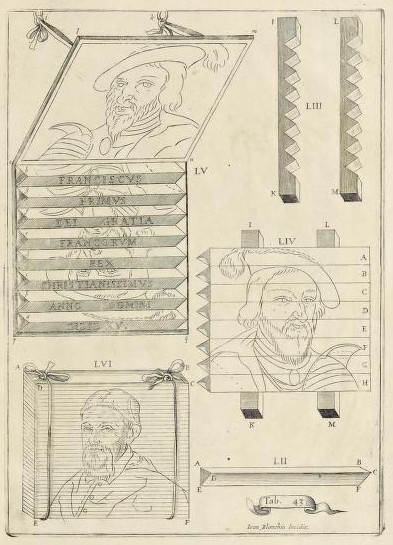
Tabula Scalata does not use magic or digital screens. Its secret lies in the wavy surface — like a wavy board. Each vertical or horizontal strip carries two images printed on different sides. When you look from a certain angle, your eyes only catch one set of strips, while the other strips are hidden in the shadows.
In other words, Tabula Scalata is a painting that "lies" to you. It tells one story from the left and another from the right. This technique has been used since the 17th century by European artists who enjoyed playing with perception. In fact, there are versions that use mirrors above the painting to allow viewers to see both images simultaneously — one with the naked eye, one through the mirror reflection. It's like watching two movies at the same time on one screen!
Three Faces in One Frame: Tabula Stritta
If two images are not enough, what about three? That is called Tabula Stritta or "triscenorama." Imagine vertical striped curtains in front of a third background. Each strip has two sides showing different images. As you move, you will see three images rotating — as if the painting is changing shape.
For example, in a museum in the Netherlands, there is a Tabula Stritta that shows a king's portrait on the left, a queen's portrait in the middle, and a prince's portrait on the right. As you slowly walk, the faces change like in a dream — one dies, one is born, one disappears. This is not just art, but also a mind game that tests eye coordination and movement.
From the Greek Stage to the Digital Screen
The roots of Tabula Scalata can be traced back to ancient Greek theater. They used periaktos — triangular prisms that could be rotated to change the stage background. This technique was later adapted by Renaissance artists to create more complex illusions.
Today, lenticular technology (lenticular printing) used in credit cards, 3D posters, and Trivision ads is a modern cousin of Tabula Scalata. At shopping centers, Trivision billboards show three advertisements rotating every few seconds. However, Tabula Scalata is a smoother analog version without motors or lights — just a play of light and angles.
Why This Art Still Captivates
In the digital era, we are used to moving images and virtual reality. Yet, Tabula Scalata still captivates because it is physical and interactive. You need to move, tilt your head, and find the right angle. It's like a puzzle game that requires the viewer's participation.
Even more intriguing, Tabula Scalata often hides secret messages or social criticism. For example, some paintings show a ruler's face from one angle and a skull from another — a reminder of death and power. Others display a beautiful garden view from the left and war from the right, criticizing societal hypocrisy.
Hunting for Tabula Scalata Around the World
If you want to see this miracle yourself, some famous places that house Tabula Scalata include the Hermitage Museum in Russia, the Fine Arts Museum in Brussels, and small galleries in Amsterdam. However, most collections are rarely displayed because they are fragile and require special lighting.
There are also contemporary artists like Patrick Hughes who create 3D versions of Tabula Scalata — where the painting appears convex but is actually flat. His works are sold for thousands of pounds and are sought after by collectors.
Conclusion: One Frame, Two Worlds
Tabula Scalata is not just a painting. It is a dialogue between the artist and the viewer, between illusion and reality. When you look at it, you are no longer a passive observer — you become part of the magic. Every step, every head tilt, reveals another layer of the story.
In the end, Tabula Scalata reminds us that reality is never absolute. Sometimes, to see the truth, we need to change our perspective — even if it's just a single step to the left.
---
Reference: Tabula scalata — Wikipedia
This Face-Transforming Painting Can Make You See Two Different Worlds — In the Blink of an Eye!. Imagine a picture that can transform into another face just by changing the viewing angle. This is Tabula Scalata, an optical illusion art that has existed since the 17th century. By simply stepping left or right, you will see two different stories in one frame. The secret? Thin strips that hide more than just a painting.. First Encounter with the Illusion
Have you ever walked down an art gallery corridor and suddenly saw an old woman's portrait turn into a handsome young man? Or perhaps a peaceful beach scene turned into a dense jungle? If not, you haven't met Tabula Scalata — a painting art that plays with the perception of the eye and mind.
I still remember the first time I saw Tabula Scalata at a small museum in Europe. I stood in front of a normal wooden frame, displaying a portrait of an English nobleman. Then, accidentally, I took a step to the right. I was shocked — the nobleman's face changed into a skull! My heart pounded. I stepped back to the left, and the nobleman returned. To the right, a skull. To the left, the nobleman. I felt like I was in a horror movie, locked in an illusion game.
The Secret Behind the Wavy Strips
Tabula Scalata does not use magic or digital screens. Its secret lies in the wavy surface — like a wavy board. Each vertical or horizontal strip carries two images printed on different sides. When you look from a certain angle, your eyes only catch one set of strips, while the other strips are hidden in the shadows.
In other words, Tabula Scalata is a painting that "lies" to you. It tells one story from the left and another from the right. This technique has been used since the 17th century by European artists who enjoyed playing with perception. In fact, there are versions that use mirrors above the painting to allow viewers to see both images simultaneously — one with the naked eye, one through the mirror reflection. It's like watching two movies at the same time on one screen!
Three Faces in One Frame: Tabula Stritta
If two images are not enough, what about three? That is called Tabula Stritta or "triscenorama." Imagine vertical striped curtains in front of a third background. Each strip has two sides showing different images. As you move, you will see three images rotating — as if the painting is changing shape.
For example, in a museum in the Netherlands, there is a Tabula Stritta that shows a king's portrait on the left, a queen's portrait in the middle, and a prince's portrait on the right. As you slowly walk, the faces change like in a dream — one dies, one is born, one disappears. This is not just art, but also a mind game that tests eye coordination and movement.
From the Greek Stage to the Digital Screen
The roots of Tabula Scalata can be traced back to ancient Greek theater. They used periaktos — triangular prisms that could be rotated to change the stage background. This technique was later adapted by Renaissance artists to create more complex illusions.
Today, lenticular technology lenticular printing used in credit cards, 3D posters, and Trivision ads is a modern cousin of Tabula Scalata. At shopping centers, Trivision billboards show three advertisements rotating every few seconds. However, Tabula Scalata is a smoother analog version without motors or lights — just a play of light and angles.
Why This Art Still Captivates
In the digital era, we are used to moving images and virtual reality. Yet, Tabula Scalata still captivates because it is physical and interactive. You need to move, tilt your head, and find the right angle. It's like a puzzle game that requires the viewer's participation.
Even more intriguing, Tabula Scalata often hides secret messages or social criticism. For example, some paintings show a ruler's face from one angle and a skull from another — a reminder of death and power. Others display a beautiful garden view from the left and war from the right, criticizing societal hypocrisy.
Hunting for Tabula Scalata Around the World
If you want to see this miracle yourself, some famous places that house Tabula Scalata include the Hermitage Museum in Russia, the Fine Arts Museum in Brussels, and small galleries in Amsterdam. However, most collections are rarely displayed because they are fragile and require special lighting.
There are also contemporary artists like Patrick Hughes who create 3D versions of Tabula Scalata — where the painting appears convex but is actually flat. His works are sold for thousands of pounds and are sought after by collectors.
Conclusion: One Frame, Two Worlds
Tabula Scalata is not just a painting. It is a dialogue between the artist and the viewer, between illusion and reality. When you look at it, you are no longer a passive observer — you become part of the magic. Every step, every head tilt, reveals another layer of the story.
In the end, Tabula Scalata reminds us that reality is never absolute. Sometimes, to see the truth, we need to change our perspective — even if it's just a single step to the left.
---
Reference: Tabula scalata — Wikipedia https://en.wikipedia.org/wiki/Tabula scalata