Not Just 'Old Poison' — This Element Once Killed Kings & Saved Lives
Imagine: a tiny particle — as small as dust — can enter your body without you realizing, then hide in bones, liver, and hair for
years. It won't leave even if you drink mineral water every day. This element was once a secret weapon of a serial killer in the 19th century (yes, arsenic was indeed used as the 'perfect poison' because of its colorless, odorless, and tasteless nature). But is it harmful? It is also an important component in your
smartphone chip. Even a type of bacteria in Mono Lake, California — yes,
it really exists — uses arsenic
as a substitute for phosphorus in its DNA. Not theory. It has been proven by NASA in 2010. So... this is no longer about 'good or bad'. It's about
context, dosage, and how it interacts with life.
Arsenic Is Not a Metal — But Also Not a Non-Metal
If you imagine chemical elements like Lego blocks — there are metals (iron, copper), non-metals (oxygen, carbon), and...
those in between. Arsenic falls into the third category:
metalloid. Like humans who sometimes are introverts, sometimes extroverts — arsenic behaves similarly. It can act like a metal
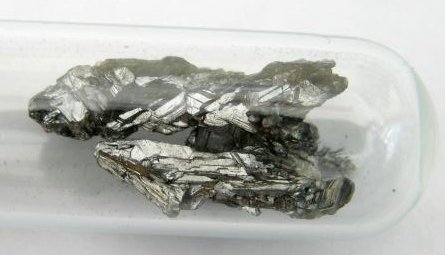
or a non-metal, depending on what it's 'with'. In its gray form (the most stable), it shines like iron, but isn't fully conductive. In compounds such as arsenic trioxide (As₂O₃), it becomes a deadly poison — but in the form of
gallium arsenide (GaAs), it becomes the main component in DVD lasers, advanced solar panels, and 5G antennas. Irony? They both come from the same ore in mines in China or Chile.
In Malaysia, Arsenic Isn't Just in Laboratories — It's in Your Rice Fields & Wells
Don't be surprised: a study by the Department of Environment (2021) showed arsenic levels in groundwater in some coastal areas — especially Kelantan and Terengganu — exceed WHO safety limits (10 µg/L). Not because of industrial pollution, but
natural geology: layers of arsenic-rich soil from metamorphic rocks slowly eroding. As a result, well water can contain up to 50–200 µg/L of arsenic. Over time, it accumulates in the body — and the first sign? Teeth turn black, skin develops brown spots (hyperpigmentation), and nails have thick white lines (
Mees’ lines). This is not a myth — doctors at Universiti Sains Malaysia Hospital have documented such cases since 2016.
From Rat Poison to Computer Chips: The Evolution of Arsenic's Identity
In the past, arsenic trioxide was the main ingredient in rat poison and wood insecticides (such as CCA — chromated copper arsenate). However, since the 2000s, its use has been drastically reduced — because it
doesn't degrade, lasting in the soil for up to 40 years! Yet, the technology world actually
values it. Gallium arsenide (GaAs) conducts electrons faster than silicon — so it is the preferred choice for high-frequency devices: satellites, aircraft radar, and 5G modules. A modern smartphone can have up to
3 components containing GaAs. So, when you scroll TikTok, arsenic is working — not to kill, but to
accelerate.
Bacteria That 'Eat Arsenic' — Evidence That 'Poison' Can Be the Basis of Life
In 2010, NASA scientists shocked the world with the discovery of
GFAJ-1: bacteria from Mono Lake that can replace
phosphorus — one of the six basic elements of life (C, H, N, O, P, S) — with
arsenic in its DNA and cell membranes. Not all bacteria can do this. Only certain species in extreme environments — with arsenic levels 200 times higher than seawater. This means that what we consider a 'absolute poison' for humans may be
building material for other organisms. This opens the door to the possibility of life on other planets — where phosphorus is rare, but arsenic is abundant. And yes, this is not science fiction. It is empirical data published in the journal
Science.
So, Is Arsenic an Enemy or a Friend?
The answer is: It's like fire. Useful for cooking and generating energy — but one mistake, and it can burn everything. In Malaysia, practical steps are not about 'fearing people', but education: regularly test well water, use iron oxide-based filters (which effectively capture arsenic), and support local studies on phytoremediation — for example, the
Pteris vittata (arsenic fern) plant that can absorb large amounts of arsenic from the soil. Most importantly, don't think of 'chemistry' as something far away in a lab. It is in your water, in your rice, in your phone — and sometimes, in your family history that never explained why your grandmother had black teeth. Knowledge is not for fear. But to
know — and make wise choices.
Rujukan: Arsenic — Wikipedia
Why Well Water in Kelantan Can Turn Teeth Black — And Is It Related to Arsenic?. There is an odorless, tasteless element that can damage the liver, affect genes, and increase cancer risk at just 0.01 mg/L in water — and it is still active in Malaysian soil today. Not a myth. Not a folklore story. This is a hidden chemical fact behind tap water, rice fields, and even your fried rice. How did something once used to poison rats become an essential component in your smartphone?. Not Just 'Old Poison' — This Element Once Killed Kings & Saved Lives
Imagine: a tiny particle — as small as dust — can enter your body without you realizing, then hide in bones, liver, and hair for years . It won't leave even if you drink mineral water every day. This element was once a secret weapon of a serial killer in the 19th century yes, arsenic was indeed used as the 'perfect poison' because of its colorless, odorless, and tasteless nature . But is it harmful? It is also an important component in your smartphone chip . Even a type of bacteria in Mono Lake, California — yes, it really exists — uses arsenic as a substitute for phosphorus in its DNA. Not theory. It has been proven by NASA in 2010. So... this is no longer about 'good or bad'. It's about context, dosage, and how it interacts with life .
Arsenic Is Not a Metal — But Also Not a Non-Metal
If you imagine chemical elements like Lego blocks — there are metals iron, copper , non-metals oxygen, carbon , and... those in between . Arsenic falls into the third category: metalloid . Like humans who sometimes are introverts, sometimes extroverts — arsenic behaves similarly. It can act like a metal or a non-metal, depending on what it's 'with'. In its gray form the most stable , it shines like iron, but isn't fully conductive. In compounds such as arsenic trioxide As₂O₃ , it becomes a deadly poison — but in the form of gallium arsenide GaAs , it becomes the main component in DVD lasers, advanced solar panels, and 5G antennas. Irony? They both come from the same ore in mines in China or Chile.
In Malaysia, Arsenic Isn't Just in Laboratories — It's in Your Rice Fields & Wells
Don't be surprised: a study by the Department of Environment 2021 showed arsenic levels in groundwater in some coastal areas — especially Kelantan and Terengganu — exceed WHO safety limits 10 µg/L . Not because of industrial pollution, but natural geology : layers of arsenic-rich soil from metamorphic rocks slowly eroding. As a result, well water can contain up to 50–200 µg/L of arsenic. Over time, it accumulates in the body — and the first sign? Teeth turn black, skin develops brown spots hyperpigmentation , and nails have thick white lines Mees’ lines . This is not a myth — doctors at Universiti Sains Malaysia Hospital have documented such cases since 2016.
From Rat Poison to Computer Chips: The Evolution of Arsenic's Identity
In the past, arsenic trioxide was the main ingredient in rat poison and wood insecticides such as CCA — chromated copper arsenate . However, since the 2000s, its use has been drastically reduced — because it doesn't degrade , lasting in the soil for up to 40 years! Yet, the technology world actually values it . Gallium arsenide GaAs conducts electrons faster than silicon — so it is the preferred choice for high-frequency devices: satellites, aircraft radar, and 5G modules. A modern smartphone can have up to 3 components containing GaAs. So, when you scroll TikTok, arsenic is working — not to kill, but to accelerate .
Bacteria That 'Eat Arsenic' — Evidence That 'Poison' Can Be the Basis of Life
In 2010, NASA scientists shocked the world with the discovery of GFAJ-1 : bacteria from Mono Lake that can replace phosphorus — one of the six basic elements of life C, H, N, O, P, S — with arsenic in its DNA and cell membranes. Not all bacteria can do this. Only certain species in extreme environments — with arsenic levels 200 times higher than seawater. This means that what we consider a 'absolute poison' for humans may be building material for other organisms. This opens the door to the possibility of life on other planets — where phosphorus is rare, but arsenic is abundant. And yes, this is not science fiction. It is empirical data published in the journal Science .
So, Is Arsenic an Enemy or a Friend?
The answer is: It's like fire. Useful for cooking and generating energy — but one mistake, and it can burn everything. In Malaysia, practical steps are not about 'fearing people', but education: regularly test well water, use iron oxide-based filters which effectively capture arsenic , and support local studies on phytoremediation — for example, the Pteris vittata arsenic fern plant that can absorb large amounts of arsenic from the soil. Most importantly, don't think of 'chemistry' as something far away in a lab. It is in your water, in your rice, in your phone — and sometimes, in your family history that never explained why your grandmother had black teeth. Knowledge is not for fear. But to know — and make wise choices .
Rujukan: Arsenic — Wikipedia https://en.wikipedia.org/wiki/Arsenic