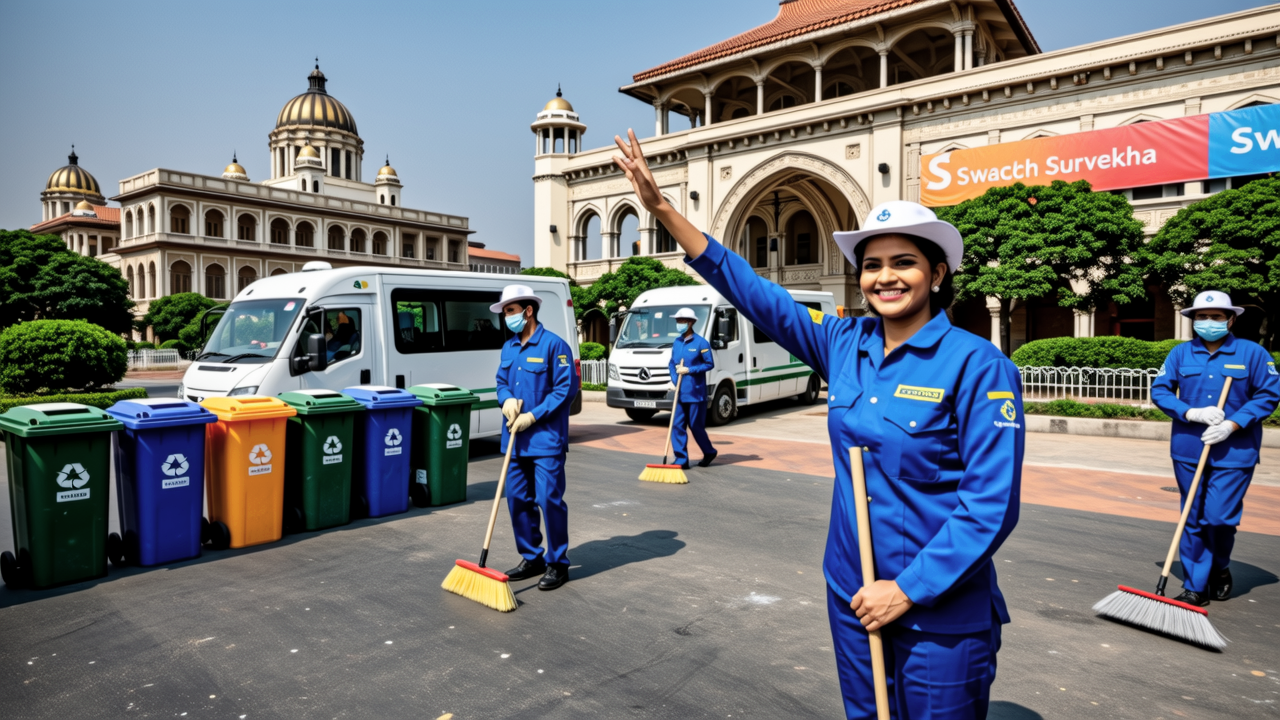
How Does Swachh Survekshan Assess Cleanliness?
Swachh Survekshan, meaning 'Cleanliness Survey' in Sanskrit, is a major initiative under the Swachh Bharat (Clean India) mission launched by Prime Minister Narendra Modi in 2014. The study uses a rigorous methodology that includes field surveys, public feedback, and secondary data analysis. Cities across India are rated based on three main categories: waste collection and transportation, waste processing and disposal, and public sanitation. States with the best performance in both urban and rural categories will be recognized.Madhya Pradesh, with its capital Bhopal, has shown significant improvements in every aspect. According to the report, 98% of cities in the state have achieved the 'Open Defecation Free' status, while 85% of solid waste is treated using modern technologies such as waste-to-energy conversion. These factors contribute to the state's high score.
Factors Behind Madhya Pradesh's Success
Madhya Pradesh's success did not happen overnight. It is the result of a holistic approach that includes investment in infrastructure, progressive policy formulation, and community mobilization. The state government introduced unique initiatives such as 'Swachhata Hi Seva' (Cleanliness is Service), which involves volunteers in cleaning public areas. In addition, the 'Source Separation of Waste' system is strictly enforced in all major cities, ensuring that organic and non-organic waste is managed separately.Real-time monitoring through mobile applications also plays a role. Residents can directly report cleanliness issues to local authorities, who are then required to resolve complaints within 48 hours. This innovation not only increases accountability but also accelerates response times. At the grassroots level, approximately 25,000 volunteer cleaning groups have been established throughout the state, involving nearly half a million residents in daily efforts to ensure a clean environment.
Challenges and Future Prospects
Although Madhya Pradesh leads, challenges still exist. Small towns and rural areas continue to struggle with a lack of public dustbins and waste processing facilities. Moreover, changing public attitudes towards waste segregation requires time and ongoing education. The state government acknowledges that to maintain and improve the current situation, continued investment in green technology and public awareness programs is essential.
Meanwhile, this recognition has attracted investors and tourists, opening up new economic opportunities. Neighboring states such as Chhattisgarh and Rajasthan are reported to be emulating Madhya Pradesh's model, hoping to match this achievement in the future. However, as emphasized by the Chief Minister of Madhya Pradesh, "Cleanliness is not a destination, but an ongoing journey that requires the participation of all." For the people of this state, being recognized as the cleanest state is a source of pride, but more importantly, it is a responsibility that must be maintained every day.