Tesla has stopped production of the Model S and X and shifted to producing the humanoid robot 'Optimus' at the same factory in Fremont, California. This decision may seem surprising, but automotive history shows it is not unusual. Rather, it is an industrial tradition that has been ongoing for more than a century.
Toyota: From Looms to Cars
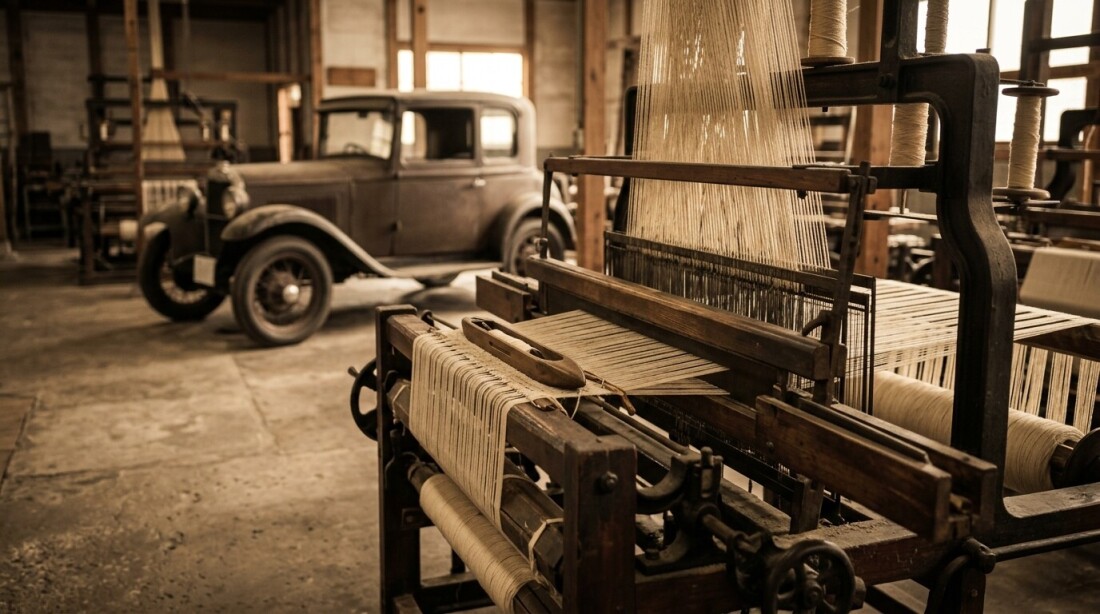
Toyota, now the world's largest car manufacturer, started as a manufacturer of automatic looms. Sakichi Toyoda, the inventor of the automatic loom, founded the Toyoda Automatic Loom Works. In 1933, the company established an automotive division, led by his son Kiichiro. In 1937, the automotive division split into Toyota Motor Corporation. Thus, the Toyota cars we see today come from a company that once made looms.
Subaru: From Fighter Planes to Compact Cars
Subaru began as Nakajima Aircraft Company, the largest aircraft manufacturer in East Asia during the war. After World War II, aircraft production was banned. The abandoned factories and engineers switched to producing scooters 'Rabbit' and bus bodies. In 1958, Subaru launched the Subaru 360, a small car that became a symbol of the Japanese era of affordable cars. Former aircraft designers now designed four-passenger cars.
Other Manufacturers: BMW, Saab, Mitsubishi
BMW started as an aircraft engine manufacturer during World War I, then switched to motorcycles and eventually cars after post-war agreements banned aircraft engine production. Saab also started as an aircraft manufacturer before launching its automotive division after the war, producing unique cars with good aerodynamics. Mitsubishi Motors originated from the heavy industry that produced warships and aircraft.
Car Factories Switching to Weapons
Product changes do not only happen towards cars; sometimes they switch from cars. During World War II, the United States halted public car production in 1942 and converted automotive factories into weapon production. Ford's Willow Run in Michigan, originally designed for cars, began producing B-24 bombers at a rate of almost one per hour at its peak. General Motors completely changed its operations to produce tanks, aircraft engines, machinery, and military trucks. The Cadillac factory produced tanks, and body manufacturers produced Sherman tanks. After the war, they returned to car production.
Factories as Capabilities, Not Products
Why are factories so easily able to switch products? Because the reality of a factory is capabilities, not specific products. Factories have the skills to cut, melt, and assemble metal, manage supply chains, and skilled labor. The capability to mass-produce something accurately can be transferred. The capability to weave can be used to assemble cars; the capability to design aircraft can create compact cars; the capability to produce cars on an assembly line can produce bombers.
Tesla: From EVs to Robots
With this perspective, Tesla's move seems more logical. Factories that produce electric vehicles are equipped to handle batteries, motors, and control software. Humanoid robots also use batteries, motors, and software. The technology to control movement and positioning is similar. Therefore, Tesla is not leaving cars; it is redirecting factory capabilities to new products, just like Toyota switched from looms, and Subaru from planes. Whether this move succeeds or not, it is part of a long tradition in the automotive industry.
Conclusion
This change is not something sad. Instead, it shows that even if certain products become obsolete, the capability to produce them does not disappear; it is moved to the next product. Factories are not graves of products, but places where capabilities wait for their turn. Cars may not last forever, but the power to create remains.
*References: CNBC, Toyota 75-year History, Subaru history, BMW and Saab official history, Detroit Historical Society.*
---
*Original source: [kurumaerabi.com](https://www.kurumaerabi.com/magazine/articles/1285/)*