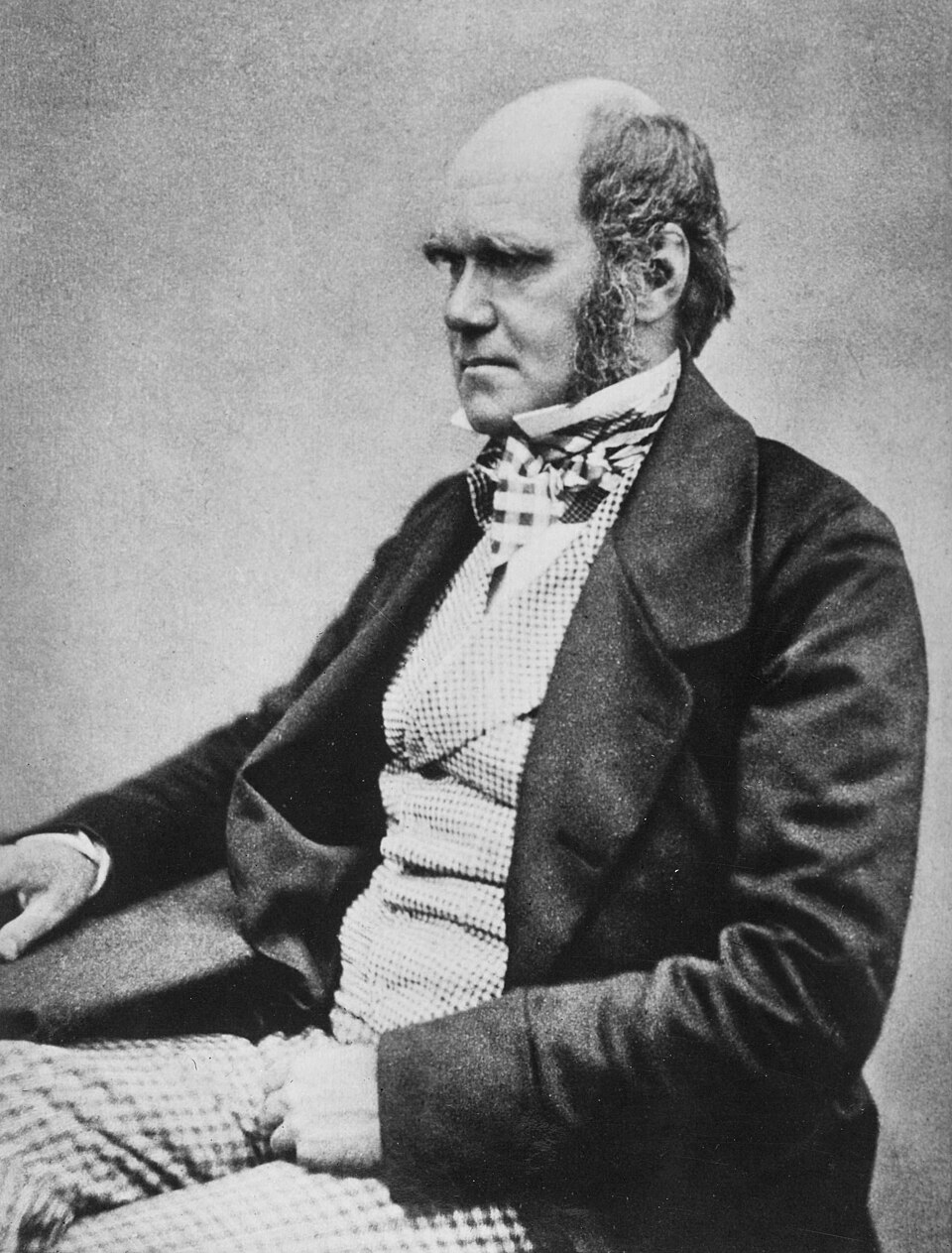
On November 24, 1859, a book titled On the Origin of Species by Means of Natural Selection, or the Preservation of Favoured Races in the Struggle for Life was officially published by the John Murray publishing house in London. Authored by English naturalist Charles Robert Darwin, the book sold out rapidly on its very first day of release. This event marked the beginning of one of the most significant paradigm shifts in the history of scientific thought, profoundly transforming human understanding of evolution and the origin of life's diversity on Earth.
This book highlighted the scientific theory that species populations evolve from generation to generation through a mechanism termed by Darwin as "natural selection." This explanation provided a scientific answer to the question of how complex biological structures and species adaptations to the environment could form without relying on mystical explanations or separate special creations.
Charles Darwin's Intellectual Journey and the Influence of Alfred Russel Wallace
Charles Robert Darwin was a naturalist, geologist, and biologist who dedicated many years to collecting information and specimens from various corners of the world. His experiences circumnavigating the globe aboard the HMS Beagle in the 1830s provided a very rich foundation of empirical data, particularly his observations of the variation in bird diversity in the Galapagos Islands.
However, Darwin delayed the publication of his theory for nearly two decades, realizing the social and religious implications that would arise. The decision to publish the book was ultimately prompted when another naturalist, Alfred Russel Wallace, sent a draft essay to Darwin containing a remarkably similar concept of evolution. This led to a joint paper presentation between Darwin and Wallace at the Linnean Society of London in 1858, before Darwin completed writing his full book the following year.
The Mechanism of Natural Selection and the Struggle for Survival
In the work, Darwin argued that all existing species of life have evolved from common ancestors through a branching pattern of evolution. This process is driven by the "struggle for existence," in which organisms possessing physical variations or behavioral advantages suited to their environment have a greater chance of survival and reproduction.
Darwin compared this phenomenon of natural selection to the process of "artificial selection" commonly practiced by breeders and farmers in selective breeding for livestock or crops. He demonstrated that if humans are able to alter the physical traits of animals and plants in a short period through planned breeding, then nature does the same through environmental pressures over millions of years.
Public Opposition and Acceptance by the Scientific Community
The publication of
On the Origin of Species sparked fierce debates among the general public, religious institutions, and the Victorian scientific community. Initially, Darwin's theory of evolution faced harsh opposition because it challenged traditional beliefs regarding the fixed creation of species and the privileged position of humans in the universe.
Nevertheless, over the span of several decades, evidence from geology, paleontology, and comparative anatomy increasingly reinforced Darwin's arguments. The scientific community began to accept evolution and common descent as valid scientific facts. Although the mechanisms of genetic inheritance were not yet fully understood in Darwin's time—prior to the development of modern genetics—the core concept of natural selection remains firm and is recognized as a core pillar of biology.
Enduring Legacy and Influence on Modern Biology
Today, Charles Darwin is recognized as one of the most influential figures in human history. His contributions not only revolutionized biology but also left a profound impact on anthropology, psychology, geology, and modern philosophy. Modern scientific discoveries such as DNA and genome mapping continue to confirm the fundamental truth of Darwin's theory of evolution.
As a high tribute to his intellectual service to world civilization, Charles Darwin was buried in Westminster Abbey, London, alongside other great scientific figures such as Sir Isaac Newton. The work On the Origin of Species remains a prime example of rigorous scientific method and meticulous empirical observation in exploring the secrets of nature.
Source: Wikipedia — https://en.wikipedia.org/wiki/Charles_Darwin | License: CC BY-SA 4.0_
1859: The Publication of 'On the Origin of Species' by Charles Darwin Sparks the Modern Biological Revolution. On November 24, 1859, English naturalist Charles Darwin published his monumental work On the Origin of Species, introducing the theory of evolution by natural selection. This book presented evidence that all species evolve from common ancestors. This discovery transformed the world's scientific landscape and remains the foundation of modern biology.. On November 24, 1859, a book titled On the Origin of Species by Means of Natural Selection, or the Preservation of Favoured Races in the Struggle for Life was officially published by the John Murray publishing house in London. Authored by English naturalist Charles Robert Darwin, the book sold out rapidly on its very first day of release. This event marked the beginning of one of the most significant paradigm shifts in the history of scientific thought, profoundly transforming human understanding of evolution and the origin of life's diversity on Earth.
This book highlighted the scientific theory that species populations evolve from generation to generation through a mechanism termed by Darwin as "natural selection." This explanation provided a scientific answer to the question of how complex biological structures and species adaptations to the environment could form without relying on mystical explanations or separate special creations.
Charles Darwin's Intellectual Journey and the Influence of Alfred Russel Wallace
Charles Robert Darwin was a naturalist, geologist, and biologist who dedicated many years to collecting information and specimens from various corners of the world. His experiences circumnavigating the globe aboard the HMS Beagle in the 1830s provided a very rich foundation of empirical data, particularly his observations of the variation in bird diversity in the Galapagos Islands.
However, Darwin delayed the publication of his theory for nearly two decades, realizing the social and religious implications that would arise. The decision to publish the book was ultimately prompted when another naturalist, Alfred Russel Wallace, sent a draft essay to Darwin containing a remarkably similar concept of evolution. This led to a joint paper presentation between Darwin and Wallace at the Linnean Society of London in 1858, before Darwin completed writing his full book the following year.
The Mechanism of Natural Selection and the Struggle for Survival
In the work, Darwin argued that all existing species of life have evolved from common ancestors through a branching pattern of evolution. This process is driven by the "struggle for existence," in which organisms possessing physical variations or behavioral advantages suited to their environment have a greater chance of survival and reproduction.
Darwin compared this phenomenon of natural selection to the process of "artificial selection" commonly practiced by breeders and farmers in selective breeding for livestock or crops. He demonstrated that if humans are able to alter the physical traits of animals and plants in a short period through planned breeding, then nature does the same through environmental pressures over millions of years.
Public Opposition and Acceptance by the Scientific Community
The publication of On the Origin of Species sparked fierce debates among the general public, religious institutions, and the Victorian scientific community. Initially, Darwin's theory of evolution faced harsh opposition because it challenged traditional beliefs regarding the fixed creation of species and the privileged position of humans in the universe.
Nevertheless, over the span of several decades, evidence from geology, paleontology, and comparative anatomy increasingly reinforced Darwin's arguments. The scientific community began to accept evolution and common descent as valid scientific facts. Although the mechanisms of genetic inheritance were not yet fully understood in Darwin's time—prior to the development of modern genetics—the core concept of natural selection remains firm and is recognized as a core pillar of biology.
Enduring Legacy and Influence on Modern Biology
Today, Charles Darwin is recognized as one of the most influential figures in human history. His contributions not only revolutionized biology but also left a profound impact on anthropology, psychology, geology, and modern philosophy. Modern scientific discoveries such as DNA and genome mapping continue to confirm the fundamental truth of Darwin's theory of evolution.
As a high tribute to his intellectual service to world civilization, Charles Darwin was buried in Westminster Abbey, London, alongside other great scientific figures such as Sir Isaac Newton. The work On the Origin of Species remains a prime example of rigorous scientific method and meticulous empirical observation in exploring the secrets of nature.
Source: Wikipedia — https://en.wikipedia.org/wiki/Charles Darwin License: CC BY-SA 4.0