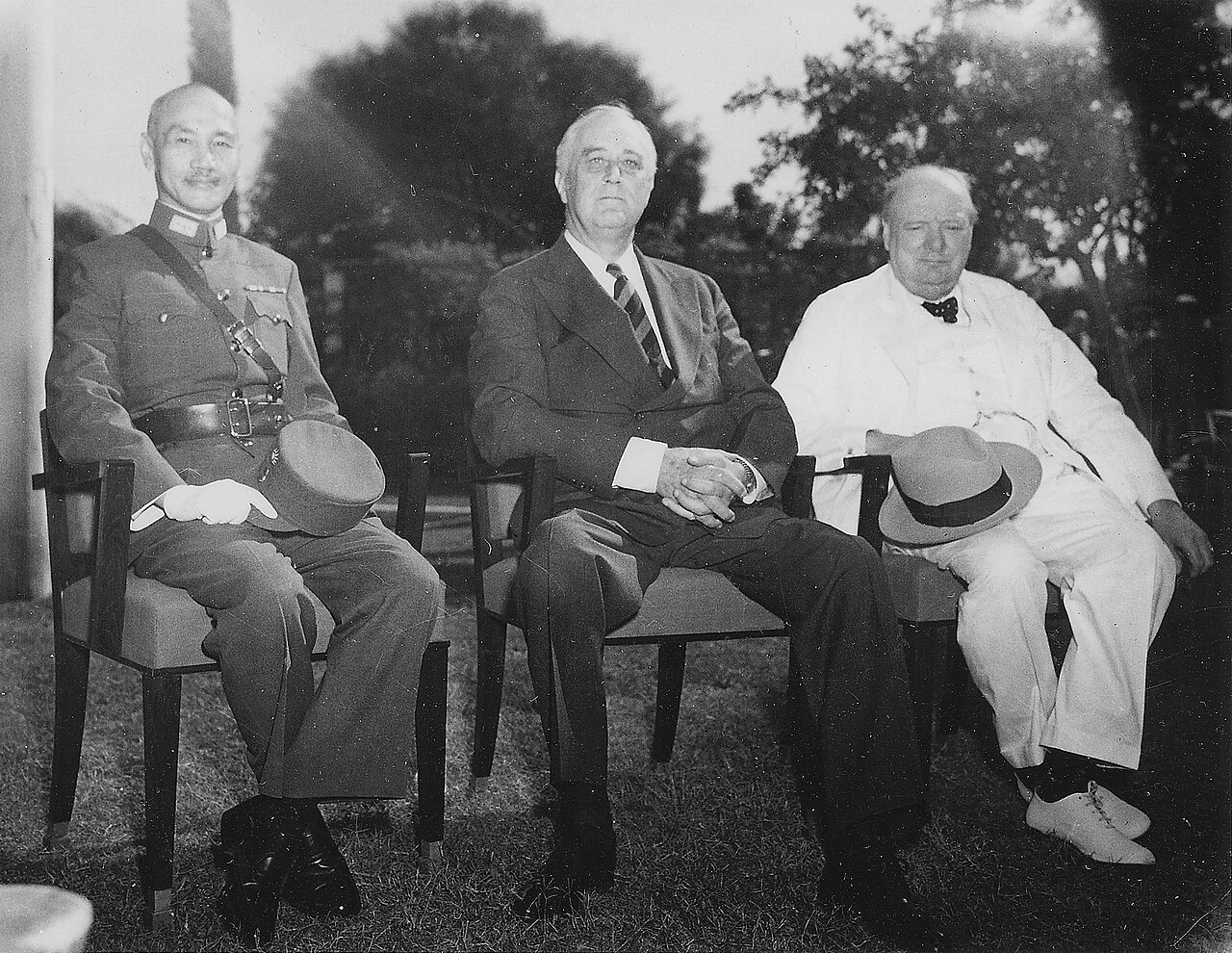
On November 22, 1943, the city of Cairo in Egypt became the center of world diplomacy as three Allied leaders gathered for a historic meeting known as the First Cairo Conference. The summit was attended by US President Franklin D. Roosevelt, United Kingdom Prime Minister Winston Churchill, and Chinese Nationalist Government Chairman Chiang Kai-shek. The meeting, which lasted until November 26, was held specifically to discuss the Allied stance against the Japanese Empire during World War II and to plan a new order for Asia after the end of the conflict.
The Cairo Conference was one of 14 important summits held by the Allies throughout World War II. However, this summit was unique because it focused specifically on the Pacific and Asian Theater, unlike other conferences that concentrated more on the crisis in Europe and the Nazi German threat.
The Pacific War Arena and the Need for a Joint Strategy
By the end of 1943, World War II was at a critical turning point. In Asia and the Pacific, the Japanese Empire had expanded its control to most of Southeast Asia, Eastern China, and various islands in the Pacific Ocean. China, under the leadership of Chiang Kai-shek, had been fighting Japanese troops since the outbreak of the Second Sino-Japanese War in 1937 and was under severe economic and military pressure.
For President Roosevelt, China's participation in the Allies was crucial not only to maintain military pressure on Japan on the Asian mainland, but also to recognize China as one of the world's post-war superpowers. However, Prime Minister Churchill tended to prioritize the European theater of war and was somewhat cautious about overly large military commitments in Asia. The Cairo Conference became an important forum to align strategic priorities among the three powers.
Military Discussions and Logistical Challenges
During the five-day negotiations in Cairo, various heavy military issues were discussed. Among the main topics were the reopening of the Burma Road and the implementation of Operation Anakim, which was a plan for sea and land attacks to liberate Burma from Japanese occupation. Chiang Kai-shek urged the Allies to launch large-scale amphibious operations in the Bay of Bengal to support Chinese and British ground troops.
However, constraints on military resources—especially amphibious landing craft that needed to be allocated for the planning of the Normandy landings (Operation Overlord) in Europe—forced several promises of amphibious aid to China to be reassessed. Despite differing opinions on logistical priorities, all three parties agreed that the concentration of continuous attacks on Japanese military facilities and supply routes needed to be increased.
The main outcome of this conference was the draft of the Cairo Declaration, officially issued on December 1, 1943, after being endorsed by Soviet Union Leader Joseph Stalin during the Tehran Conference that followed immediately after. This declaration outlined several firm provisions regarding the fate of the Japanese Empire.
Among the main demands of the Cairo Declaration were:
- Demanding an unconditional surrender from all armed forces of the Japanese Empire.
- Ensuring that Japan is stripped of all islands in the Pacific seized or occupied since the outbreak of World War I in 1914.
- Returning all territories seized by Japan from China, including Manchuria (Manchukuo), Taiwan (Formosa), and the Pescadores Islands (Penghu).
- Stipulating that the Korean peninsula would be freed from Japanese colonization and made an independent nation "in due course."
Geopolitical Implications and Historical Heritage
The Cairo Conference had a profound implication on the geopolitics of East Asia after World War II. The provisions made in Cairo were later reaffirmed in the Potsdam Declaration in July 1945, which became the basis for Japan's surrender terms in August 1945.
Decisions made in Cairo directly shaped the post-war political dynamics in Asia. The liberation of Korea from Japanese colonial rule stemmed from this conference's provisions, although it later led to the division of the Korean peninsula during the Cold War. In addition, the handover of Taiwan back to China remains a subject of international legal and political discussion to this day.
Overall, the Cairo Conference on November 22, 1943, symbolized a pivotal moment where the Allies not only planned military victory, but also began to remap the political and geopolitical order of the Asian continent for a new era.
Source: Wikipedia — https://en.wikipedia.org/wiki/Cairo_Conference | License: CC BY-SA 4.0_
1943: The Cairo Conference Shapes the Future of Asia After the Defeat of the Japanese Empire. On November 22, 1943, the first Cairo Conference began in Cairo, Egypt, bringing together US President Franklin D. Roosevelt, British Prime Minister Winston Churchill, and Chinese Nationalist Government Chairman Chiang Kai-shek. This highest-level meeting of World War II aimed to formulate a joint military strategy to defeat the Japanese Empire. The conference established the terms for Japan's unconditional surrender and the post-war redistribution of Asian territories.. On November 22, 1943, the city of Cairo in Egypt became the center of world diplomacy as three Allied leaders gathered for a historic meeting known as the First Cairo Conference. The summit was attended by US President Franklin D. Roosevelt, United Kingdom Prime Minister Winston Churchill, and Chinese Nationalist Government Chairman Chiang Kai-shek. The meeting, which lasted until November 26, was held specifically to discuss the Allied stance against the Japanese Empire during World War II and to plan a new order for Asia after the end of the conflict.
The Cairo Conference was one of 14 important summits held by the Allies throughout World War II. However, this summit was unique because it focused specifically on the Pacific and Asian Theater, unlike other conferences that concentrated more on the crisis in Europe and the Nazi German threat.
The Pacific War Arena and the Need for a Joint Strategy
By the end of 1943, World War II was at a critical turning point. In Asia and the Pacific, the Japanese Empire had expanded its control to most of Southeast Asia, Eastern China, and various islands in the Pacific Ocean. China, under the leadership of Chiang Kai-shek, had been fighting Japanese troops since the outbreak of the Second Sino-Japanese War in 1937 and was under severe economic and military pressure.
For President Roosevelt, China's participation in the Allies was crucial not only to maintain military pressure on Japan on the Asian mainland, but also to recognize China as one of the world's post-war superpowers. However, Prime Minister Churchill tended to prioritize the European theater of war and was somewhat cautious about overly large military commitments in Asia. The Cairo Conference became an important forum to align strategic priorities among the three powers.
Military Discussions and Logistical Challenges
During the five-day negotiations in Cairo, various heavy military issues were discussed. Among the main topics were the reopening of the Burma Road and the implementation of Operation Anakim, which was a plan for sea and land attacks to liberate Burma from Japanese occupation. Chiang Kai-shek urged the Allies to launch large-scale amphibious operations in the Bay of Bengal to support Chinese and British ground troops.
However, constraints on military resources—especially amphibious landing craft that needed to be allocated for the planning of the Normandy landings Operation Overlord in Europe—forced several promises of amphibious aid to China to be reassessed. Despite differing opinions on logistical priorities, all three parties agreed that the concentration of continuous attacks on Japanese military facilities and supply routes needed to be increased.
The main outcome of this conference was the draft of the Cairo Declaration, officially issued on December 1, 1943, after being endorsed by Soviet Union Leader Joseph Stalin during the Tehran Conference that followed immediately after. This declaration outlined several firm provisions regarding the fate of the Japanese Empire.
Among the main demands of the Cairo Declaration were:
- Demanding an unconditional surrender from all armed forces of the Japanese Empire.
- Ensuring that Japan is stripped of all islands in the Pacific seized or occupied since the outbreak of World War I in 1914.
- Returning all territories seized by Japan from China, including Manchuria Manchukuo , Taiwan Formosa , and the Pescadores Islands Penghu .
- Stipulating that the Korean peninsula would be freed from Japanese colonization and made an independent nation "in due course."
Geopolitical Implications and Historical Heritage
The Cairo Conference had a profound implication on the geopolitics of East Asia after World War II. The provisions made in Cairo were later reaffirmed in the Potsdam Declaration in July 1945, which became the basis for Japan's surrender terms in August 1945.
Decisions made in Cairo directly shaped the post-war political dynamics in Asia. The liberation of Korea from Japanese colonial rule stemmed from this conference's provisions, although it later led to the division of the Korean peninsula during the Cold War. In addition, the handover of Taiwan back to China remains a subject of international legal and political discussion to this day.
Overall, the Cairo Conference on November 22, 1943, symbolized a pivotal moment where the Allies not only planned military victory, but also began to remap the political and geopolitical order of the Asian continent for a new era.
Source: Wikipedia — https://en.wikipedia.org/wiki/Cairo Conference License: CC BY-SA 4.0