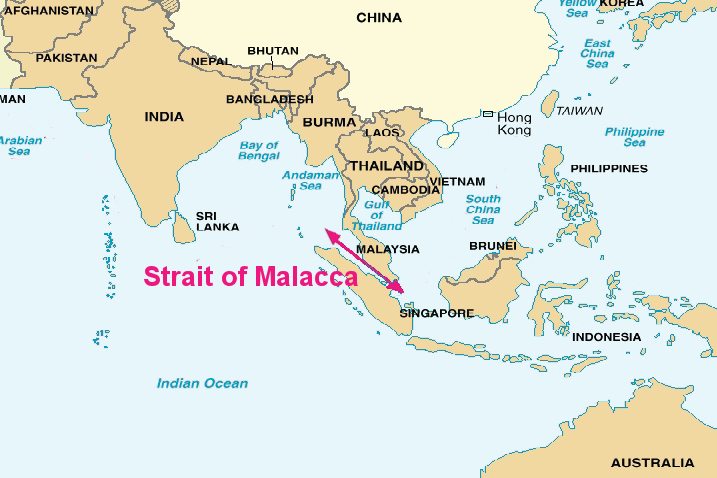
The Ocean as a Field of Power: The Historical Roots of Piracy in the Strait of Malacca
Imagine the year 1345. Javanese cargo ships sailed from Gresik towards Pasai with cargoes of salt, camphor, and woven cloth. In the middle of the journey, among small islands like Pulau Berhala or Tanjung Tuan, dark shadows emerged from behind moss-covered rocks. Not a storm — but
orang laut, trained fishermen and seafarers who had mastered currents, tides, and the narrow passages between the Pahang River and the Penyu Bay for centuries. They were not 'criminals' in the modern sense, but maritime political actors: unacknowledged rulers of the sea, yet recognized by Arab, Chinese, and Indian merchants as parties that had to be paid
uang jalan — a form of legitimate maritime tribute within the pre-colonial social structure of Nusantara. Records by Marco Polo (1292) and Ibn Battuta (1345) mention 'small islands south of Sumatra' as places where foreign ships 'often disappeared without a trace,' while 16th-century Portuguese maps noted names such as
Ilha dos Ladroes (Pirate Island) around Karimun and Batam — not as moral labels, but as practical navigational indicators.
Empires Forced to Negotiate: The Malay Kingdom and the Practice of 'Uang Jalan'
The Malacca Sultanate (1400–1511) did not eradicate pirates — it integrated them. Malay historical sources such as
Sejarah Melayu refer to
orang laut as one of the main components of the Malacca navy, led by officials with ranks such as
Laksamana and
Temenggung Laut. They were tasked with controlling trade routes, but also collecting taxes from foreign ships passing through 'zones of influence' outside formal ports. This practice was not extortion, but a paid protection system — similar to pre-modern maritime insurance. When Sultan Mansur Shah (1459–1477) sent envoys to China, his ships were escorted by
orang laut groups from Riau-Lingga, who were given exclusive rights to control certain segments of the strait. Portuguese documents from Goa (1522) recorded that 'no Chinese ship dared enter Malacca without a permit from the
Orang Laut on Lingga Island.' This was not a weakness of the kingdom, but evidence of a dual power structure: land power (the sultan) and sea power (
orang laut), which were interdependent.
Colonial Waves and the Transformation of Pirates into 'Criminals'
Radical changes occurred after the Portuguese conquest in 1511. With the introduction of the
cartaz system (mandatory permits for European ships) and the construction of fortresses in Malacca, traditional maritime power was broken.
Orang laut who had once been allies became threats — not because they changed, but because colonizers did not recognize the legitimacy of their maritime authority. The Dutch later tightened further through the
VOC's Sea Regulations (1620s), which banned all armed activities at sea without VOC permission. It was here that the term 'pirate' began to carry moral and colonial legal connotations. British Resident records in Singapore (1824–1850) show an increase in 'piracy' reports around Karimun and Natuna — but Dutch East Indies archives from the same year reveal that many 'pirates' were former
orang laut leaders who had lost their status and income due to the VOC's ban on free trade in the region.
The Modern Era: When Maritime Security Became a Four-Nation Cooperation
After independence, the threat of piracy did not disappear — it evolved. Between 1992 and 2004, the number of incidents tripled, peaking in 2000 (227 cases recorded by IMB). However, what is rarely told is that the drastic decline after 2005 was not solely the result of technology, but a precedent-breaking cooperation:
Malacca Strait Patrols (MSP), a joint initiative by Indonesia, Malaysia, Singapore, and Thailand launched in 2004. MSP was not just patrols — it included
Eyes in the Sky (joint aerial surveillance),
Maritime Information Sharing Centre (a data-sharing operations center in Kuala Lumpur), and deradicalization programs for former perpetrators in fishing villages in Johor and Riau. A University of Malaya study (2018) showed that over 68% of former pirates who participated in the MSP rehabilitation program successfully returned to fishing or port labor — not as 'former criminals,' but as critical holders of maritime knowledge.
Why This Story Remains Hidden?
The story of pirates in the Strait of Malacca is rarely told in full because it challenges two dominant historical myths: first, the myth that the Nusantara maritime space was an 'empty' area waiting to be conquered; second, the myth that maritime security is the result of Western technological progress. In reality, the Strait of Malacca was a maritime political laboratory — where power was divided, negotiated, and inherited through deep local knowledge. It reminds us that every line on a nautical map is the result of an unwritten agreement, not just a geographical boundary. And the shadows in the Strait? They never truly disappeared — they only changed shape: from 14th-century sea lords to radar technicians in today's MSP coordination centers.
---
Rujukan: Piracy in the Strait of Malacca — Wikipedia
Shadows in the Strait: When Pirates Mapped the Nusantara Trade Routes. From the 13th to the early 21st century, the Strait of Malacca was not just a trade route — it was a hidden battlefield where maritime pirates shaped economies, challenged empires, and forced kingdoms to form alliances for safety. This story is important because it shows that maritime security is not solely the result of technology, but also diplomacy, local knowledge, and recognition of complex power structures — a historical reality often erased in linear narratives about port development.. The Ocean as a Field of Power: The Historical Roots of Piracy in the Strait of Malacca
Imagine the year 1345. Javanese cargo ships sailed from Gresik towards Pasai with cargoes of salt, camphor, and woven cloth. In the middle of the journey, among small islands like Pulau Berhala or Tanjung Tuan, dark shadows emerged from behind moss-covered rocks. Not a storm — but orang laut , trained fishermen and seafarers who had mastered currents, tides, and the narrow passages between the Pahang River and the Penyu Bay for centuries. They were not 'criminals' in the modern sense, but maritime political actors: unacknowledged rulers of the sea, yet recognized by Arab, Chinese, and Indian merchants as parties that had to be paid uang jalan — a form of legitimate maritime tribute within the pre-colonial social structure of Nusantara. Records by Marco Polo 1292 and Ibn Battuta 1345 mention 'small islands south of Sumatra' as places where foreign ships 'often disappeared without a trace,' while 16th-century Portuguese maps noted names such as Ilha dos Ladroes Pirate Island around Karimun and Batam — not as moral labels, but as practical navigational indicators.
Empires Forced to Negotiate: The Malay Kingdom and the Practice of 'Uang Jalan'
The Malacca Sultanate 1400–1511 did not eradicate pirates — it integrated them. Malay historical sources such as Sejarah Melayu refer to orang laut as one of the main components of the Malacca navy, led by officials with ranks such as Laksamana and Temenggung Laut . They were tasked with controlling trade routes, but also collecting taxes from foreign ships passing through 'zones of influence' outside formal ports. This practice was not extortion, but a paid protection system — similar to pre-modern maritime insurance. When Sultan Mansur Shah 1459–1477 sent envoys to China, his ships were escorted by orang laut groups from Riau-Lingga, who were given exclusive rights to control certain segments of the strait. Portuguese documents from Goa 1522 recorded that 'no Chinese ship dared enter Malacca without a permit from the Orang Laut on Lingga Island.' This was not a weakness of the kingdom, but evidence of a dual power structure: land power the sultan and sea power orang laut , which were interdependent.
Colonial Waves and the Transformation of Pirates into 'Criminals'
Radical changes occurred after the Portuguese conquest in 1511. With the introduction of the cartaz system mandatory permits for European ships and the construction of fortresses in Malacca, traditional maritime power was broken. Orang laut who had once been allies became threats — not because they changed, but because colonizers did not recognize the legitimacy of their maritime authority. The Dutch later tightened further through the VOC's Sea Regulations 1620s , which banned all armed activities at sea without VOC permission. It was here that the term 'pirate' began to carry moral and colonial legal connotations. British Resident records in Singapore 1824–1850 show an increase in 'piracy' reports around Karimun and Natuna — but Dutch East Indies archives from the same year reveal that many 'pirates' were former orang laut leaders who had lost their status and income due to the VOC's ban on free trade in the region.
The Modern Era: When Maritime Security Became a Four-Nation Cooperation
After independence, the threat of piracy did not disappear — it evolved. Between 1992 and 2004, the number of incidents tripled, peaking in 2000 227 cases recorded by IMB . However, what is rarely told is that the drastic decline after 2005 was not solely the result of technology, but a precedent-breaking cooperation: Malacca Strait Patrols MSP , a joint initiative by Indonesia, Malaysia, Singapore, and Thailand launched in 2004. MSP was not just patrols — it included Eyes in the Sky joint aerial surveillance , Maritime Information Sharing Centre a data-sharing operations center in Kuala Lumpur , and deradicalization programs for former perpetrators in fishing villages in Johor and Riau. A University of Malaya study 2018 showed that over 68% of former pirates who participated in the MSP rehabilitation program successfully returned to fishing or port labor — not as 'former criminals,' but as critical holders of maritime knowledge.
Why This Story Remains Hidden?
The story of pirates in the Strait of Malacca is rarely told in full because it challenges two dominant historical myths: first, the myth that the Nusantara maritime space was an 'empty' area waiting to be conquered; second, the myth that maritime security is the result of Western technological progress. In reality, the Strait of Malacca was a maritime political laboratory — where power was divided, negotiated, and inherited through deep local knowledge. It reminds us that every line on a nautical map is the result of an unwritten agreement, not just a geographical boundary. And the shadows in the Strait? They never truly disappeared — they only changed shape: from 14th-century sea lords to radar technicians in today's MSP coordination centers.
---
Rujukan: Piracy in the Strait of Malacca — Wikipedia https://en.wikipedia.org/wiki/Piracy in the Strait of Malacca