One of the most amazing phenomena in physics is the existence of the triple point — a condition where a substance can exist in three physical phases simultaneously: solid, liquid, and gas. For water, this triple point occurs at a temperature of 0.01 degrees Celsius and a pressure of 611.73 Pascals — a pressure much lower than the Earth's atmospheric pressure at sea level.
At this triple point, ice can sublime directly into vapor, vapor can condense into liquid, and liquid can freeze into ice — all at the same time and in perfect equilibrium. This is a very specific condition where all three phases are in thermodynamic equilibrium with each other.
This phenomenon is not just an academic curiosity — it has great scientific importance. The triple point of water was once used to define the Kelvin temperature scale. Until 2019, one Kelvin was defined as 1/273.16 of the thermodynamic temperature of the triple point of water. Although this definition has been updated to be based on the Boltzmann constant, the importance of the triple point in temperature metrology remains significant.
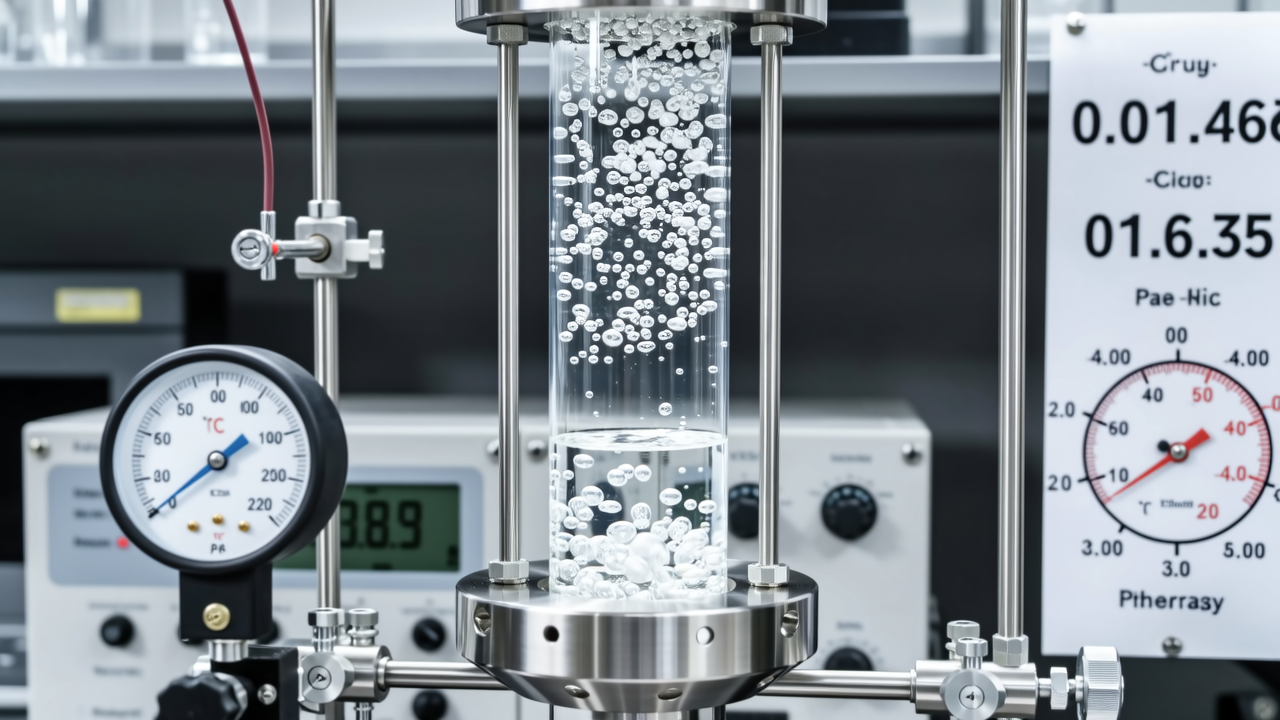
In a laboratory, the triple point can be observed visually — water in a sealed container with reduced pressure will start to boil even at room temperature because the decrease in pressure lowers the boiling point. At the exact pressure, water will freeze and boil simultaneously. This experiment is the most direct visual demonstration of how pressure affects the phase of matter.
🔬 Science Facts #6: Water Can Boil and Freeze at the Same Time — Triple Point. Under very precise pressure and temperature conditions, water can exist in three phases simultaneously — liquid, solid, and gas — in a phenomenon known as the triple point of water.. One of the most amazing phenomena in physics is the existence of the triple point — a condition where a substance can exist in three physical phases simultaneously: solid, liquid, and gas. For water, this triple point occurs at a temperature of 0.01 degrees Celsius and a pressure of 611.73 Pascals — a pressure much lower than the Earth's atmospheric pressure at sea level.
At this triple point, ice can sublime directly into vapor, vapor can condense into liquid, and liquid can freeze into ice — all at the same time and in perfect equilibrium. This is a very specific condition where all three phases are in thermodynamic equilibrium with each other.
This phenomenon is not just an academic curiosity — it has great scientific importance. The triple point of water was once used to define the Kelvin temperature scale. Until 2019, one Kelvin was defined as 1/273.16 of the thermodynamic temperature of the triple point of water. Although this definition has been updated to be based on the Boltzmann constant, the importance of the triple point in temperature metrology remains significant.
In a laboratory, the triple point can be observed visually — water in a sealed container with reduced pressure will start to boil even at room temperature because the decrease in pressure lowers the boiling point. At the exact pressure, water will freeze and boil simultaneously. This experiment is the most direct visual demonstration of how pressure affects the phase of matter.