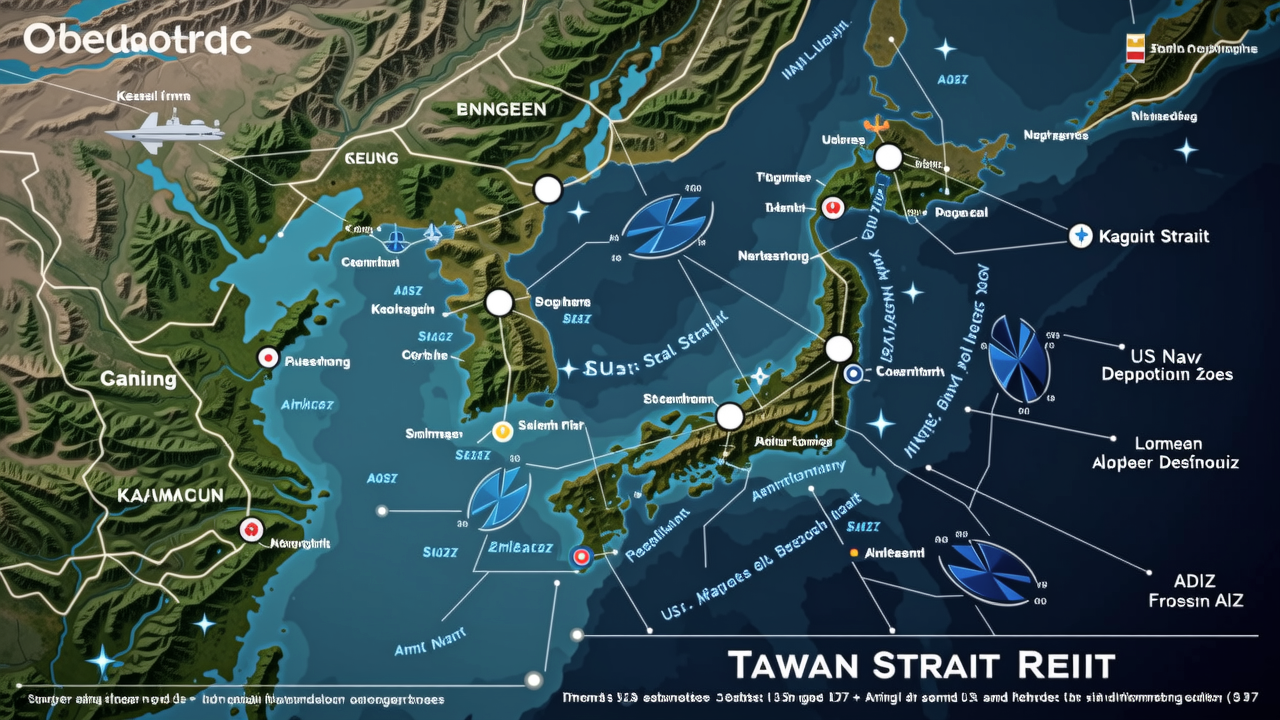
Beijing/Taipei, 24 Jun — The narrow Taiwan Strait — only 180 kilometers wide at its narrowest point between the Chinese mainland and the island of Taiwan — is now the most watched waterway in the world, where geopolitical rhetoric, strategic interests, and military calculations combine in a potentially explosive mix at any time.
The year 2026 has witnessed a significant intensification of military activity in this area. The Chinese People's Liberation Army (PLA) air force and navy regularly conduct exercises involving simulated blockades and amphibious operations around Taiwan, with each recent operation larger and more sophisticated than previous ones. Beijing claims these exercises are a response to 'provocations' from Taipei and continued U.S. support for Taiwan.
Taiwan, on the other hand, is rapidly enhancing its defense capabilities. Taiwan's defense budget has risen to the highest level based on percentage of GDP since the previous Cross-Strait tensions. Purchases of advanced weapon systems from the United States — including F-16 V fighter jets, Harpoon anti-ship missiles, and Patriot air defense systems — are strengthening the island's defenses.
The United States continues to adhere to a 'strategic ambiguity' policy that does not explicitly commit to defending Taiwan militarily, yet sends increasingly strong signals about its commitment to Taiwan's security through arms sales, official visits, and joint military exercises with Taiwan.
The global business community, especially the technology industry heavily reliant on Taiwan's semiconductor production through TSMC, is closely watching these developments with deep concern. Disruption of Taiwan's semiconductor production would send a major shock to the global technology supply chain and potentially trigger serious economic downturns.
Taiwan Strait Tensions: The Most Critical Asian Security Dynamic in 2026. Tensions in the Taiwan Strait continue to be the hottest point in global geopolitics, with frequent military operations and pressured diplomatic negotiations between Beijing, Taipei, and Washington.. Beijing/Taipei, 24 Jun — The narrow Taiwan Strait — only 180 kilometers wide at its narrowest point between the Chinese mainland and the island of Taiwan — is now the most watched waterway in the world, where geopolitical rhetoric, strategic interests, and military calculations combine in a potentially explosive mix at any time.
The year 2026 has witnessed a significant intensification of military activity in this area. The Chinese People's Liberation Army PLA air force and navy regularly conduct exercises involving simulated blockades and amphibious operations around Taiwan, with each recent operation larger and more sophisticated than previous ones. Beijing claims these exercises are a response to 'provocations' from Taipei and continued U.S. support for Taiwan.
Taiwan, on the other hand, is rapidly enhancing its defense capabilities. Taiwan's defense budget has risen to the highest level based on percentage of GDP since the previous Cross-Strait tensions. Purchases of advanced weapon systems from the United States — including F-16 V fighter jets, Harpoon anti-ship missiles, and Patriot air defense systems — are strengthening the island's defenses.
The United States continues to adhere to a 'strategic ambiguity' policy that does not explicitly commit to defending Taiwan militarily, yet sends increasingly strong signals about its commitment to Taiwan's security through arms sales, official visits, and joint military exercises with Taiwan.
The global business community, especially the technology industry heavily reliant on Taiwan's semiconductor production through TSMC, is closely watching these developments with deep concern. Disruption of Taiwan's semiconductor production would send a major shock to the global technology supply chain and potentially trigger serious economic downturns.