🌍 Global coverage 24/7 • 🏯 East Asia: China, Japan, Korea • 🛕 South Asia: India • 🏰 Europe • 🗽 Americas • 🌍 Africa • 🕌 Middle East • 🇵🇸 Palestine Solidarity •
This article is a translation from the original language.
🕌 Stories & Lessons
Aleppo Citadel: A Medieval Islamic Fortress and World Heritage Site
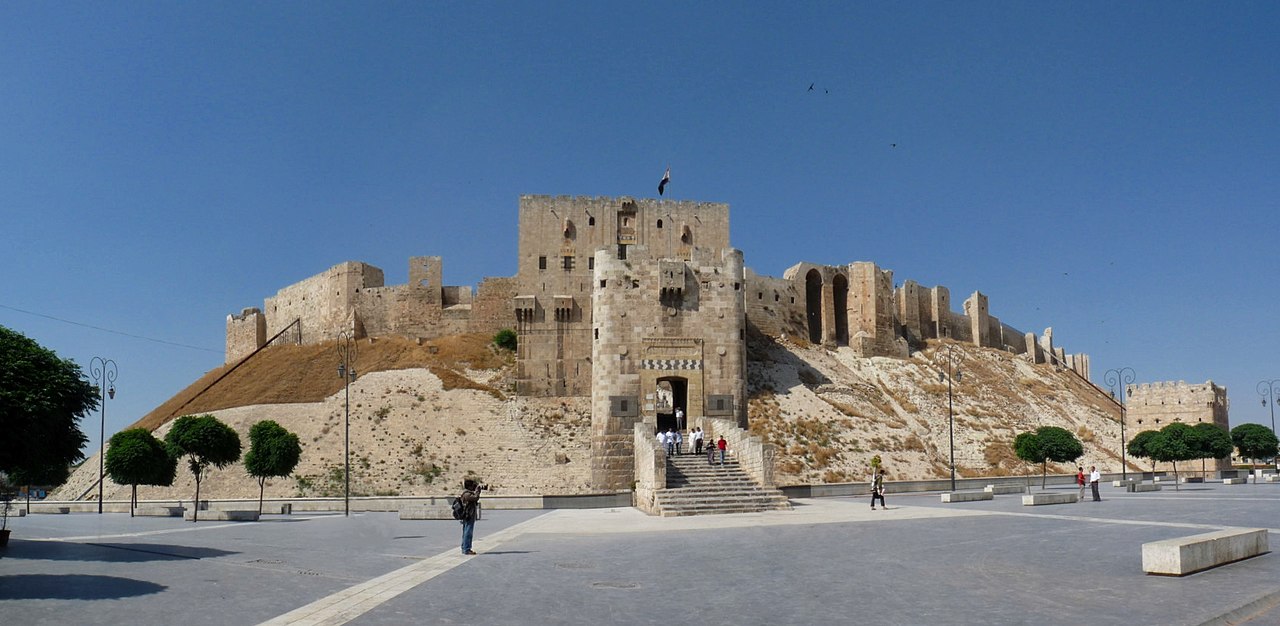
The Aleppo Citadel, located in the heart of Old Aleppo city in Syria, is one of the largest and oldest fortified palaces in the world. Built on a hill that has been inhabited since the third millennium BCE, the citadel reached its peak of glory during the Ayyubid period in the 12th and 13th centuries CE. As part of the Old City of Aleppo recognized by UNESCO in 1986, the citadel symbolizes the grandeur of Islamic civilization in architecture, military, and governance. Although it suffered severe damage during the Syrian Civil War, restoration efforts are currently underway to preserve this valuable heritage.
Image: Foto: Wikipedia — Citadel of Aleppo (CC BY-SA 4.0)
AI
Introduction: Tracing the Glory from the Top of Aleppo Hill
Amidst the bustling city of Aleppo, Syria, stands a rocky hill that holds a thousand and one stories. At its peak stands the Aleppo Citadel (Qal’at Halab), a medieval fortress that is not only a symbol of resilience but also a landmark of Islamic civilization's grandeur. This citadel is not just walls and towers; it is a city within a city, an palace, a center of government, and a defensive fortress that has witnessed the successes of sultans, scholars, and Muslim warriors. More astonishingly, the history of this site dates back to the third millennium BCE, making it one of the oldest and largest fortresses in the world. Let us explore the grandeur of the Aleppo Citadel, a world heritage site that continues to tell the story of Islamic excellence.
Early History: From Pre-Islamic Times to the Arrival of Islam
The hill where the Aleppo Citadel stands has been inhabited since ancient times. Archaeological remains indicate the presence of a fortress from the Aramean, Assyrian, Greek, Roman, and Byzantine periods. Each civilization left its mark, but the citadel's peak of glory came with the arrival of Islam. In 636 CE, Muslim forces under the command of Khalid ibn al-Walid conquered Aleppo from the Byzantines. Since then, the citadel became an important administrative and military center for Islamic kingdoms, including the Umayyads, Abbasids, Hamdanids, and Fatimids. However, the form of the citadel we see today is largely the result of large-scale construction during the Ayyubid period under the rule of Sultan al-Malik al-Zahir Ghazi, son of Saladin al-Ayyubi.
The Ayyubid Era: The Peak of Glory of the Aleppo Citadel
In the 12th and 13th centuries CE, al-Malik al-Zahir Ghazi transformed the Aleppo Citadel into a complete fortified palace. He reinforced the walls, built large towers, covered gates, and established an advanced defense system. The citadel was equipped with a palace, mosque, bathhouse, court hall, armory, and large water reservoirs. One of the most impressive features is the deep dry moat surrounding the citadel, making it difficult for enemies to penetrate. The main entrance, known as the Snake Gate, was designed with a winding path and multiple iron doors to slow down attackers. This Ayyubid architecture combined military functionality with beautiful Islamic aesthetics, such as stone carvings, calligraphy, and mihrabs in the mosque. The citadel became a center of governance, shelter, and a symbol of Islamic sovereignty in Syria.
Mamluk and Ottoman Eras: Continuity and Change
After the fall of the Ayyubids, the Aleppo Citadel remained an important fortress under the Mamluk rule (13th to 16th centuries). Mamluk sultans improved the defensive structures, built new towers, and repaired the walls. During the Ottoman era (16th to early 20th centuries), the citadel lost its military function but remained a symbol of power and the residence of governors. Despite several earthquakes and wars, the citadel was constantly repaired and maintained. In 1986, the Old City of Aleppo, including the Aleppo Citadel, was recognized as a UNESCO World Heritage Site due to its extraordinary universal value.
Unique Architecture and Defense Technology
The Aleppo Citadel is a brilliant example of Islamic military architecture. Its walls, several meters thick, are made of limestone and equipped with strategically placed watchtowers. A dry moat 22 meters deep and 30 meters wide prevents direct access. The main gate, the Snake Gate, is named after the snake carvings on the stone, designed with a double-door system and holes to pour hot oil onto enemies. Inside the citadel, the Masjid al-Malik al-Zahir (built in 1214 CE) still stands intact, with a beautifully carved mihrab. An advanced water supply system, including wells and underground channels, ensured the citadel could withstand long sieges. All of this demonstrates how advanced Islamic engineering was during the medieval period.
The Role of the Aleppo Citadel in Islamic Civilization
The citadel was not only a defensive fortress but also a center of governance, knowledge, and trade. Here, sultans administered their territories, resolved disputes, and protected their people. Aleppo itself was a major crossroads of trade between East and West, making the citadel a center of economy and culture. Many scholars, intellectuals, and artists found refuge under the protection of this palace. The citadel also inspired writers and poets who praised its greatness in poetry and prose. In other words, the Aleppo Citadel is a mirror of the grandeur of Islamic civilization in all aspects: politics, economy, society, and culture.
21st Century: Challenges and Restoration
Unfortunately, the glorious history of the Aleppo Citadel has not been free from modern challenges. During the Syrian Civil War (2011–2020), the citadel was caught in fierce battles. Its walls were damaged by cannonballs and rockets, its towers collapsed, and parts of the structure suffered severe damage. However, the spirit of restoration never faded. In 2018, the citadel was reopened to the public after initial restoration work. Larger restoration efforts, with the cooperation of UNESCO and various international organizations, are currently underway to restore its original grandeur. This shows that Islamic heritage is not only to be remembered but also to be preserved and passed on to future generations.
Conclusion: The Enduring Fortress
The Aleppo Citadel is more than just stone and mortar. It is evidence of the excellence of Islamic civilization in architecture, military, and administration. It is a symbol of resilience that has endured for thousands of years through various eras and challenges. Although the scars of war are still visible, the citadel continues to stand proudly, reminding us of the grandeur of the past and the hope for the future. As a world heritage site, the Aleppo Citadel is our shared responsibility to ensure that it continues to be a source of inspiration and pride for all humanity.
Aleppo Citadel: A Medieval Islamic Fortress and World Heritage Site. The Aleppo Citadel, located in the heart of Old Aleppo city in Syria, is one of the largest and oldest fortified palaces in the world. Built on a hill that has been inhabited since the third millennium BCE, the citadel reached its peak of glory during the Ayyubid period in the 12th and 13th centuries CE. As part of the Old City of Aleppo recognized by UNESCO in 1986, the citadel symbolizes the grandeur of Islamic civilization in architecture, military, and governance. Although it suffered severe damage during the Syrian Civil War, restoration efforts are currently underway to preserve this valuable heritage.. Introduction: Tracing the Glory from the Top of Aleppo Hill
Amidst the bustling city of Aleppo, Syria, stands a rocky hill that holds a thousand and one stories. At its peak stands the Aleppo Citadel Qal’at Halab , a medieval fortress that is not only a symbol of resilience but also a landmark of Islamic civilization's grandeur. This citadel is not just walls and towers; it is a city within a city, an palace, a center of government, and a defensive fortress that has witnessed the successes of sultans, scholars, and Muslim warriors. More astonishingly, the history of this site dates back to the third millennium BCE, making it one of the oldest and largest fortresses in the world. Let us explore the grandeur of the Aleppo Citadel, a world heritage site that continues to tell the story of Islamic excellence.
Early History: From Pre-Islamic Times to the Arrival of Islam
The hill where the Aleppo Citadel stands has been inhabited since ancient times. Archaeological remains indicate the presence of a fortress from the Aramean, Assyrian, Greek, Roman, and Byzantine periods. Each civilization left its mark, but the citadel's peak of glory came with the arrival of Islam. In 636 CE, Muslim forces under the command of Khalid ibn al-Walid conquered Aleppo from the Byzantines. Since then, the citadel became an important administrative and military center for Islamic kingdoms, including the Umayyads, Abbasids, Hamdanids, and Fatimids. However, the form of the citadel we see today is largely the result of large-scale construction during the Ayyubid period under the rule of Sultan al-Malik al-Zahir Ghazi, son of Saladin al-Ayyubi.
The Ayyubid Era: The Peak of Glory of the Aleppo Citadel
In the 12th and 13th centuries CE, al-Malik al-Zahir Ghazi transformed the Aleppo Citadel into a complete fortified palace. He reinforced the walls, built large towers, covered gates, and established an advanced defense system. The citadel was equipped with a palace, mosque, bathhouse, court hall, armory, and large water reservoirs. One of the most impressive features is the deep dry moat surrounding the citadel, making it difficult for enemies to penetrate. The main entrance, known as the Snake Gate, was designed with a winding path and multiple iron doors to slow down attackers. This Ayyubid architecture combined military functionality with beautiful Islamic aesthetics, such as stone carvings, calligraphy, and mihrabs in the mosque. The citadel became a center of governance, shelter, and a symbol of Islamic sovereignty in Syria.
Mamluk and Ottoman Eras: Continuity and Change
After the fall of the Ayyubids, the Aleppo Citadel remained an important fortress under the Mamluk rule 13th to 16th centuries . Mamluk sultans improved the defensive structures, built new towers, and repaired the walls. During the Ottoman era 16th to early 20th centuries , the citadel lost its military function but remained a symbol of power and the residence of governors. Despite several earthquakes and wars, the citadel was constantly repaired and maintained. In 1986, the Old City of Aleppo, including the Aleppo Citadel, was recognized as a UNESCO World Heritage Site due to its extraordinary universal value.
Unique Architecture and Defense Technology
The Aleppo Citadel is a brilliant example of Islamic military architecture. Its walls, several meters thick, are made of limestone and equipped with strategically placed watchtowers. A dry moat 22 meters deep and 30 meters wide prevents direct access. The main gate, the Snake Gate, is named after the snake carvings on the stone, designed with a double-door system and holes to pour hot oil onto enemies. Inside the citadel, the Masjid al-Malik al-Zahir built in 1214 CE still stands intact, with a beautifully carved mihrab. An advanced water supply system, including wells and underground channels, ensured the citadel could withstand long sieges. All of this demonstrates how advanced Islamic engineering was during the medieval period.
The Role of the Aleppo Citadel in Islamic Civilization
The citadel was not only a defensive fortress but also a center of governance, knowledge, and trade. Here, sultans administered their territories, resolved disputes, and protected their people. Aleppo itself was a major crossroads of trade between East and West, making the citadel a center of economy and culture. Many scholars, intellectuals, and artists found refuge under the protection of this palace. The citadel also inspired writers and poets who praised its greatness in poetry and prose. In other words, the Aleppo Citadel is a mirror of the grandeur of Islamic civilization in all aspects: politics, economy, society, and culture.
21st Century: Challenges and Restoration
Unfortunately, the glorious history of the Aleppo Citadel has not been free from modern challenges. During the Syrian Civil War 2011–2020 , the citadel was caught in fierce battles. Its walls were damaged by cannonballs and rockets, its towers collapsed, and parts of the structure suffered severe damage. However, the spirit of restoration never faded. In 2018, the citadel was reopened to the public after initial restoration work. Larger restoration efforts, with the cooperation of UNESCO and various international organizations, are currently underway to restore its original grandeur. This shows that Islamic heritage is not only to be remembered but also to be preserved and passed on to future generations.
Conclusion: The Enduring Fortress
The Aleppo Citadel is more than just stone and mortar. It is evidence of the excellence of Islamic civilization in architecture, military, and administration. It is a symbol of resilience that has endured for thousands of years through various eras and challenges. Although the scars of war are still visible, the citadel continues to stand proudly, reminding us of the grandeur of the past and the hope for the future. As a world heritage site, the Aleppo Citadel is our shared responsibility to ensure that it continues to be a source of inspiration and pride for all humanity.
---
Reference: Citadel of Aleppo — Wikipedia https://en.wikipedia.org/wiki/Citadel of Aleppo