What Exactly Was the Royal Road?
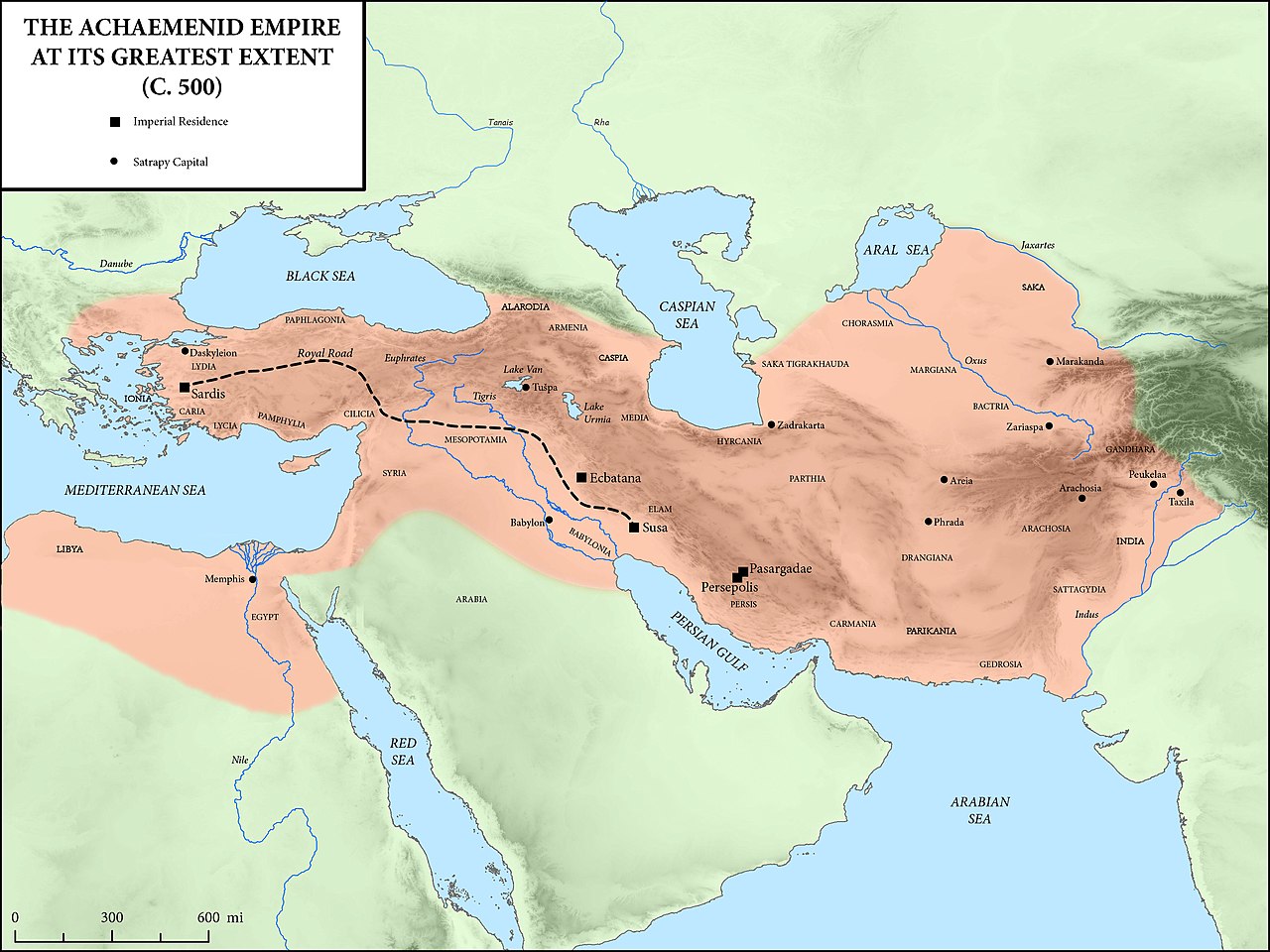
The Royal Road was no ordinary road. It was the world's first paved highway, specifically built to connect the western parts of the Achaemenid Persian Empire — from the city of Susa (modern-day Iran) to Sardis (modern-day Turkey). Constructed in the 5th century BC, this road stretched 2,699 kilometers (1,677 miles) and served as the backbone of communication and trade for an empire that extended from India to the Mediterranean.
Uniquely, the road was not built all at once. It was actually a collection of existing routes that were improved and coordinated into a neat network. However, the greatest contribution came from King Darius I (522–486 BC), who not only widened and paved the road but also built rest stations and control posts along the route.
Who Used This Road and Why?
The Royal Road was used by three main groups: royal messengers, merchants, and soldiers. The first group — messengers — were the most important. They rode horses in rotation at each postal station called an
angarium. This system allowed the king's news and commands to reach across the empire in a time impossible for ordinary pedestrians.
Merchants used the road to transport goods such as silk from China, spices from India, gold from Lydia, and ivory from Africa. This road became the first international trade artery in the world. Soldiers also used the road for rapid movement — a strategic advantage that allowed the Persians to send reinforcements to the western borders in less than two weeks.
How Did the Postal System Work So Fast?
The secret behind the speed of the Royal Road was the postal system called
chapar khaneh (post house). Along the road, approximately every 30 kilometers, there was a station equipped with fresh horses and ready riders. When a messenger arrived, he would hand over the message to the next rider on a new horse. This way, no time was wasted on rest or changing horses.
According to Herodotus, the distance of 2,699 kilometers from Susa to Sardis could be covered in nine days. Compare this to the 90 days it took a pedestrian — it was 10 times faster! The system was so efficient that Alexander the Great later reused it after conquering Persia.
What Was Remarkable About Its Construction?
The Royal Road was not just an dirt road. It was built with layers of compacted stone and gravel, wide enough for two chariots to pass simultaneously. In mountainous areas, it was cut directly into rock faces, while in desert regions, it was lined with sun-dried mud bricks.
There were also stone bridges crossing major rivers like the Tigris and Euphrates. Each rest station not only provided horses but also food, water, and lodging for travelers. This system ensured a comfortable and safe journey — a very advanced concept for its time.
Does This Road Still Exist Today?
Although the Royal Road is no longer used as it once was, much of its route can still be traced through archaeological remains. In Turkey, several sections of the original road are still visible, with marked stones pointing towards ancient cities. In Iran, traces of the road have been found near the cities of Susa and Persepolis.
More interestingly, the route of the Royal Road has actually become the basis for several modern roads. For example, the main highway connecting Tehran to Ankara in Turkey follows a large part of this ancient route. In fact, the concept of 'toll highways' with rest stops that we use today has roots in the Persian chapar khaneh system.
Why Was It Called the 'Royal Road'?
The name 'Royal Road' originated from its special use: it was a road protected and maintained by the king himself. Only messengers and merchants with special permits could use it. Any ordinary individual who violated the rules would face severe punishment.
However, ironically, this road also became a symbol of the empire's downfall. When Alexander the Great attacked Persia in 334 BC, he used the Royal Road to advance rapidly into the heart of the empire. The road built to unite Persia ultimately facilitated its conquest.
In conclusion, the Royal Road was more than just a road — it was a symbol of unparalleled engineering, logistical, and administrative prowess in ancient times. It paved the way for the first globalization in human history.
---
Reference: Royal Road — Wikipedia
This Ancient Highway Could Be Driven 2,699 km in 9 Days — Without an Engine!. Imagine a highway built 2,500 years ago, spanning two continents and connecting three capitals. With horses and the fastest postal system in the ancient world, messengers could cover a distance of 2,699 kilometers in just nine days. This is the Persian Royal Road — an engineering and logistical marvel that changed the history of trade and warfare. How did it work? Who built it? And why is it called the 'royal road'? All the answers are here.. What Exactly Was the Royal Road?
The Royal Road was no ordinary road. It was the world's first paved highway, specifically built to connect the western parts of the Achaemenid Persian Empire — from the city of Susa modern-day Iran to Sardis modern-day Turkey . Constructed in the 5th century BC, this road stretched 2,699 kilometers 1,677 miles and served as the backbone of communication and trade for an empire that extended from India to the Mediterranean.
Uniquely, the road was not built all at once. It was actually a collection of existing routes that were improved and coordinated into a neat network. However, the greatest contribution came from King Darius I 522–486 BC , who not only widened and paved the road but also built rest stations and control posts along the route.
Who Used This Road and Why?
The Royal Road was used by three main groups: royal messengers, merchants, and soldiers. The first group — messengers — were the most important. They rode horses in rotation at each postal station called an angarium . This system allowed the king's news and commands to reach across the empire in a time impossible for ordinary pedestrians.
Merchants used the road to transport goods such as silk from China, spices from India, gold from Lydia, and ivory from Africa. This road became the first international trade artery in the world. Soldiers also used the road for rapid movement — a strategic advantage that allowed the Persians to send reinforcements to the western borders in less than two weeks.
How Did the Postal System Work So Fast?
The secret behind the speed of the Royal Road was the postal system called chapar khaneh post house . Along the road, approximately every 30 kilometers, there was a station equipped with fresh horses and ready riders. When a messenger arrived, he would hand over the message to the next rider on a new horse. This way, no time was wasted on rest or changing horses.
According to Herodotus, the distance of 2,699 kilometers from Susa to Sardis could be covered in nine days. Compare this to the 90 days it took a pedestrian — it was 10 times faster! The system was so efficient that Alexander the Great later reused it after conquering Persia.
What Was Remarkable About Its Construction?
The Royal Road was not just an dirt road. It was built with layers of compacted stone and gravel, wide enough for two chariots to pass simultaneously. In mountainous areas, it was cut directly into rock faces, while in desert regions, it was lined with sun-dried mud bricks.
There were also stone bridges crossing major rivers like the Tigris and Euphrates. Each rest station not only provided horses but also food, water, and lodging for travelers. This system ensured a comfortable and safe journey — a very advanced concept for its time.
Does This Road Still Exist Today?
Although the Royal Road is no longer used as it once was, much of its route can still be traced through archaeological remains. In Turkey, several sections of the original road are still visible, with marked stones pointing towards ancient cities. In Iran, traces of the road have been found near the cities of Susa and Persepolis.
More interestingly, the route of the Royal Road has actually become the basis for several modern roads. For example, the main highway connecting Tehran to Ankara in Turkey follows a large part of this ancient route. In fact, the concept of 'toll highways' with rest stops that we use today has roots in the Persian chapar khaneh system.
Why Was It Called the 'Royal Road'?
The name 'Royal Road' originated from its special use: it was a road protected and maintained by the king himself. Only messengers and merchants with special permits could use it. Any ordinary individual who violated the rules would face severe punishment.
However, ironically, this road also became a symbol of the empire's downfall. When Alexander the Great attacked Persia in 334 BC, he used the Royal Road to advance rapidly into the heart of the empire. The road built to unite Persia ultimately facilitated its conquest.
In conclusion, the Royal Road was more than just a road — it was a symbol of unparalleled engineering, logistical, and administrative prowess in ancient times. It paved the way for the first globalization in human history.
---
Reference: Royal Road — Wikipedia https://en.wikipedia.org/wiki/Royal Road