AI
Kandungan Ditaja (Sponsored)
The Whispering Sand of Metal — But Its Price is 30 Times Higher than Gold. Among the slowly flowing sand in the Andes rivers to the Siberian plains, this shining grain is often mistaken for ordinary metal residue. It does not rust, does not melt under the stove fire, and is resistant to the strongest acid — but it is not gold. It is rarer, calmer, and more faithful to time than any other metal on Earth. And humans have only truly understood its value — after two centuries of thinking it was only 'false silver'.. The Whispering Sand of Metal
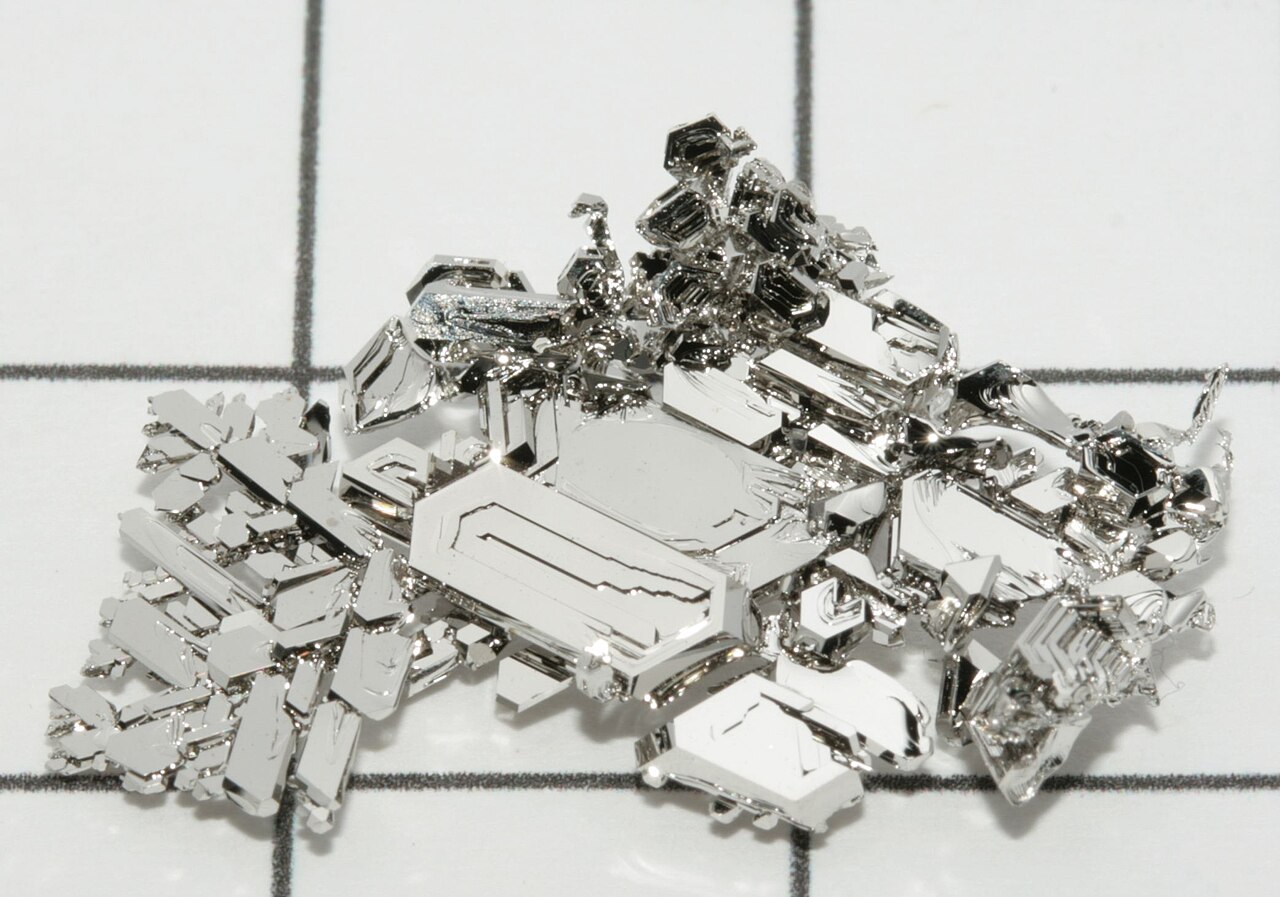
Imagine standing on the banks of the Pinto River in Colombia in 1735. The murky water flows slowly between smooth rocks, and among its sand — like a fallen moon's droplets on Earth — shines a small, white-silver grain, soft yet hard-hearted. Spanish miners called it platina , 'small silver', with a mocking tone: a metal that disrupted their efforts to find gold, a metal that refused to melt even when heated in a wooden stove for hours. They threw it into the river, thinking it was just an obstacle. No one knew: in every kilogram of that sand, there was a small grain of one of the rarest elements on Earth's crust — platinum.
The Unmeasurable Rarity
Platinum is not just 'expensive'. It is an almost imperceptible presence in geological scales. Its abundance in the Earth's crust is only about 5 micrograms per kilogram of rock — meaning that to get one gram of pure platinum, you need to extract and process around 20 metric tons of rock . For comparison: gold is found at a rate of 0.004 grams per ton — platinum is almost 30 times rarer . No mining investment can guarantee a certain outcome. No large platinum fields exist like gold mines in South Africa or copper in Chile. Most of the world's platinum comes as a byproduct of nickel mining in Russia and palladium in South Africa — like finding a pearl while searching for snails.
A Body that Does Not Know Time
Platinum is a metal that resists time with silence. It does not rust, does not react with oxygen even when heated to 900°C, and is resistant to all common acids — even nitric and hydrochloric acids separately cannot touch its surface. Only a mixture of aqua regia — 'king's water' — can dissolve it. This is what makes it a symbol of endurance not just physically, but metaphorically: a metal that does not change even as the world around it collapses. In the tomb of Pharaoh Tutankhamun, archaeologists found a platinum ring carved 3,300 years ago — still intact, still shining softly, as if just dropped from the hand of ancient Egyptian metalurgic gods.
From Surgical Tools to Electric Car Hearts
If gold is a symbol of luxury and silver is a trade accompaniment, then platinum is the silent savior . It is the main catalyst in car converters — turning toxic gases like carbon monoxide and nitrogen oxide into harmless carbon dioxide and nitrogen. Without platinum, modern vehicle emissions would exceed safety limits by 20 times. It also becomes the backbone of hydrogen technology: electrolyzers that break water into clean hydrogen, and fuel cells that turn hydrogen back into energy — both rely on platinum as the most efficient catalyst in the universe. In the operating room, platinum surgical instruments are used in high-precision neurology procedures due to their stable electrical conductivity and resistance to biological corrosion.
The Grains Waiting at the River Bottom
To this day, around 10% of the world's platinum supply still comes from alluvial mining — manual searching at the river bottom, exactly like the indigenous people of Colombia did in the 18th century. In Siberia, Yakut miners dig the Lena River sand with wooden sieves, relying on gravity and patience to separate the denser platinum grains from the sand. No large machinery, no explosions, no chemicals — just trained eyes and hands that can distinguish the 'unmistakable shine'. They are not looking for instant wealth. They are looking for certainty : a metal that does not lie, does not rust, does not change — a small truth that endures amidst the endless flow of change.
Why We Still Don't Know It?
Platinum does not tremble like gold on the stock market. It does not appear in fashion ads or on celebrity fingers. It works behind the scenes: in nuclear reactors, in aircraft safety sensors, in ultra-cold mRNA vaccines stored — all use old platinum to maintain chemical stability. It is a metal that chooses to be present without show, value without whisper. And maybe, that's why we only begin to understand its importance — not when it's worn on the finger, but when it helps keep our air clean, our water clean, and our future in the form of clean energy. Platinum is not a metal to be seen. It is a metal to be trusted — in silence, in endurance, in the truth of an element that never lies.