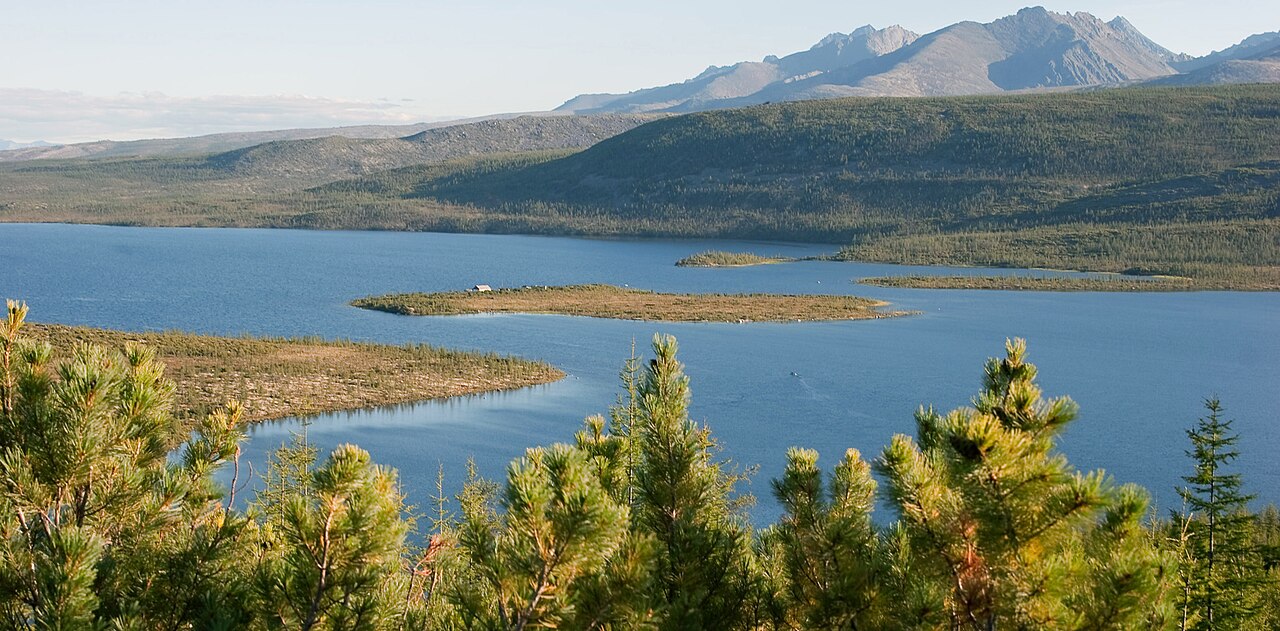
Introduction: A Green Ocean in the Northern Hemisphere
When we imagine forests, we might think of humid tropical rainforests or temperate deciduous forests. However, in the northern hemisphere, there stretches a biome much larger: the taiga, also known as the boreal forest or snow forest. Stretching like a dark green belt across Alaska, Canada, Scandinavia, and Siberia, the taiga is the largest land forest in the world, covering about 17 million square kilometers. Here, the cold season can last up to eight months, with temperatures reaching -50°C, while the summer is short, cool, and just long enough to melt the snow and allow growth.
Key Features of the Taiga: Resilient Coniferous Forests
The most notable feature of the taiga is the dominance of evergreen coniferous trees such as spruce (Picea spp.), pine (Pinus spp.), and fir (Abies spp.). These trees have needle-shaped leaves covered with a thick wax layer to reduce water loss and withstand the weight of snow. The conical shape of coniferous trees also helps snow slide off without breaking branches. In colder areas, such as eastern Siberia, larch (Larix spp.) becomes the dominant species because it sheds its needles in autumn to conserve energy—a unique adaptation among conifers. The soil in the taiga is usually podzol—acidic, nutrient-poor, and with a thin organic layer due to the very slow decomposition rate in cold temperatures.
Wildlife Adapting to Extreme Conditions
Although it may seem barren in winter, the taiga actually supports a diverse range of wildlife. Large mammals such as caribou (Rangifer tarandus) and elk (Alces alces) roam searching for lichen and twigs. Top predators such as gray wolves (Canis lupus), brown bears (Ursus arctos), and Canadian lynxes (Lynx canadensis) hunt prey such as snowshoe hares (Lepus americanus) and mice. Birds such as snowy owls (Bubo scandiacus) and black-backed woodpeckers (Picoides arcticus) also inhabit this biome. Major adaptations of these animals include thick fur, subcutaneous fat layers, hibernation, and seasonal migration. For example, brown bears dig dens and hibernate through the winter, while caribou migrate hundreds of kilometers to areas with less snow to find food.
Geographical Distribution: From Alaska to Hokkaido
The taiga does not exist as a uniform block. In North America, it covers much of the interior of Canada, Alaska, and the northern parts of the United States near the Canadian border. In Eurasia, the taiga spans Sweden, Finland, much of Norway, Iceland (lowland areas), and much of Russia—from Karelia in the west to the Pacific Ocean in the east, including much of Siberia. It is also found in the northern parts of Kazakhstan, northern Mongolia, and on the island of Hokkaido, Japan. The composition of tree species varies by region: the North American taiga is dominated by black spruce (Picea mariana) and white spruce (Picea glauca); the Scandinavian and Finnish taiga mixes spruce, pine, and birch; while the Russian taiga has spruce, pine, and larch.
Ecological and Climatic Role: The Lungs of the Northern Hemisphere
The taiga plays a critical role in regulating the global climate. Dense coniferous trees absorb large amounts of carbon dioxide, making the taiga one of the most important land carbon sinks. In addition, the dark surface of coniferous forests absorbs more solar radiation compared to white snow, helping to warm the local atmosphere. The taiga also serves as a habitat for species dependent on the cold, such as polar bears (Ursus maritimus) in the tundra-taiga transition zones. However, climate change threatens this biome: rising temperatures cause more wildfires, bark beetle infestations, and permafrost thawing that releases methane—a greenhouse gas stronger than CO₂.
Threats and the Future of the Taiga
Wildfires are a natural threat that is becoming more frequent due to drought and high temperatures. In Siberia, major fires in 2021 burned over 18 million hectares of taiga. In addition, logging and mining activities in boreal areas cause habitat loss and forest fragmentation. Global warming also forces species to migrate northward, but the rate at which trees move may not be as fast as temperature changes. For example, larch in Siberia may not be able to replace spruce in warmer areas quickly. Conservation measures such as establishing large protected areas, sustainable fire management, and reducing carbon emissions are essential to ensure the taiga continues to function as the lungs of the northern hemisphere.
Reflection: What Have We Learned from the Taiga?
The taiga teaches us about resilience in the most difficult conditions. Every tree, animal, and microorganism here has undergone extraordinary evolutionary adaptations to survive the extreme cold that reaches tens of degrees below zero. However, this ability is now being tested by climate change occurring at an unprecedented rate. Will we allow the largest forest in the world to slowly disappear? Or will we take action to protect it for future generations? The answer lies in our commitment to reduce our carbon footprint and preserve this amazing ecosystem.
Reference: Taiga — Wikipedia
Taiga: The Largest Snow Forest in the World That Holds Secrets of Extreme Life. Taiga, or boreal forest, is the largest terrestrial biome in the world spanning across northern North America and Eurasia. This biome is dominated by coniferous trees such as spruce, pine, and larch that can survive long and harsh winters. This article explores the unique structure of the taiga, the adaptations of its wildlife, its role in the global ecosystem, and the threats it faces from climate change.. Introduction: A Green Ocean in the Northern Hemisphere
When we imagine forests, we might think of humid tropical rainforests or temperate deciduous forests. However, in the northern hemisphere, there stretches a biome much larger: the taiga, also known as the boreal forest or snow forest. Stretching like a dark green belt across Alaska, Canada, Scandinavia, and Siberia, the taiga is the largest land forest in the world, covering about 17 million square kilometers. Here, the cold season can last up to eight months, with temperatures reaching -50°C, while the summer is short, cool, and just long enough to melt the snow and allow growth.
Key Features of the Taiga: Resilient Coniferous Forests
The most notable feature of the taiga is the dominance of evergreen coniferous trees such as spruce Picea spp. , pine Pinus spp. , and fir Abies spp. . These trees have needle-shaped leaves covered with a thick wax layer to reduce water loss and withstand the weight of snow. The conical shape of coniferous trees also helps snow slide off without breaking branches. In colder areas, such as eastern Siberia, larch Larix spp. becomes the dominant species because it sheds its needles in autumn to conserve energy—a unique adaptation among conifers. The soil in the taiga is usually podzol—acidic, nutrient-poor, and with a thin organic layer due to the very slow decomposition rate in cold temperatures.
Wildlife Adapting to Extreme Conditions
Although it may seem barren in winter, the taiga actually supports a diverse range of wildlife. Large mammals such as caribou Rangifer tarandus and elk Alces alces roam searching for lichen and twigs. Top predators such as gray wolves Canis lupus , brown bears Ursus arctos , and Canadian lynxes Lynx canadensis hunt prey such as snowshoe hares Lepus americanus and mice. Birds such as snowy owls Bubo scandiacus and black-backed woodpeckers Picoides arcticus also inhabit this biome. Major adaptations of these animals include thick fur, subcutaneous fat layers, hibernation, and seasonal migration. For example, brown bears dig dens and hibernate through the winter, while caribou migrate hundreds of kilometers to areas with less snow to find food.
Geographical Distribution: From Alaska to Hokkaido
The taiga does not exist as a uniform block. In North America, it covers much of the interior of Canada, Alaska, and the northern parts of the United States near the Canadian border. In Eurasia, the taiga spans Sweden, Finland, much of Norway, Iceland lowland areas , and much of Russia—from Karelia in the west to the Pacific Ocean in the east, including much of Siberia. It is also found in the northern parts of Kazakhstan, northern Mongolia, and on the island of Hokkaido, Japan. The composition of tree species varies by region: the North American taiga is dominated by black spruce Picea mariana and white spruce Picea glauca ; the Scandinavian and Finnish taiga mixes spruce, pine, and birch; while the Russian taiga has spruce, pine, and larch.
Ecological and Climatic Role: The Lungs of the Northern Hemisphere
The taiga plays a critical role in regulating the global climate. Dense coniferous trees absorb large amounts of carbon dioxide, making the taiga one of the most important land carbon sinks. In addition, the dark surface of coniferous forests absorbs more solar radiation compared to white snow, helping to warm the local atmosphere. The taiga also serves as a habitat for species dependent on the cold, such as polar bears Ursus maritimus in the tundra-taiga transition zones. However, climate change threatens this biome: rising temperatures cause more wildfires, bark beetle infestations, and permafrost thawing that releases methane—a greenhouse gas stronger than CO₂.
Threats and the Future of the Taiga
Wildfires are a natural threat that is becoming more frequent due to drought and high temperatures. In Siberia, major fires in 2021 burned over 18 million hectares of taiga. In addition, logging and mining activities in boreal areas cause habitat loss and forest fragmentation. Global warming also forces species to migrate northward, but the rate at which trees move may not be as fast as temperature changes. For example, larch in Siberia may not be able to replace spruce in warmer areas quickly. Conservation measures such as establishing large protected areas, sustainable fire management, and reducing carbon emissions are essential to ensure the taiga continues to function as the lungs of the northern hemisphere.
Reflection: What Have We Learned from the Taiga?
The taiga teaches us about resilience in the most difficult conditions. Every tree, animal, and microorganism here has undergone extraordinary evolutionary adaptations to survive the extreme cold that reaches tens of degrees below zero. However, this ability is now being tested by climate change occurring at an unprecedented rate. Will we allow the largest forest in the world to slowly disappear? Or will we take action to protect it for future generations? The answer lies in our commitment to reduce our carbon footprint and preserve this amazing ecosystem.
Reference: Taiga — Wikipedia https://en.wikipedia.org/wiki/Taiga