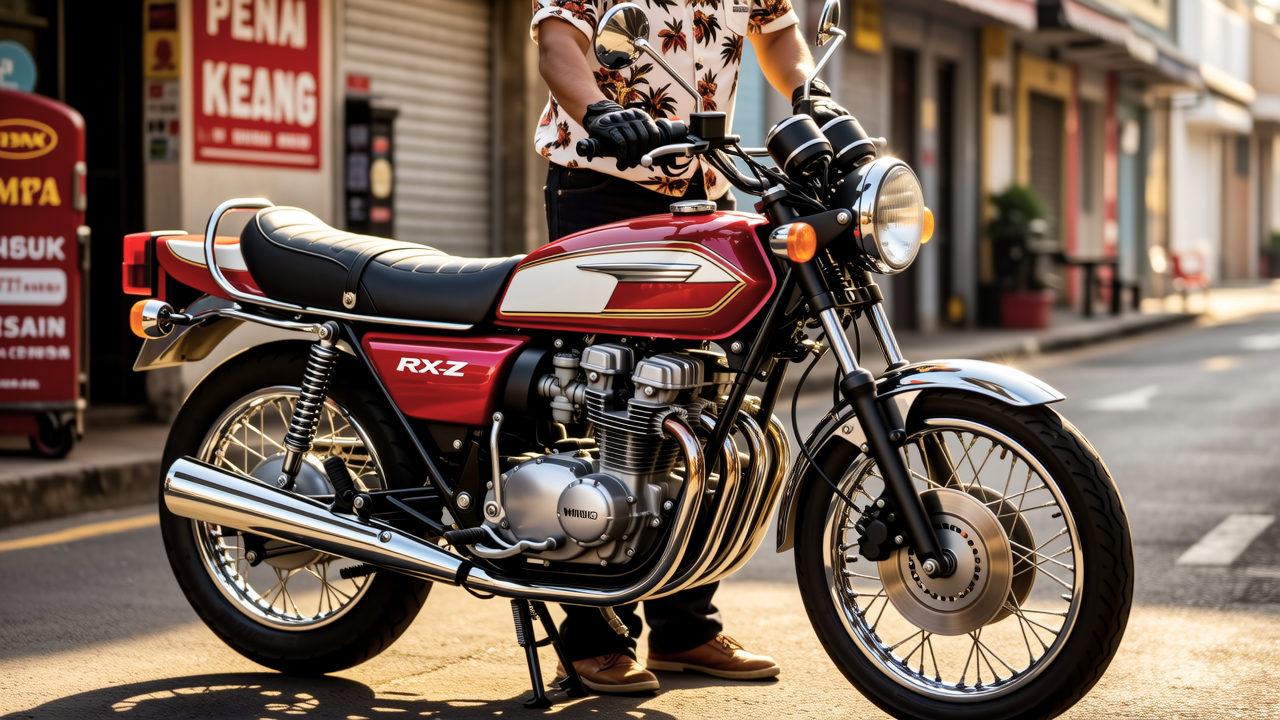
Imagine the loud roar of a twin-cylinder engine cutting through the night, an aggressive silhouette speeding down the road, and agile movements hard to match. For the generations of the 80s, 90s, and even now, this image often refers to one name: Yamaha RX-Z 135. This iconic 'naked bike' motorcycle was not only a means of transportation but also a symbol of lifestyle, rebellious spirit, and unmatched freedom that could not be matched by other models of its time. Let's delve into five important aspects that make the Yamaha RX-Z remain relevant and beloved.
1. The Birth of a Legend That Shook the Market
The Yamaha RX-Z 135 made its debut in April 1985, triggering a wave of surprise in the regional motorcycle industry. This model was specifically designed for the Southeast Asian market, with Malaysia, Singapore, and Thailand being the main sales and popularity areas. At that time, RX-Z offered a unique combination of high performance, attractive design, and competitive pricing, making it the preferred choice for young people who craved speed and style.
Its presence on the road quickly attracted attention. With its simple round front lights, aerodynamic fuel tank, and somewhat aggressive riding position, RX-Z exuded a strong sporty aura. It was not just a means of transport; it was a statement of style. From the beginning, Yamaha successfully positioned RX-Z as a new benchmark for performance motorcycles for daily use and recreation.
2. A Thrilling Twin-Cylinder Engine
One of the most defining features of the Yamaha RX-Z is its 135cc twin-cylinder engine. This engine is renowned for its exceptional responsiveness and high power at low to mid RPMs, providing an exhilarating riding experience. The unique exhaust sound and the distinct smell of twin-cylinder smoke have become an unforgettable 'signature' for anyone who has ridden or been near the RX-Z.
Although four-cylinder engines are increasingly dominating the market due to their fuel efficiency and cleaner emissions, the twin-cylinder engine of RX-Z still has a loyal following. They appreciate its mechanical simplicity, lightweight, and ability to produce impressive power from a small engine size. The sensation of the 'power band' when the engine reaches high RPMs is something difficult to find on modern motorcycles, making it a very enjoyable experience.
3. An Icon of the Street and a Famous Modification Culture
In Malaysia, especially, the Yamaha RX-Z is not just a motorcycle but has become a cultural phenomenon. It has given rise to a large and active community of enthusiasts, with a widespread culture of modification. RX-Z owners often customize their machines, whether to enhance performance, change aesthetics, or both.
From replacing racing exhausts, larger carburetors, to replacing rims, tires, and cosmetic accessories, each RX-Z seems to have its own identity. It becomes a canvas for the owner's self-expression. Although often associated with the 'mat rempit' group in some contexts, it cannot be denied that the influence of RX-Z on the local street culture and motorcycle landscape is significant, shaping the image of a popular performance motorcycle.
4. The End of an Era of Production
After more than two decades of dominating the roads, the production of the Yamaha RX-Z 135 was finally halted in July 2011. This decision, although bitter for many fans, aligned with the increasingly strict global standards for emissions and the need for fuel efficiency. Twin-cylinder engines, which tend to emit more smoke compared to four-cylinder engines, faced significant challenges in meeting new environmental standards such as EURO 3 and beyond.
The end of production marked the end of a glorious era for powerful twin-cylinder motorcycles. Although Yamaha continues to produce new models, none have been able to fill the void left by RX-Z in terms of charisma and cultural impact. It became an important turning point in the history of motorcycling, ending the dominance of twin-cylinder motorcycles in certain market segments.
5. An Eternal Legacy and Increasing Collectible Value
Although its production has long been stopped, the spirit of the Yamaha RX-Z lives on. In fact, it has now become a highly sought-after and valued classic machine. The market price for units of RX-Z in good condition, or those restored to original specifications, has significantly increased. It is no longer just an old motorcycle, but a collectible asset with sentimental and financial value.
The RX-Z enthusiast community remains intact and active, organizing gatherings and events to celebrate the heritage of this machine. For many, it is a piece of nostalgia, reminding them of the golden age of twin-cylinder motorcycles. RX-Z is not just a motorcycle; it is a legacy, a symbol of resilience, and proof that some classic things will not fade with time, but rather shine brighter as time goes by.
---
*Reference: [Yamaha RX-Z — Wikipedia](https://en.wikipedia.org/wiki/Yamaha_RX-Z)*
Yamaha RX-Z: Calling the Legend of Two Wheels That Still Thrives in Nusantara. More than just a motorcycle, the Yamaha RX-Z 135 has carved its name as an icon of two wheels in Malaysia, Singapore, and Thailand, leaving behind a legacy of roaring twin-cylinder engines that continue to echo in the hearts of its fans.. Imagine the loud roar of a twin-cylinder engine cutting through the night, an aggressive silhouette speeding down the road, and agile movements hard to match. For the generations of the 80s, 90s, and even now, this image often refers to one name: Yamaha RX-Z 135. This iconic 'naked bike' motorcycle was not only a means of transportation but also a symbol of lifestyle, rebellious spirit, and unmatched freedom that could not be matched by other models of its time. Let's delve into five important aspects that make the Yamaha RX-Z remain relevant and beloved.
1. The Birth of a Legend That Shook the Market
The Yamaha RX-Z 135 made its debut in April 1985, triggering a wave of surprise in the regional motorcycle industry. This model was specifically designed for the Southeast Asian market, with Malaysia, Singapore, and Thailand being the main sales and popularity areas. At that time, RX-Z offered a unique combination of high performance, attractive design, and competitive pricing, making it the preferred choice for young people who craved speed and style.
Its presence on the road quickly attracted attention. With its simple round front lights, aerodynamic fuel tank, and somewhat aggressive riding position, RX-Z exuded a strong sporty aura. It was not just a means of transport; it was a statement of style. From the beginning, Yamaha successfully positioned RX-Z as a new benchmark for performance motorcycles for daily use and recreation.
2. A Thrilling Twin-Cylinder Engine
One of the most defining features of the Yamaha RX-Z is its 135cc twin-cylinder engine. This engine is renowned for its exceptional responsiveness and high power at low to mid RPMs, providing an exhilarating riding experience. The unique exhaust sound and the distinct smell of twin-cylinder smoke have become an unforgettable 'signature' for anyone who has ridden or been near the RX-Z.
Although four-cylinder engines are increasingly dominating the market due to their fuel efficiency and cleaner emissions, the twin-cylinder engine of RX-Z still has a loyal following. They appreciate its mechanical simplicity, lightweight, and ability to produce impressive power from a small engine size. The sensation of the 'power band' when the engine reaches high RPMs is something difficult to find on modern motorcycles, making it a very enjoyable experience.
3. An Icon of the Street and a Famous Modification Culture
In Malaysia, especially, the Yamaha RX-Z is not just a motorcycle but has become a cultural phenomenon. It has given rise to a large and active community of enthusiasts, with a widespread culture of modification. RX-Z owners often customize their machines, whether to enhance performance, change aesthetics, or both.
From replacing racing exhausts, larger carburetors, to replacing rims, tires, and cosmetic accessories, each RX-Z seems to have its own identity. It becomes a canvas for the owner's self-expression. Although often associated with the 'mat rempit' group in some contexts, it cannot be denied that the influence of RX-Z on the local street culture and motorcycle landscape is significant, shaping the image of a popular performance motorcycle.
4. The End of an Era of Production
After more than two decades of dominating the roads, the production of the Yamaha RX-Z 135 was finally halted in July 2011. This decision, although bitter for many fans, aligned with the increasingly strict global standards for emissions and the need for fuel efficiency. Twin-cylinder engines, which tend to emit more smoke compared to four-cylinder engines, faced significant challenges in meeting new environmental standards such as EURO 3 and beyond.
The end of production marked the end of a glorious era for powerful twin-cylinder motorcycles. Although Yamaha continues to produce new models, none have been able to fill the void left by RX-Z in terms of charisma and cultural impact. It became an important turning point in the history of motorcycling, ending the dominance of twin-cylinder motorcycles in certain market segments.
5. An Eternal Legacy and Increasing Collectible Value
Although its production has long been stopped, the spirit of the Yamaha RX-Z lives on. In fact, it has now become a highly sought-after and valued classic machine. The market price for units of RX-Z in good condition, or those restored to original specifications, has significantly increased. It is no longer just an old motorcycle, but a collectible asset with sentimental and financial value.
The RX-Z enthusiast community remains intact and active, organizing gatherings and events to celebrate the heritage of this machine. For many, it is a piece of nostalgia, reminding them of the golden age of twin-cylinder motorcycles. RX-Z is not just a motorcycle; it is a legacy, a symbol of resilience, and proof that some classic things will not fade with time, but rather shine brighter as time goes by.
---
Reference: Yamaha RX-Z — Wikipedia https://en.wikipedia.org/wiki/Yamaha RX-Z