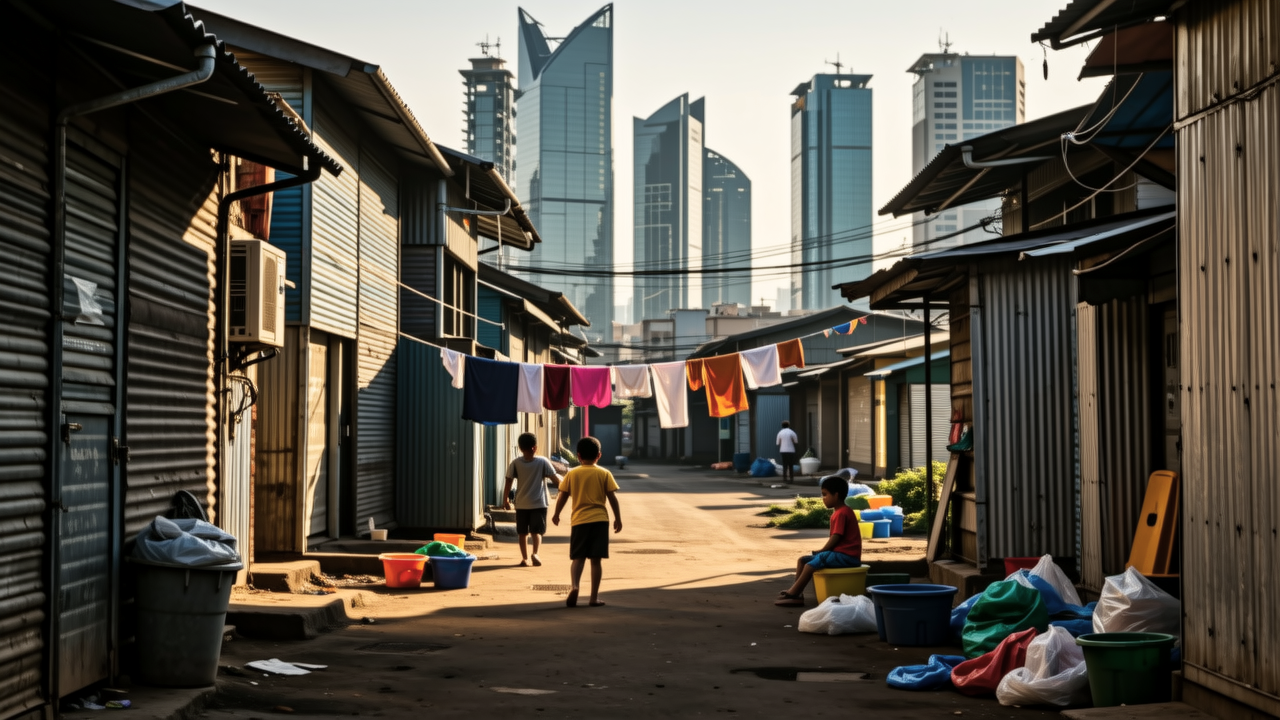
Mumbai, 24 Jun — In the shadow of glass towers reaching the sky in the Bandra Kurla Complex, Mumbai — where investment bank officials, international law firms, and technology companies occupy floor after floor of buildings — there are rows of huts made from zinc and used plastic, where large families live crammed together in spaces no larger than a small bedroom.
The paradox of modern India is nowhere more evident and touching than the view that can be seen in any of these major Indian cities: extraordinary luxury and extreme poverty stand side by side, sometimes separated only by a wall or iron fence. India now has the third largest number of billionaires (in dollars) in the world, yet also has more than 200 million people still living below the extreme poverty line.
Dharavi in Mumbai, known as one of the largest slums in Asia with more than 700,000 residents living in unimaginable density, is now at the center of a heated redevelopment controversy. The Dharavi redevelopment project worth billions of rupees planned by the city authorities promises to replace the old huts with contemporary apartments and better infrastructure, but original Dharavi residents fear they will lose the community they have built over several generations, as well as the unique informal economic life that generates livelihoods for hundreds of thousands of people.
India's rapid economic growth has indeed lifted hundreds of millions out of poverty — an extraordinary achievement on a historical scale. However, this progress has also been accompanied by an increase in economic inequality, where the benefits of growth flow more to the top of the income pyramid than to the bottom.
Debate about how India can maintain high economic growth while ensuring its benefits are distributed more fairly — what economists call 'inclusive growth' — continues to be the most important and urgent policy discussion in Indian politics.
Urban Poverty in India: Mumbai, Kolkata and Chennai Struggling to Cope with Excessive Wealth Gaps. Although India's economy continues to grow, major cities struggle to handle the excessive urban poverty gap, with slum areas adjacent to luxurious buildings reflecting the paradox of development.. Mumbai, 24 Jun — In the shadow of glass towers reaching the sky in the Bandra Kurla Complex, Mumbai — where investment bank officials, international law firms, and technology companies occupy floor after floor of buildings — there are rows of huts made from zinc and used plastic, where large families live crammed together in spaces no larger than a small bedroom.
The paradox of modern India is nowhere more evident and touching than the view that can be seen in any of these major Indian cities: extraordinary luxury and extreme poverty stand side by side, sometimes separated only by a wall or iron fence. India now has the third largest number of billionaires in dollars in the world, yet also has more than 200 million people still living below the extreme poverty line.
Dharavi in Mumbai, known as one of the largest slums in Asia with more than 700,000 residents living in unimaginable density, is now at the center of a heated redevelopment controversy. The Dharavi redevelopment project worth billions of rupees planned by the city authorities promises to replace the old huts with contemporary apartments and better infrastructure, but original Dharavi residents fear they will lose the community they have built over several generations, as well as the unique informal economic life that generates livelihoods for hundreds of thousands of people.
India's rapid economic growth has indeed lifted hundreds of millions out of poverty — an extraordinary achievement on a historical scale. However, this progress has also been accompanied by an increase in economic inequality, where the benefits of growth flow more to the top of the income pyramid than to the bottom.
Debate about how India can maintain high economic growth while ensuring its benefits are distributed more fairly — what economists call 'inclusive growth' — continues to be the most important and urgent policy discussion in Indian politics.