World War I Crisis and the Cracks in the Dual Monarchy
World War I eroded the endurance of the Austro-Hungarian Empire across economic, military, and political dimensions. As a region comprising half of the Dual Monarchy, Hungary faced a deepening food supply crisis, soaring inflation rates, and profound disappointment with the Vienna administration. The imperial government was deemed insensitive to the will of the Magyar people. The Hungarian military units sent to the western front suffered heavy casualties, while the domestic population was forced to endure hardship. This instability created ample space for reform movements and nationalist groups to push for a complete separation from imperial ties.
Leadership of Mihály Károlyi and the Wave of Reform
Count Mihály Károlyi, a liberal noble with progressive views and a member of Parliament, emerged as the main opposition figure advocating for full Hungarian independence. He founded the Freedom Party and forged close cooperation with socialist groups, labor unions, and disillusioned war veterans. Károlyi championed a comprehensive reform agenda, encompassing free trade, land reforms, and the establishment of a sovereign constitutional government. His influence grew rapidly as unified support flowed from both the common people and the intelligentsia.
The Moment of 31 October 1918: The Rise of the Aster
The wave of uprising reached its peak on the morning of
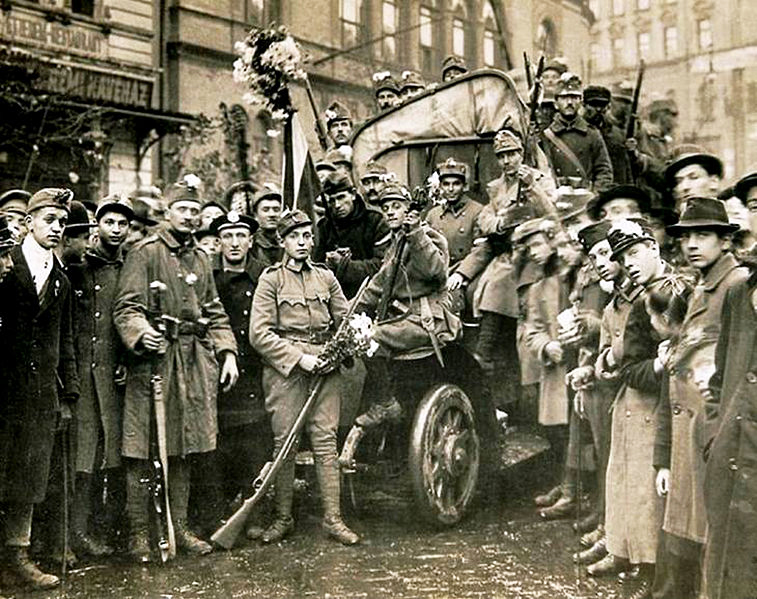
31 October 1918. Mass demonstrations erupted in Budapest as thousands of workers, students, and war veterans gathered in front of the Parliament building. They pinned aster flowers onto their clothes and hats as symbols of hope and renewal. Police and military forces loyal to the monarchy attempted to block the progress of the movement, but their morale had collapsed following successive defeats on the battlefield.
Károlyi, who had just been appointed Prime Minister by King Karl IV in a state of emergency, took action to annul the 1867 Compromise and declared the full sovereignty of Hungary. This event became known as the Aster Revolution—or the Chrysanthemum Revolution—a transfer of power that occurred almost without bloodshed.
Formation of the First Hungarian People's Republic
After the revolution, Károlyi served as Interim President before being officially appointed President of the First Hungarian People's Republic on
16 November 1918. The new administration issued a manifesto promising universal suffrage, an eight-hour workday, and the redistribution of land to poor peasants. However, the new regime was immediately tested by various severe pressures: economic sanctions by the Allied Powers, threats of territorial invasion by Romania and Czechoslovakia, and internal conflicts among liberals, socialists, and communists.
Brief Collapse and Foreign Intervention
The lifespan of the First Hungarian People's Republic proved short. In March 1919, Béla Kun led the communist faction to seize power and establish the Hungarian Soviet Republic, thereby ending Károlyi's administration. Nevertheless, the Soviet regime also fell in August 1919 due to Romanian military attacks and continuous pressure from the Allied Powers. Hungary subsequently entered the authoritarian Horthy era, while Károlyi's liberal democratic aspirations were halted until after World War II.
The Legacy of the Aster Revolution in Hungary's Historical Evolution
Although its history was brief, the Aster Revolution left a deep impact on Hungary's historical development. The event demonstrated the ability of the Hungarian people to demand and achieve full sovereignty independently. The symbol of the aster flower remains an icon of the struggle for democracy and freedom in the country, commemorated annually on 31 October. This history of uprising also underscores the importance of unity among liberals, workers, and peasants in opposing authoritarian regimes.
Sourced from: Wikipedia — https://en.wikipedia.org/wiki/Aster_Revolution | License: CC BY-SA 4.0_
1918: The Aster Revolution Ends the Austro-Hungarian Compromise and Gives Birth to the First Hungarian People's Republic. On 31 October 1918, the Aster Revolution led by Count Mihály Károlyi successfully toppled the Austro-Hungarian power structure in Hungary. This historic event ended the 1867 Compromise that bound Hungary to Vienna, thereby curbing imperial dominance and paving the way for the establishment of the First Hungarian People's Republic.. World War I Crisis and the Cracks in the Dual Monarchy
World War I eroded the endurance of the Austro-Hungarian Empire across economic, military, and political dimensions. As a region comprising half of the Dual Monarchy, Hungary faced a deepening food supply crisis, soaring inflation rates, and profound disappointment with the Vienna administration. The imperial government was deemed insensitive to the will of the Magyar people. The Hungarian military units sent to the western front suffered heavy casualties, while the domestic population was forced to endure hardship. This instability created ample space for reform movements and nationalist groups to push for a complete separation from imperial ties.
Leadership of Mihály Károlyi and the Wave of Reform
Count Mihály Károlyi, a liberal noble with progressive views and a member of Parliament, emerged as the main opposition figure advocating for full Hungarian independence. He founded the Freedom Party and forged close cooperation with socialist groups, labor unions, and disillusioned war veterans. Károlyi championed a comprehensive reform agenda, encompassing free trade, land reforms, and the establishment of a sovereign constitutional government. His influence grew rapidly as unified support flowed from both the common people and the intelligentsia.
The Moment of 31 October 1918: The Rise of the Aster
The wave of uprising reached its peak on the morning of 31 October 1918 . Mass demonstrations erupted in Budapest as thousands of workers, students, and war veterans gathered in front of the Parliament building. They pinned aster flowers onto their clothes and hats as symbols of hope and renewal. Police and military forces loyal to the monarchy attempted to block the progress of the movement, but their morale had collapsed following successive defeats on the battlefield.
Károlyi, who had just been appointed Prime Minister by King Karl IV in a state of emergency, took action to annul the 1867 Compromise and declared the full sovereignty of Hungary. This event became known as the Aster Revolution—or the Chrysanthemum Revolution—a transfer of power that occurred almost without bloodshed.
Formation of the First Hungarian People's Republic
After the revolution, Károlyi served as Interim President before being officially appointed President of the First Hungarian People's Republic on 16 November 1918 . The new administration issued a manifesto promising universal suffrage, an eight-hour workday, and the redistribution of land to poor peasants. However, the new regime was immediately tested by various severe pressures: economic sanctions by the Allied Powers, threats of territorial invasion by Romania and Czechoslovakia, and internal conflicts among liberals, socialists, and communists.
Brief Collapse and Foreign Intervention
The lifespan of the First Hungarian People's Republic proved short. In March 1919, Béla Kun led the communist faction to seize power and establish the Hungarian Soviet Republic, thereby ending Károlyi's administration. Nevertheless, the Soviet regime also fell in August 1919 due to Romanian military attacks and continuous pressure from the Allied Powers. Hungary subsequently entered the authoritarian Horthy era, while Károlyi's liberal democratic aspirations were halted until after World War II.
The Legacy of the Aster Revolution in Hungary's Historical Evolution
Although its history was brief, the Aster Revolution left a deep impact on Hungary's historical development. The event demonstrated the ability of the Hungarian people to demand and achieve full sovereignty independently. The symbol of the aster flower remains an icon of the struggle for democracy and freedom in the country, commemorated annually on 31 October. This history of uprising also underscores the importance of unity among liberals, workers, and peasants in opposing authoritarian regimes.
Sourced from: Wikipedia — https://en.wikipedia.org/wiki/Aster Revolution License: CC BY-SA 4.0