Stones That Dance at the Edge of a Cliff
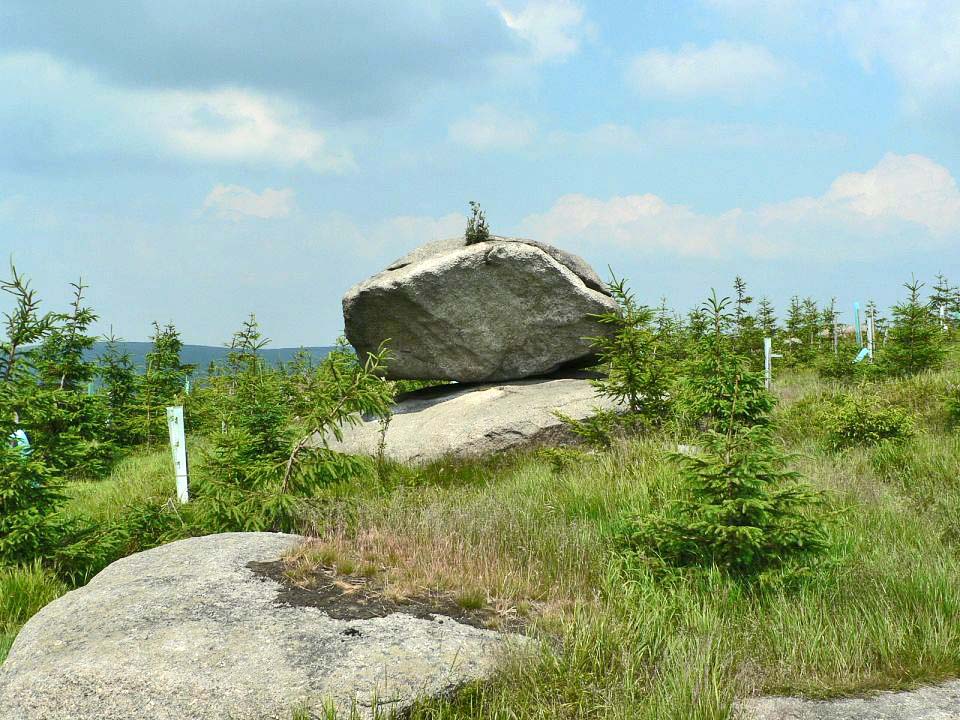
Imagine standing on a quiet hilltop, facing a boulder the size of a small car. You place your hand on its rough surface and gently push. With an almost imperceptible nudge, the giant rock begins to sway — slowly rocking back and forth, as if it were alive. This dance has been going on for thousands of years, silently waiting for a human touch.
This phenomenon is not an illusion or hypnosis. It is a 'rocking stone,' also known as a 'logan stone' or 'logan.' The name 'logan' is believed to come from the old English word 'logge,' meaning 'to rock.' Across the world, from the peaks of Cornwall in England to the tropical forests of India, these stones bear witness to a natural mystery: how can a large boulder sit on such a small base with such perfect balance?
The Secret Behind the Balance: A Process That Took Millions of Years
To understand this wonder, we need to go back to a very distant past. Most rocking stones are formed through a process called 'spheroidal weathering.' It starts when slightly acidic rainwater seeps into cracks in granite or sandstone. Over time, this water dissolves certain minerals, causing the sharp corners of the rock to erode and become more rounded, like giant marbles.
This process occurs beneath the earth's surface for millions of years. Then, erosion — whether by wind, water, or moving glaciers — wears away the surrounding layers of soil and rock. What remains is the rounded stone, sitting on a tiny point where it touches the base rock. This contact point is usually no larger than a hand, creating an extremely delicate balance.
Some rocking stones are also 'glacial erratics' — boulders carried by glaciers from one place and left on different types of rock. When the ice melted, the stone was stranded in a slightly unbalanced position.
Two Faces of the Rocking Stone: Natural vs. Human-Made
Most rocking stones are a gift of nature, but some were created by the hands of ancient humans. In some areas of Britain and France, there are megaliths — large stones placed by Neolithic people — that were deliberately balanced to rock on an axis. Archaeologists believe these stones were used in religious ceremonies, perhaps as divination tools or as voices of the gods.
A famous example is the 'Logan Rock' in Cornwall, England. This stone weighs about 70 tons and sits naturally on a granite cliff. In 1824, a group of overly enthusiastic sailors tried to move it and managed to knock it into the sea. Locals were angry, and eventually, the stone was lifted back with machinery — but it never returned to its original position. Now, it still rocks, but with a looser balance.
So, how do we distinguish between a natural and a human-made stone? The answer lies in the surrounding geology. Natural stones usually sit on rocks of the same type, with signs of erosion that match. Human-made stones, on the other hand, are often placed on different types of rock and may have carvings or holes for support.
Where Can We Find Rocking Stones?
This phenomenon is spread across the world, but some locations are particularly notable:
- Cornwall, England: The aforementioned Logan Rock, as well as several other rocking stones along the rugged coastline.
- India: In Mahabalipuram, there is the 'Krishna's Butter Ball' — a giant boulder sitting on a hillside with an impossible angle. It looks like it could roll at any moment, but it has never moved.
- United States: In the 'Rocking Stones' state park in New York, there are several rocking stones that can be moved with a single finger, despite their weight reaching several tons.
- Australia: In the Bungle Bungle National Park, there are sandstone formations that create natural 'rocking stones.'
- Northern Europe: In Sweden and Norway, many glacial erratics are found that rock slightly.
Each location offers a unique view, but all share one characteristic: a balance that defies logic.
The Physics Behind the Rocking: Small Force, Big Impact
From a physics perspective, the rocking stone is a perfect example of the concept of 'center of gravity.' The stone is shaped by nature so that its center of gravity is directly above the point of contact. If you push the stone, it will swing around that point, like a pendulum. The force required to start the rocking is very small — sometimes just 0.1% of the stone's weight.
For example, a 10-ton stone requires a force of 10 kilograms to begin rocking. This is because the long lever between the point of contact and the mass of the stone provides a significant mechanical advantage. However, if you push too hard, the stone can tip over and fall — as happened to the Logan Rock in 1824.
A Heritage That Needs Protection: Threats from Humans and Time
Unfortunately, rocking stones are fragile treasures. Like the Logan Rock that nearly disappeared, many have been damaged by vandalism or development. In some places, governments have taken steps to protect these stones with fences or surveillance. However, the biggest threat is natural erosion by wind and rain, which gradually changes the shape of the contact point. Eventually, the stone may lose its balance and stop rocking.
For scientists, the rocking stones are a natural laboratory for studying geological and physical processes. For us, they remind us that the wonders of nature are often hidden in the most unexpected places — waiting only for a single touch of a finger to dance.
---
Reference: Rocking stone — Wikipedia
Batu Goyang: The Mystery of the Balanced Giant Rock — Just a Single Touch Can Move It!. Throughout the world, there are giant boulders that sit on top of other rocks with such a delicate balance that a small touch is enough to make them wobble. This geological phenomenon, known as 'rocking stone' or 'logan stone,' is not only amazing from a physical perspective but also holds ancient stories about erosion, glaciers, and possibly human hands. This article will uncover the wonders of these dancing stones that defy gravity.. Stones That Dance at the Edge of a Cliff
Imagine standing on a quiet hilltop, facing a boulder the size of a small car. You place your hand on its rough surface and gently push. With an almost imperceptible nudge, the giant rock begins to sway — slowly rocking back and forth, as if it were alive. This dance has been going on for thousands of years, silently waiting for a human touch.
This phenomenon is not an illusion or hypnosis. It is a 'rocking stone,' also known as a 'logan stone' or 'logan.' The name 'logan' is believed to come from the old English word 'logge,' meaning 'to rock.' Across the world, from the peaks of Cornwall in England to the tropical forests of India, these stones bear witness to a natural mystery: how can a large boulder sit on such a small base with such perfect balance?
The Secret Behind the Balance: A Process That Took Millions of Years
To understand this wonder, we need to go back to a very distant past. Most rocking stones are formed through a process called 'spheroidal weathering.' It starts when slightly acidic rainwater seeps into cracks in granite or sandstone. Over time, this water dissolves certain minerals, causing the sharp corners of the rock to erode and become more rounded, like giant marbles.
This process occurs beneath the earth's surface for millions of years. Then, erosion — whether by wind, water, or moving glaciers — wears away the surrounding layers of soil and rock. What remains is the rounded stone, sitting on a tiny point where it touches the base rock. This contact point is usually no larger than a hand, creating an extremely delicate balance.
Some rocking stones are also 'glacial erratics' — boulders carried by glaciers from one place and left on different types of rock. When the ice melted, the stone was stranded in a slightly unbalanced position.
Two Faces of the Rocking Stone: Natural vs. Human-Made
Most rocking stones are a gift of nature, but some were created by the hands of ancient humans. In some areas of Britain and France, there are megaliths — large stones placed by Neolithic people — that were deliberately balanced to rock on an axis. Archaeologists believe these stones were used in religious ceremonies, perhaps as divination tools or as voices of the gods.
A famous example is the 'Logan Rock' in Cornwall, England. This stone weighs about 70 tons and sits naturally on a granite cliff. In 1824, a group of overly enthusiastic sailors tried to move it and managed to knock it into the sea. Locals were angry, and eventually, the stone was lifted back with machinery — but it never returned to its original position. Now, it still rocks, but with a looser balance.
So, how do we distinguish between a natural and a human-made stone? The answer lies in the surrounding geology. Natural stones usually sit on rocks of the same type, with signs of erosion that match. Human-made stones, on the other hand, are often placed on different types of rock and may have carvings or holes for support.
Where Can We Find Rocking Stones?
This phenomenon is spread across the world, but some locations are particularly notable:
- Cornwall, England : The aforementioned Logan Rock, as well as several other rocking stones along the rugged coastline.
- India : In Mahabalipuram, there is the 'Krishna's Butter Ball' — a giant boulder sitting on a hillside with an impossible angle. It looks like it could roll at any moment, but it has never moved.
- United States : In the 'Rocking Stones' state park in New York, there are several rocking stones that can be moved with a single finger, despite their weight reaching several tons.
- Australia : In the Bungle Bungle National Park, there are sandstone formations that create natural 'rocking stones.'
- Northern Europe : In Sweden and Norway, many glacial erratics are found that rock slightly.
Each location offers a unique view, but all share one characteristic: a balance that defies logic.
The Physics Behind the Rocking: Small Force, Big Impact
From a physics perspective, the rocking stone is a perfect example of the concept of 'center of gravity.' The stone is shaped by nature so that its center of gravity is directly above the point of contact. If you push the stone, it will swing around that point, like a pendulum. The force required to start the rocking is very small — sometimes just 0.1% of the stone's weight.
For example, a 10-ton stone requires a force of 10 kilograms to begin rocking. This is because the long lever between the point of contact and the mass of the stone provides a significant mechanical advantage. However, if you push too hard, the stone can tip over and fall — as happened to the Logan Rock in 1824.
A Heritage That Needs Protection: Threats from Humans and Time
Unfortunately, rocking stones are fragile treasures. Like the Logan Rock that nearly disappeared, many have been damaged by vandalism or development. In some places, governments have taken steps to protect these stones with fences or surveillance. However, the biggest threat is natural erosion by wind and rain, which gradually changes the shape of the contact point. Eventually, the stone may lose its balance and stop rocking.
For scientists, the rocking stones are a natural laboratory for studying geological and physical processes. For us, they remind us that the wonders of nature are often hidden in the most unexpected places — waiting only for a single touch of a finger to dance.
---
Reference: Rocking stone — Wikipedia https://en.wikipedia.org/wiki/Rocking stone