A Birth That Was Never Truly Safe
On the morning of March 17, 2008, in a referral hospital in Boston, a baby boy was born weighing 3.1 kg — normal in all neonatal parameters. But by the third week, he began to show lymph node swelling in his neck, an enlarged spleen palpable below the ribs, and a threefold increase in B cell count in his blood compared to the norm. Pediatricians concluded it was an 'unspecified viral infection.' However, follow-up tests revealed something deeper: no virus was found. No bacteria. No autoantibodies. Only B cells — thousands, millions, all active, all 'alive,' but not functioning as they should. The baby was one of the first patients who would later be recorded in history as a case of BENTA disease — a syndrome that was unnamed, not yet understood, and had never been reported in global medical literature.
When Immunology Met Its Limit
The years 2010–2011 were critical for the immunogenetics team at the National Institute of Allergy and Infectious Diseases (NIAID), a branch of the National Institutes of Health (NIH) in Bethesda, Maryland. Under the leadership of Dr. Andrew L. Snow and Dr. Michael J. Lenardo, the team was tracing the genetic culprits behind several pediatric cases of strange lymphoproliferation: no family history of leukemia, no MYD88 or BRAF mutations, but all showing a common characteristic — uncontrolled NF-κB expression in B cells, accompanied by a loss of T cell response to antigens. They termed it 'T cell anergy' — a state where the body's primary defense system seemed to be 'asleep' despite the presence of a real threat. In January 2012, after analyzing 12 similar cases through exome sequencing, they identified a
germline heterozygous mutation in the
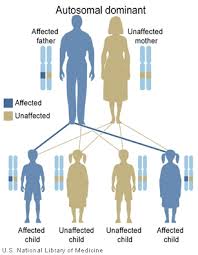
CARD11 gene — not a loss-of-function mutation, but a
gain-of-function: a single DNA letter change at position c.2996G>A that altered arginine to glutamine in the CARD11 protein's coiled-coil domain. The result? A 'master switch' locked in the 'ON' position — and never able to be turned off again.
A Name Born From a Scientific Acronym
On August 15, 2012, an article titled
"BENTA Disease: A Novel Primary Immunodeficiency Caused by Gain-of-Function Mutations in CARD11" was published in the
Journal of Experimental Medicine. For the first time in medical history, the term 'BENTA' was officially introduced — not as the name of a person or place, but a technical acronym laden with meaning:
B cell expansion with NF-κB and T cell anergy. Each letter is a clue to the pathophysiology: 'B' for polyclonal B cell proliferation from infancy; 'E' for constitutive NF-κB expression; 'N' for swollen lymph nodes and spleen; 'T' for T cell dysfunction; and 'A' for anergy — not weakness, but functional paralysis. This name is not just a label. It is the first molecular map detailing how a single mutation can create two opposing states within one body: B cell hyperactivity
and T cell failure — two arms of the immune system that should cooperate, now canceling each other out.
A Clinical Legacy Still Unfolding
To this day — more than a decade after the initial discovery — BENTA disease is still listed in OMIM (Online Mendelian Inheritance in Man) as entry #607210, with fewer than 50 cases reported globally. There is no dedicated reference center. There is no standard treatment protocol. Treatment is symptomatic: lymphoma monitoring every six months, splenectomy in extreme cases, and rituximab use only when lymphocytosis reaches critical levels. The most surprising aspect? BENTA patients do not die from recurrent infections — like most primary immunodeficiencies — but from the risk of malignant transformation: between 15–20% of patients develop non-Hodgkin lymphoma before the age of 25. This is not a 'weak' disease. It is a 'misguided' disease — where the body's defense system, from birth, is encoded to attack
itself in a subtle, slow, and deadly manner.
Where Will the Future of BENTA Be Written?
Currently, Dr. Andrew L. Snow's lab at the Uniformed Services University of the Health Sciences (USUHS) in Bethesda continues to study CARD11-GOF transgenic mouse models and test specific NF-κB inhibitors like lenalidomide in the context of B cells. In Kuala Lumpur, a new case was reported in April 2024 by pediatric immunologists at the University of Malaya Medical Centre — a 5-month-old girl with generalized lymphadenopathy and CD19+ lymphocytosis of 8.7 × 10⁹/L. Genetic testing confirmed the CARD11 p.R999Q mutation. It is not the last case. It is a new chapter. BENTA disease is not just a footnote in immunology textbooks. It is a reminder that genetic evolution does not always proceed in a straight line — sometimes, it twists, stumbles, and leaves behind traces that can only be read by those patient enough to await answers from the tiny molecules whispering within our DNA.
---
Reference: BENTA disease — Wikipedia
This Baby Was Born With an 'Overly Strong Defense System' — And It Slowly Killed Him. In a lab in Bethesda, Maryland, in 2012, two scientists discovered a clinical anomaly that challenged the foundations of immunology: the human body can be 'too good' at fighting disease — to the point of becoming a threat to itself. Not an immune deficiency, not typical hyperactivity — but a genetic mutation that causes B cells to proliferate relentlessly from the first day of birth. Its name is BENTA disease. It's not a myth. It's real. And only dozens of cases worldwide have ever been recorded.. A Birth That Was Never Truly Safe
On the morning of March 17, 2008, in a referral hospital in Boston, a baby boy was born weighing 3.1 kg — normal in all neonatal parameters. But by the third week, he began to show lymph node swelling in his neck, an enlarged spleen palpable below the ribs, and a threefold increase in B cell count in his blood compared to the norm. Pediatricians concluded it was an 'unspecified viral infection.' However, follow-up tests revealed something deeper: no virus was found. No bacteria. No autoantibodies. Only B cells — thousands, millions, all active, all 'alive,' but not functioning as they should. The baby was one of the first patients who would later be recorded in history as a case of BENTA disease — a syndrome that was unnamed, not yet understood, and had never been reported in global medical literature.
When Immunology Met Its Limit
The years 2010–2011 were critical for the immunogenetics team at the National Institute of Allergy and Infectious Diseases NIAID , a branch of the National Institutes of Health NIH in Bethesda, Maryland. Under the leadership of Dr. Andrew L. Snow and Dr. Michael J. Lenardo, the team was tracing the genetic culprits behind several pediatric cases of strange lymphoproliferation: no family history of leukemia, no MYD88 or BRAF mutations, but all showing a common characteristic — uncontrolled NF-κB expression in B cells, accompanied by a loss of T cell response to antigens. They termed it 'T cell anergy' — a state where the body's primary defense system seemed to be 'asleep' despite the presence of a real threat. In January 2012, after analyzing 12 similar cases through exome sequencing, they identified a germline heterozygous mutation in the CARD11 gene — not a loss-of-function mutation, but a gain-of-function : a single DNA letter change at position c.2996G A that altered arginine to glutamine in the CARD11 protein's coiled-coil domain. The result? A 'master switch' locked in the 'ON' position — and never able to be turned off again.
A Name Born From a Scientific Acronym
On August 15, 2012, an article titled "BENTA Disease: A Novel Primary Immunodeficiency Caused by Gain-of-Function Mutations in CARD11" was published in the Journal of Experimental Medicine . For the first time in medical history, the term 'BENTA' was officially introduced — not as the name of a person or place, but a technical acronym laden with meaning: B cell expansion with NF-κB and T cell anergy . Each letter is a clue to the pathophysiology: 'B' for polyclonal B cell proliferation from infancy; 'E' for constitutive NF-κB expression; 'N' for swollen lymph nodes and spleen; 'T' for T cell dysfunction; and 'A' for anergy — not weakness, but functional paralysis. This name is not just a label. It is the first molecular map detailing how a single mutation can create two opposing states within one body: B cell hyperactivity and T cell failure — two arms of the immune system that should cooperate, now canceling each other out.
A Clinical Legacy Still Unfolding
To this day — more than a decade after the initial discovery — BENTA disease is still listed in OMIM Online Mendelian Inheritance in Man as entry 607210, with fewer than 50 cases reported globally. There is no dedicated reference center. There is no standard treatment protocol. Treatment is symptomatic: lymphoma monitoring every six months, splenectomy in extreme cases, and rituximab use only when lymphocytosis reaches critical levels. The most surprising aspect? BENTA patients do not die from recurrent infections — like most primary immunodeficiencies — but from the risk of malignant transformation: between 15–20% of patients develop non-Hodgkin lymphoma before the age of 25. This is not a 'weak' disease. It is a 'misguided' disease — where the body's defense system, from birth, is encoded to attack itself in a subtle, slow, and deadly manner.
Where Will the Future of BENTA Be Written?
Currently, Dr. Andrew L. Snow's lab at the Uniformed Services University of the Health Sciences USUHS in Bethesda continues to study CARD11-GOF transgenic mouse models and test specific NF-κB inhibitors like lenalidomide in the context of B cells. In Kuala Lumpur, a new case was reported in April 2024 by pediatric immunologists at the University of Malaya Medical Centre — a 5-month-old girl with generalized lymphadenopathy and CD19+ lymphocytosis of 8.7 × 10⁹/L. Genetic testing confirmed the CARD11 p.R999Q mutation. It is not the last case. It is a new chapter. BENTA disease is not just a footnote in immunology textbooks. It is a reminder that genetic evolution does not always proceed in a straight line — sometimes, it twists, stumbles, and leaves behind traces that can only be read by those patient enough to await answers from the tiny molecules whispering within our DNA.
---
Reference: BENTA disease — Wikipedia https://en.wikipedia.org/wiki/BENTA disease