What Exactly Are Celestial Bodies?
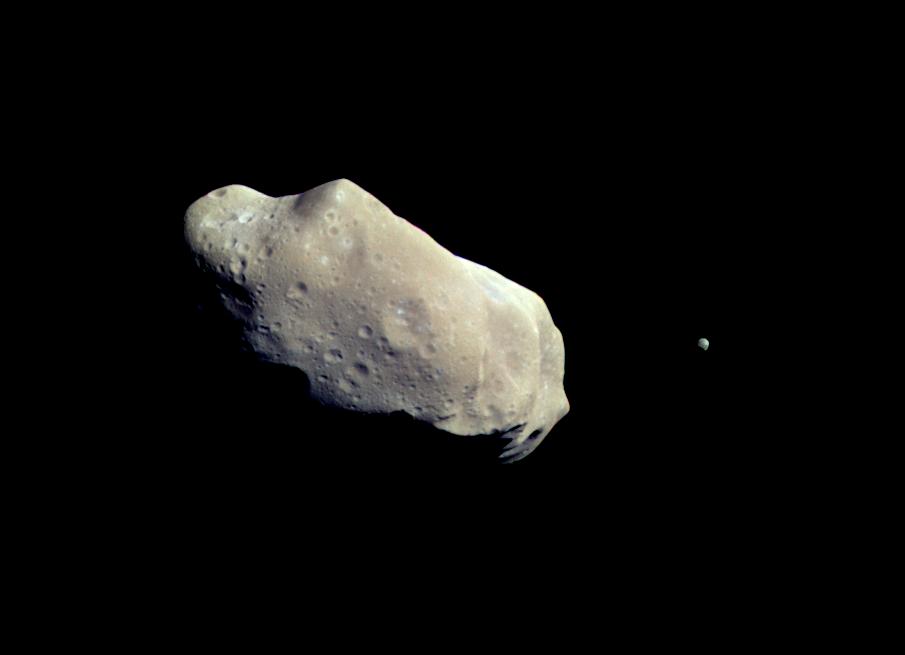
When we look up at the night sky, we are often mesmerized by the glowing points known as stars. However, did you know that in astronomy, the terms 'celestial body' and 'astronomical object' have different meanings? A celestial body refers to a single, solid, and directly connected physical entity—such as a planet, moon, asteroid, or star. On the other hand, an astronomical object is a more complex and loose structure that can consist of various celestial bodies or other objects with substructures. For example, star clusters, nebulae, and galaxies are astronomical objects, while planets and stars are celestial bodies.
This distinction is important because it helps us understand how the universe is 'built' from small to large scales. For instance, a comet can be considered both: its frozen core (nucleus) is a celestial body, while the entire comet with its coma and tail is an astronomical object. This phenomenon shows that the boundary between 'body' and 'object' can sometimes be blurred, depending on the scale and our perspective.
## Planets: The Most Recognized Celestial Bodies
Planets are the best examples of celestial bodies. They are solid or gaseous bodies that orbit a star, have enough mass for their gravity to shape them into spheres, and have cleared their orbital path of other debris. Our Earth itself is a planet—a single and solid celestial body. However, planets can also be part of larger astronomical objects, such as planetary systems. A planetary system consists of a central star and all the bodies orbiting it, including planets, moons, asteroids, and comets. Therefore, although planets are celestial bodies, they are also components of more complex astronomical objects.
Astronomers use the term 'celestial body' to refer to entities that can be studied individually, such as Mars, Venus, or the Moon. Each planet has unique characteristics—from rocky surfaces to thick atmospheres—that make them fascinating subjects of study. However, when we look at planets within the context of the solar system, we shift to a larger scale of astronomical objects.
## Astronomical Objects: From Nebulae to Galaxies
Astronomical objects are a broader term that encompasses loose and complex structures. Nebulae, for example, are clouds of gas and dust between stars that often serve as birthplaces for new stars. Nebulae are not single bodies; they consist of billions of particles spread over vast areas. Similarly, star clusters—groups of gravitationally bound stars, such as the Pleiades or globular clusters—are astronomical objects because they contain many stars (celestial bodies) forming a structure.
Galaxies are the largest and most complex astronomical objects. Galaxies like the Milky Way contain hundreds of billions of stars, planets, nebulae, and black holes, all bound together by gravity. Galaxies also have structures such as spiral, elliptical, or irregular shapes. When we study galaxies, we are actually examining a collection of celestial bodies interacting with one another. Thus, although galaxies are astronomical objects, they can also be considered as 'systems' containing many celestial bodies.
## Comets: Unique Dual Entities
Comets are one of the most interesting examples because they can be classified as both celestial bodies and astronomical objects. The nucleus of a comet, which consists of ice, dust, and rock, is a solid and single celestial body. However, when a comet approaches the Sun, heat causes the ice to evaporate, creating a coma (a cloud of gas and dust) and a long tail. The entire entity—nucleus, coma, and tail—is considered an astronomical object due to its loose and spreading structure. This phenomenon shows that classification depends on what we focus on: the nucleus as a body, or the entire comet as an object.
Astronomers often observe comets to understand the composition of the early solar system, as their nuclei are remnants from planetary formation. Although comets may seem small, they can carry valuable information about our origins.
## Black Holes: A Body or an Object?
Black holes are difficult to classify. They are regions of spacetime with extremely strong gravity, so nothing, including light, can escape. Black holes are usually formed from the collapse of massive stars and are considered celestial bodies because they are single entities with clear boundaries (event horizon). However, black holes can also be part of larger astronomical objects, such as active galaxies or binary star systems. In this case, the black hole is a celestial body interacting with other bodies, forming more complex structures.
Recent studies show that supermassive black holes exist at the center of almost every galaxy, including the Milky Way. These black holes can influence the movement of stars and gas around them, making them an essential component of galactic astronomical objects.
## Why Is This Difference Important?
Understanding the difference between celestial bodies and astronomical objects helps us appreciate the complexity of the universe. It allows astronomers to categorize phenomena more accurately and study interactions between entities at various scales. For example, when we study galaxies, we need to understand how stars (celestial bodies) move within galaxies (astronomical objects), and how galaxies interact with each other in galaxy clusters (larger astronomical objects).
In addition, this distinction is also relevant in science education. Many people often use the term 'celestial body' to refer to all entities in space, but by understanding these nuances, we can convey information more accurately. So, the next time you look at the night sky, remember that each star you see is a celestial body, but it is also part of a larger astronomical object—the beautiful galaxy we live in.
With this knowledge, we can see the universe not as a random collection of bodies, but as an organized and interconnected network, from small planets to vast galaxy clusters.
---
Reference: Astronomical object — Wikipedia
The Most Mysterious Space Objects: Astronomical Objects Are More Than Just Stars and Planets. Understand the difference between 'celestial body' and 'astronomical object' that many people confuse. From nebulae to galaxies, there are complex structures that are difficult to explain simply. This article will reveal how the universe organizes itself in an amazing hierarchy.. What Exactly Are Celestial Bodies?
When we look up at the night sky, we are often mesmerized by the glowing points known as stars. However, did you know that in astronomy, the terms 'celestial body' and 'astronomical object' have different meanings? A celestial body refers to a single, solid, and directly connected physical entity—such as a planet, moon, asteroid, or star. On the other hand, an astronomical object is a more complex and loose structure that can consist of various celestial bodies or other objects with substructures. For example, star clusters, nebulae, and galaxies are astronomical objects, while planets and stars are celestial bodies.
This distinction is important because it helps us understand how the universe is 'built' from small to large scales. For instance, a comet can be considered both: its frozen core nucleus is a celestial body, while the entire comet with its coma and tail is an astronomical object. This phenomenon shows that the boundary between 'body' and 'object' can sometimes be blurred, depending on the scale and our perspective.
Planets: The Most Recognized Celestial Bodies
Planets are the best examples of celestial bodies. They are solid or gaseous bodies that orbit a star, have enough mass for their gravity to shape them into spheres, and have cleared their orbital path of other debris. Our Earth itself is a planet—a single and solid celestial body. However, planets can also be part of larger astronomical objects, such as planetary systems. A planetary system consists of a central star and all the bodies orbiting it, including planets, moons, asteroids, and comets. Therefore, although planets are celestial bodies, they are also components of more complex astronomical objects.
Astronomers use the term 'celestial body' to refer to entities that can be studied individually, such as Mars, Venus, or the Moon. Each planet has unique characteristics—from rocky surfaces to thick atmospheres—that make them fascinating subjects of study. However, when we look at planets within the context of the solar system, we shift to a larger scale of astronomical objects.
Astronomical Objects: From Nebulae to Galaxies
Astronomical objects are a broader term that encompasses loose and complex structures. Nebulae, for example, are clouds of gas and dust between stars that often serve as birthplaces for new stars. Nebulae are not single bodies; they consist of billions of particles spread over vast areas. Similarly, star clusters—groups of gravitationally bound stars, such as the Pleiades or globular clusters—are astronomical objects because they contain many stars celestial bodies forming a structure.
Galaxies are the largest and most complex astronomical objects. Galaxies like the Milky Way contain hundreds of billions of stars, planets, nebulae, and black holes, all bound together by gravity. Galaxies also have structures such as spiral, elliptical, or irregular shapes. When we study galaxies, we are actually examining a collection of celestial bodies interacting with one another. Thus, although galaxies are astronomical objects, they can also be considered as 'systems' containing many celestial bodies.
Comets: Unique Dual Entities
Comets are one of the most interesting examples because they can be classified as both celestial bodies and astronomical objects. The nucleus of a comet, which consists of ice, dust, and rock, is a solid and single celestial body. However, when a comet approaches the Sun, heat causes the ice to evaporate, creating a coma a cloud of gas and dust and a long tail. The entire entity—nucleus, coma, and tail—is considered an astronomical object due to its loose and spreading structure. This phenomenon shows that classification depends on what we focus on: the nucleus as a body, or the entire comet as an object.
Astronomers often observe comets to understand the composition of the early solar system, as their nuclei are remnants from planetary formation. Although comets may seem small, they can carry valuable information about our origins.
Black Holes: A Body or an Object?
Black holes are difficult to classify. They are regions of spacetime with extremely strong gravity, so nothing, including light, can escape. Black holes are usually formed from the collapse of massive stars and are considered celestial bodies because they are single entities with clear boundaries event horizon . However, black holes can also be part of larger astronomical objects, such as active galaxies or binary star systems. In this case, the black hole is a celestial body interacting with other bodies, forming more complex structures.
Recent studies show that supermassive black holes exist at the center of almost every galaxy, including the Milky Way. These black holes can influence the movement of stars and gas around them, making them an essential component of galactic astronomical objects.
Why Is This Difference Important?
Understanding the difference between celestial bodies and astronomical objects helps us appreciate the complexity of the universe. It allows astronomers to categorize phenomena more accurately and study interactions between entities at various scales. For example, when we study galaxies, we need to understand how stars celestial bodies move within galaxies astronomical objects , and how galaxies interact with each other in galaxy clusters larger astronomical objects .
In addition, this distinction is also relevant in science education. Many people often use the term 'celestial body' to refer to all entities in space, but by understanding these nuances, we can convey information more accurately. So, the next time you look at the night sky, remember that each star you see is a celestial body, but it is also part of a larger astronomical object—the beautiful galaxy we live in.
With this knowledge, we can see the universe not as a random collection of bodies, but as an organized and interconnected network, from small planets to vast galaxy clusters.
---
Reference: Astronomical object — Wikipedia https://en.wikipedia.org/wiki/Astronomical object