🌍 Global coverage 24/7 • 🏯 East Asia: China, Japan, Korea • 🛕 South Asia: India • 🏰 Europe • 🗽 Americas • 🌍 Africa • 🕌 Middle East • 🇵🇸 Palestine Solidarity •
This article is a translation from the original language.
📖 Today in History
From Hunter to Farmer: The Agricultural Revolution That Transformed Human Civilization
About 12,000 years ago, humans began a radical shift from a nomadic hunting and gathering lifestyle to settled agriculture. This process occurred independently in at least 11 regions in the Old and New Worlds, involving various plant and animal species. This article explores the origins of agriculture, early evidence of cultivation, and its profound impact on the development of human civilization.
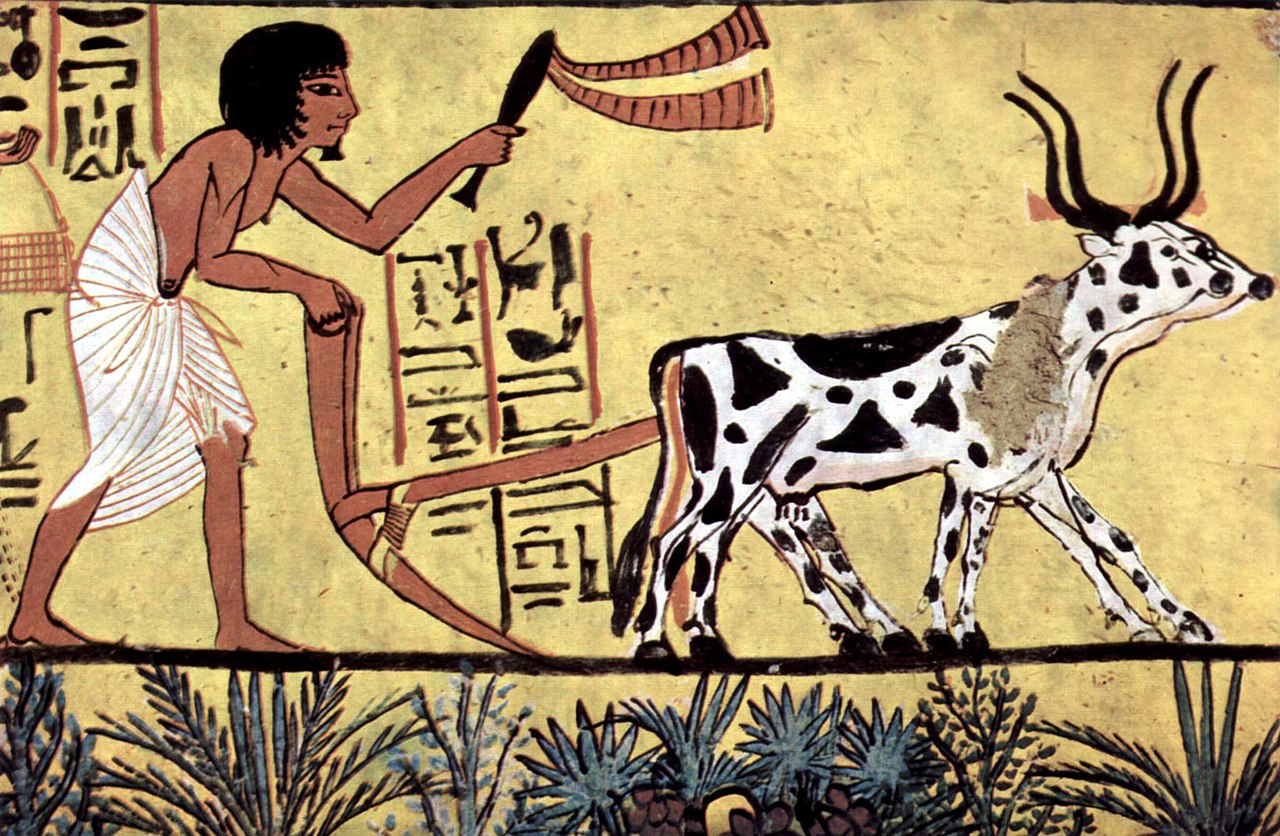
Image: Foto: Wikipedia — History of agriculture (CC BY-SA 4.0)
AI
Introduction: A Quantum Leap in Human History
Imagine life without supermarkets, without vegetable gardens, without a bowl of hot rice. Before the agricultural revolution, humans lived as hunters and gatherers, constantly moving with the seasons and food availability. However, around 12,000 years ago, a fundamental change occurred. Humans began to shift from a nomadic lifestyle to permanent settlement; from gathering wild plants to cultivating and harvesting. This change not only transformed how humans obtained food but also reshaped the social, economic, and cultural structures of civilizations. Agriculture was not a single invention, but a global phenomenon that emerged independently in various parts of the world, each with unique local plants and animals. This article will trace this amazing journey, from the earliest evidence of cultivation to its lasting implications today.
Beginnings: From Wild Gathering to Early Cultivation
Ancient humans had been eating wild grains for at least 104,000 years, but intentional farming required a major mental shift. The earliest evidence of small-scale cultivation comes from the site of Ohalo II on the shores of the Sea of Galilee, around 21,000 BCE. Here, ancient human communities are known to have gathered and possibly managed edible grasses. This was the first long step toward full domestication. This process did not happen overnight; it was a continuous trial and error over thousands of years. Humans learned to select the best seeds, clear areas for planting, and protect crops from pests. It was from here that the seeds of the agricultural revolution began to sprout.
Neolithic Revolution: The Eight Founder Crops in the Fertile Crescent
Around 9500 BCE, in an area known as the Fertile Crescent (encompassing parts of modern-day Iraq, Syria, Jordan, and Palestine), humans successfully domesticated eight basic crops known as "Neolithic founder crops." These eight crops are emmer wheat, einkorn wheat, hulled barley, peas, lentils, bitter vetch, horse beans, and flax. Einkorn and emmer wheat were among the first crops to be intensively cultivated, becoming a primary source of carbohydrates. Barley, on the other hand, is hardy and suitable for less fertile soils. Legumes such as lentils and horse beans provided essential protein, while flax was used for fiber and oil. The combination of these crops provided a balanced diet and enabled larger, more permanent settlements. This was the foundation of the first civilizations in Mesopotamia and surrounding areas.
Spread and Variation: Other Grains, Different Regions
Although the eight founder crops became the main focus in the Near East, the history of agriculture did not end there. Rye, for example, may have been cultivated earlier, but the evidence remains debated. What is certain is that the spread of agriculture from the Near East to the Atlantic Ocean happened independently from the Neolithic founder crop package. This indicates that agriculture was not a fixed recipe copied, but a process of local adaptation. Meanwhile, in China, rice began to be domesticated around 6200 BCE, with evidence of early cultivation dating back to 5700 BCE. In other parts of the world, corn, potatoes, and sweet potatoes were domesticated separately. Each region developed crops suited to its climate and soil, resulting in an extraordinary diversity of agricultural systems.
Impact on Society: Permanent Settlements and the Rise of Civilizations
The shift to agriculture brought radical social changes. Permanent settlements allowed populations to grow, as food supplies became more stable. This, in turn, required more complex organizational systems: food storage, division of labor, and eventually the emergence of leaders and social classes. Agriculture also enabled specialization of work; not everyone needed to be involved in food production. This freed some members of society to become craftsmen, traders, priests, and rulers. From this came the first cities, writing systems, laws, and empires. However, agriculture also brought new challenges: high population density facilitated the spread of disease, and reliance on specific crops increased the risk of famine due to crop failure. Reflective question: Did agriculture truly improve the quality of life for ancient humans, or was it a trap that imprisoned them in endless hard work?
Agriculture in the New World: Another Independent Revolution
In the Americas, agriculture developed independently from the Old World. Corn, beans, and squash were domesticated in Mesoamerica, forming the basis of the Maya and Aztec civilizations. In the Andes, potatoes and quinoa became staple crops. This domestication process also took thousands of years and resulted in highly diverse varieties. For example, corn originated from the wild grass teosinte and through long artificial selection produced large, easily harvestable ears. Agriculture in the New World also led to permanent settlements and the formation of complex civilizations, although without the presence of large domesticated animals like cattle or horses. This shows that the agricultural revolution was not a single event, but a recurring pattern in human history across the globe.
Legacy and Modern Implications
The agricultural revolution that began 12,000 years ago continues to influence our lives today. Modern agricultural systems based on monoculture and chemical fertilizers are a continuation of the basic principles discovered by our ancestors: efficient and large-scale food production. However, challenges such as climate change, loss of biodiversity, and food security require us to re-evaluate our agricultural practices. Sustainable agriculture, organic farming, and the preservation of traditional crop varieties are efforts to balance modern needs with ancient wisdom. Reflective question: What can we learn from agricultural history to ensure a sustainable food future for all?
Conclusion
The agricultural revolution is the starting point in human history. It changed how we live, think, and interact with each other and the environment. From the early cultivation along the shores of the Sea of Galilee to the vast cornfields in America, agriculture has become the foundation of civilization. Understanding this history not only gives us appreciation for the resilience and creativity of our ancestors, but also provides an important perspective for facing the challenges of the 21st century. The history of agriculture is a story of adaptation, innovation, and the complex relationship between humans and nature.
From Hunter to Farmer: The Agricultural Revolution That Transformed Human Civilization. About 12,000 years ago, humans began a radical shift from a nomadic hunting and gathering lifestyle to settled agriculture. This process occurred independently in at least 11 regions in the Old and New Worlds, involving various plant and animal species. This article explores the origins of agriculture, early evidence of cultivation, and its profound impact on the development of human civilization.. Introduction: A Quantum Leap in Human History
Imagine life without supermarkets, without vegetable gardens, without a bowl of hot rice. Before the agricultural revolution, humans lived as hunters and gatherers, constantly moving with the seasons and food availability. However, around 12,000 years ago, a fundamental change occurred. Humans began to shift from a nomadic lifestyle to permanent settlement; from gathering wild plants to cultivating and harvesting. This change not only transformed how humans obtained food but also reshaped the social, economic, and cultural structures of civilizations. Agriculture was not a single invention, but a global phenomenon that emerged independently in various parts of the world, each with unique local plants and animals. This article will trace this amazing journey, from the earliest evidence of cultivation to its lasting implications today.
Beginnings: From Wild Gathering to Early Cultivation
Ancient humans had been eating wild grains for at least 104,000 years, but intentional farming required a major mental shift. The earliest evidence of small-scale cultivation comes from the site of Ohalo II on the shores of the Sea of Galilee, around 21,000 BCE. Here, ancient human communities are known to have gathered and possibly managed edible grasses. This was the first long step toward full domestication. This process did not happen overnight; it was a continuous trial and error over thousands of years. Humans learned to select the best seeds, clear areas for planting, and protect crops from pests. It was from here that the seeds of the agricultural revolution began to sprout.
Neolithic Revolution: The Eight Founder Crops in the Fertile Crescent
Around 9500 BCE, in an area known as the Fertile Crescent encompassing parts of modern-day Iraq, Syria, Jordan, and Palestine , humans successfully domesticated eight basic crops known as "Neolithic founder crops." These eight crops are emmer wheat, einkorn wheat, hulled barley, peas, lentils, bitter vetch, horse beans, and flax. Einkorn and emmer wheat were among the first crops to be intensively cultivated, becoming a primary source of carbohydrates. Barley, on the other hand, is hardy and suitable for less fertile soils. Legumes such as lentils and horse beans provided essential protein, while flax was used for fiber and oil. The combination of these crops provided a balanced diet and enabled larger, more permanent settlements. This was the foundation of the first civilizations in Mesopotamia and surrounding areas.
Spread and Variation: Other Grains, Different Regions
Although the eight founder crops became the main focus in the Near East, the history of agriculture did not end there. Rye, for example, may have been cultivated earlier, but the evidence remains debated. What is certain is that the spread of agriculture from the Near East to the Atlantic Ocean happened independently from the Neolithic founder crop package. This indicates that agriculture was not a fixed recipe copied, but a process of local adaptation. Meanwhile, in China, rice began to be domesticated around 6200 BCE, with evidence of early cultivation dating back to 5700 BCE. In other parts of the world, corn, potatoes, and sweet potatoes were domesticated separately. Each region developed crops suited to its climate and soil, resulting in an extraordinary diversity of agricultural systems.
Impact on Society: Permanent Settlements and the Rise of Civilizations
The shift to agriculture brought radical social changes. Permanent settlements allowed populations to grow, as food supplies became more stable. This, in turn, required more complex organizational systems: food storage, division of labor, and eventually the emergence of leaders and social classes. Agriculture also enabled specialization of work; not everyone needed to be involved in food production. This freed some members of society to become craftsmen, traders, priests, and rulers. From this came the first cities, writing systems, laws, and empires. However, agriculture also brought new challenges: high population density facilitated the spread of disease, and reliance on specific crops increased the risk of famine due to crop failure. Reflective question: Did agriculture truly improve the quality of life for ancient humans, or was it a trap that imprisoned them in endless hard work?
Agriculture in the New World: Another Independent Revolution
In the Americas, agriculture developed independently from the Old World. Corn, beans, and squash were domesticated in Mesoamerica, forming the basis of the Maya and Aztec civilizations. In the Andes, potatoes and quinoa became staple crops. This domestication process also took thousands of years and resulted in highly diverse varieties. For example, corn originated from the wild grass teosinte and through long artificial selection produced large, easily harvestable ears. Agriculture in the New World also led to permanent settlements and the formation of complex civilizations, although without the presence of large domesticated animals like cattle or horses. This shows that the agricultural revolution was not a single event, but a recurring pattern in human history across the globe.
Legacy and Modern Implications
The agricultural revolution that began 12,000 years ago continues to influence our lives today. Modern agricultural systems based on monoculture and chemical fertilizers are a continuation of the basic principles discovered by our ancestors: efficient and large-scale food production. However, challenges such as climate change, loss of biodiversity, and food security require us to re-evaluate our agricultural practices. Sustainable agriculture, organic farming, and the preservation of traditional crop varieties are efforts to balance modern needs with ancient wisdom. Reflective question: What can we learn from agricultural history to ensure a sustainable food future for all?
Conclusion
The agricultural revolution is the starting point in human history. It changed how we live, think, and interact with each other and the environment. From the early cultivation along the shores of the Sea of Galilee to the vast cornfields in America, agriculture has become the foundation of civilization. Understanding this history not only gives us appreciation for the resilience and creativity of our ancestors, but also provides an important perspective for facing the challenges of the 21st century. The history of agriculture is a story of adaptation, innovation, and the complex relationship between humans and nature.
---
Reference: History of agriculture — Wikipedia https://en.wikipedia.org/wiki/History of agriculture