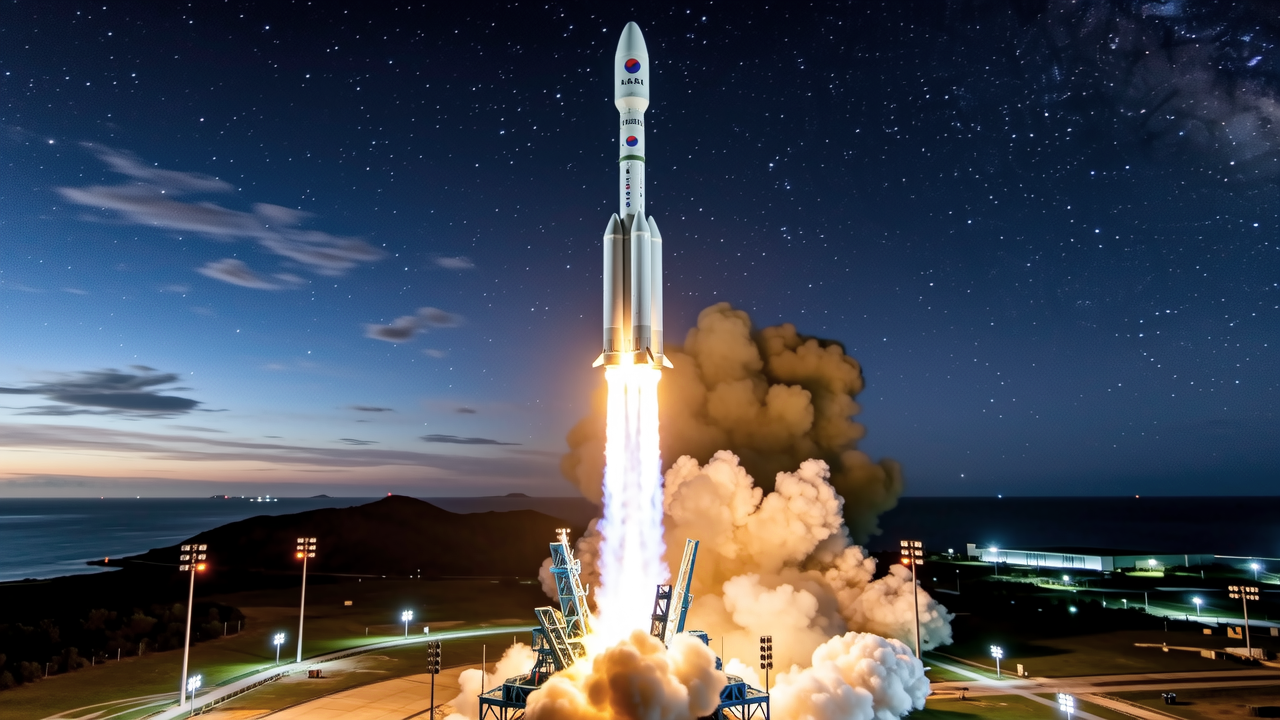
Goheung, 24 June — South Korea officially entered the league of world space powers when the latest generation Nuri rocket was successfully launched from the Naro Space Center in Goheung for the fourth time, accurately placing nine satellites into orbit. This success marks the maturity of South Korea's indigenous rocket technology, which has been fully developed by local scientists and engineers over more than two decades of research and development.
The Nuri rocket, or KSLV-II (Korea Space Launch Vehicle-II), is an extraordinary engineering achievement. Standing 47.2 meters tall and weighing 200 tons, this rocket is capable of carrying a payload of 2.6 tons into low Earth orbit. Most notably, more than 90 percent of the rocket's components were developed and manufactured in South Korea, unlike many other space programs that still rely on foreign technology for critical parts.
The satellites carried by this launch include a high-resolution Earth observation satellite to be used for environmental monitoring, agricultural mapping, and security surveillance; a communication satellite that will provide high-speed internet coverage to remote areas of South Korea; and several nanosatellites developed by Korean universities as research projects.
South Korea's space program now looks ahead to more ambitious goals. The country aims to land an unmanned lander on the Moon by 2032 and become part of an international consortium planning to build a lunar research base within the next two decades.
The Korea Aerospace Research Institute (KARI) and emerging private Korean aerospace companies such as Innospace and Perigee Aerospace are working to commercialize South Korean rocket technology, offering satellite launch services to international customers at competitive prices. This is creating a new commercial space industry expected to generate billions of dollars for the South Korean economy.
South Korea Launches Ambitious Space Program: Fourth Nuri Rocket Success. South Korea's space program achieved a historic milestone with the successful launch of the fourth Nuri rocket, which placed important satellites into orbit, solidifying South Korea's status as a space power.. Goheung, 24 June — South Korea officially entered the league of world space powers when the latest generation Nuri rocket was successfully launched from the Naro Space Center in Goheung for the fourth time, accurately placing nine satellites into orbit. This success marks the maturity of South Korea's indigenous rocket technology, which has been fully developed by local scientists and engineers over more than two decades of research and development.
The Nuri rocket, or KSLV-II Korea Space Launch Vehicle-II , is an extraordinary engineering achievement. Standing 47.2 meters tall and weighing 200 tons, this rocket is capable of carrying a payload of 2.6 tons into low Earth orbit. Most notably, more than 90 percent of the rocket's components were developed and manufactured in South Korea, unlike many other space programs that still rely on foreign technology for critical parts.
The satellites carried by this launch include a high-resolution Earth observation satellite to be used for environmental monitoring, agricultural mapping, and security surveillance; a communication satellite that will provide high-speed internet coverage to remote areas of South Korea; and several nanosatellites developed by Korean universities as research projects.
South Korea's space program now looks ahead to more ambitious goals. The country aims to land an unmanned lander on the Moon by 2032 and become part of an international consortium planning to build a lunar research base within the next two decades.
The Korea Aerospace Research Institute KARI and emerging private Korean aerospace companies such as Innospace and Perigee Aerospace are working to commercialize South Korean rocket technology, offering satellite launch services to international customers at competitive prices. This is creating a new commercial space industry expected to generate billions of dollars for the South Korean economy.