What Is Hemophilia — Not 'Liquid Blood,' But a 'Dormant' Clotting System
Hemophilia is not a disease where blood 'does not clot.' Instead, it is a
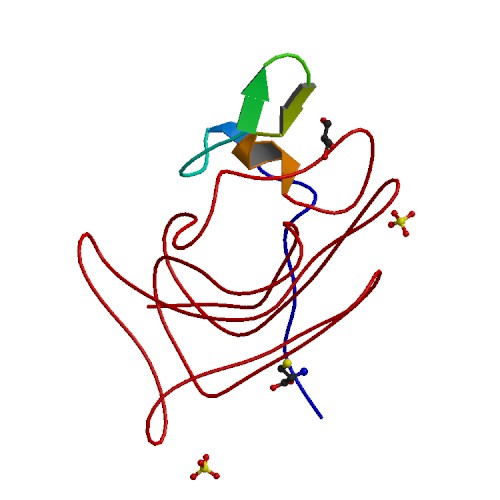
coagulation disorder — a complex process in which more than 12 protein factors work like a Swiss watch, each activating the next until a solid clot is formed. In hemophilia, one main gear is missing or damaged: factor VIII (in hemophilia A) or factor IX (in hemophilia B). Without that gear, the reaction chain is broken — and a clot never forms completely. It is not a failure of 'blood,' but a failure of the
blood activation system. Important fact: the blood of hemophilia patients has normal platelet and red blood cell counts — so they are not anemic due to chronic blood loss, but rather due to uncontrolled recurrent bleeding.
The 'Disguised' Genetics — Why 99% of Patients Are Male?
Hemophilia is inherited as an X-linked recessive. The genes that produce factor VIII and IX are located on the X chromosome. Males have one X (and one Y) chromosome; thus, if their X chromosome carries a mutation, there is no backup copy to 'fix' it — and the disease appears. Women, on the other hand, have two X chromosomes; so even if one carries a mutation, the second copy is usually sufficient to produce clotting factors in the range of 30–70%, making them carriers without noticeable symptoms. However, about 10–15% of carrier women experience mild symptoms — such as heavy menstruation or easy bruising — due to 'skewed X-inactivation,' where the normal X chromosome accidentally 'dies' more in certain cells. This explains why hemophilia seems to affect 'only males,' although women can also be affected — just in a more concealed form.
Inside the Joints: The Most Dangerous — and Quietest — Site of Bleeding
External bleeding certainly causes concern, but the real danger of hemophilia occurs inside: especially in joints such as the knees, elbows, and ankles. This is called
haemarthrosis. Blood entering the joint space not only causes swelling and pain — it also releases iron from hemoglobin, which then becomes toxic to synovial cells (joint lining). Within 2–3 years without prophylactic treatment, 80% of severe hemophilia patients develop 'hemophilic arthropathy': progressive joint degeneration, abnormal calcification, and permanent loss of mobility. MRI shows that joint bleeding can occur without trauma — simply due to daily pressure such as walking or climbing stairs. It is silent bleeding: no blood is visible, no wound, but damage is happening beneath the skin.
Factor VIII vs Factor IX: Why One Is 'More Aggressive' Than the Other?
Although both cause similar bleeding, hemophilia A (factor VIII deficiency) is five times more common than hemophilia B — and clinically, it is more difficult to control. Why? Factor VIII has a half-life in the bloodstream of only 8–12 hours, while factor IX lasts up to 18–24 hours. This means that replacement doses of factor VIII must be given daily or every other day for severe patients, while factor IX can be administered twice a week. In addition, neutralizing antibodies (inhibitors) develop in 25–30% of severe hemophilia A patients — but only 1–3% in hemophilia B. This is because the immune system recognizes factor VIII as a 'foreign' substance more often, possibly due to its large and complex molecular structure (2,300 amino acids, compared to 415 in factor IX).
Recent Revolution: Not Just Injections — But Directly 'Fixing the Code'
Since 2022, gene therapy for hemophilia B has been approved in the EU and UK — using adeno-associated virus (AAV) vectors to deliver a healthy copy of the factor IX gene to the patient's liver. The result? Stable production of factor IX at 30–50% of normal levels — enough to change severe hemophilia into a mild form, or even symptom-free. Long-term trials show effects lasting more than 5 years. For hemophilia A, gene therapy is still in phase III clinical trials, but early data show factor VIII levels increasing up to 40% with a single dose. This is no longer about 'replacing,' but 'repairing' — and for the first time in history, hemophilia can be seen not as a lifelong disease, but as a condition that can be controlled at the genetic level. However, challenges remain: high cost (over RM1 million per patient), presence of antibodies against AAV vectors, and incompatibility for patients with impaired liver function.
A Brighter Future — But Not Without Shadows
Now, a new generation of hemophilia patients in Malaysia receive recombinant factors without human components — eliminating the risk of infections such as HIV or hepatitis that plagued the 1980s era. Home monitoring of plasma factors using small blood droplet devices and AI applications is also being tested at Kuala Lumpur Hospital. However, the access gap remains real: only 30% of hemophilia patients in low-income countries receive regular treatment, compared to over 95% in developed countries. Hemophilia is no longer a punishment — but it remains a test of fairness: whether your genetics determine your life, or whether your healthcare system is able to hear the whisper of blood that never stops flowing.
Rujukan: Haemophilia — Wikipedia
Why This Person's Blood Never 'Stops' Flowing — Even from a Minor Wound?. In the human body, blood usually clots within 3–6 minutes. But for people with hemophilia, this process can fail — not once, not twice, but repeatedly throughout their lives. This is not a deficiency of vitamins or fatigue: it is a genetic code error that has been hidden since birth. And most surprisingly, a man with hemophilia A can lose up to 2 liters of blood from just one knee wound — without visible external bleeding.. What Is Hemophilia — Not 'Liquid Blood,' But a 'Dormant' Clotting System
Hemophilia is not a disease where blood 'does not clot.' Instead, it is a coagulation disorder — a complex process in which more than 12 protein factors work like a Swiss watch, each activating the next until a solid clot is formed. In hemophilia, one main gear is missing or damaged: factor VIII in hemophilia A or factor IX in hemophilia B . Without that gear, the reaction chain is broken — and a clot never forms completely. It is not a failure of 'blood,' but a failure of the blood activation system . Important fact: the blood of hemophilia patients has normal platelet and red blood cell counts — so they are not anemic due to chronic blood loss, but rather due to uncontrolled recurrent bleeding.
The 'Disguised' Genetics — Why 99% of Patients Are Male?
Hemophilia is inherited as an X-linked recessive. The genes that produce factor VIII and IX are located on the X chromosome. Males have one X and one Y chromosome; thus, if their X chromosome carries a mutation, there is no backup copy to 'fix' it — and the disease appears. Women, on the other hand, have two X chromosomes; so even if one carries a mutation, the second copy is usually sufficient to produce clotting factors in the range of 30–70%, making them carriers without noticeable symptoms. However, about 10–15% of carrier women experience mild symptoms — such as heavy menstruation or easy bruising — due to 'skewed X-inactivation,' where the normal X chromosome accidentally 'dies' more in certain cells. This explains why hemophilia seems to affect 'only males,' although women can also be affected — just in a more concealed form.
Inside the Joints: The Most Dangerous — and Quietest — Site of Bleeding
External bleeding certainly causes concern, but the real danger of hemophilia occurs inside: especially in joints such as the knees, elbows, and ankles. This is called haemarthrosis . Blood entering the joint space not only causes swelling and pain — it also releases iron from hemoglobin, which then becomes toxic to synovial cells joint lining . Within 2–3 years without prophylactic treatment, 80% of severe hemophilia patients develop 'hemophilic arthropathy': progressive joint degeneration, abnormal calcification, and permanent loss of mobility. MRI shows that joint bleeding can occur without trauma — simply due to daily pressure such as walking or climbing stairs. It is silent bleeding: no blood is visible, no wound, but damage is happening beneath the skin.
Factor VIII vs Factor IX: Why One Is 'More Aggressive' Than the Other?
Although both cause similar bleeding, hemophilia A factor VIII deficiency is five times more common than hemophilia B — and clinically, it is more difficult to control. Why? Factor VIII has a half-life in the bloodstream of only 8–12 hours, while factor IX lasts up to 18–24 hours. This means that replacement doses of factor VIII must be given daily or every other day for severe patients, while factor IX can be administered twice a week. In addition, neutralizing antibodies inhibitors develop in 25–30% of severe hemophilia A patients — but only 1–3% in hemophilia B. This is because the immune system recognizes factor VIII as a 'foreign' substance more often, possibly due to its large and complex molecular structure 2,300 amino acids, compared to 415 in factor IX .
Recent Revolution: Not Just Injections — But Directly 'Fixing the Code'
Since 2022, gene therapy for hemophilia B has been approved in the EU and UK — using adeno-associated virus AAV vectors to deliver a healthy copy of the factor IX gene to the patient's liver. The result? Stable production of factor IX at 30–50% of normal levels — enough to change severe hemophilia into a mild form, or even symptom-free. Long-term trials show effects lasting more than 5 years. For hemophilia A, gene therapy is still in phase III clinical trials, but early data show factor VIII levels increasing up to 40% with a single dose. This is no longer about 'replacing,' but 'repairing' — and for the first time in history, hemophilia can be seen not as a lifelong disease, but as a condition that can be controlled at the genetic level. However, challenges remain: high cost over RM1 million per patient , presence of antibodies against AAV vectors, and incompatibility for patients with impaired liver function.
A Brighter Future — But Not Without Shadows
Now, a new generation of hemophilia patients in Malaysia receive recombinant factors without human components — eliminating the risk of infections such as HIV or hepatitis that plagued the 1980s era. Home monitoring of plasma factors using small blood droplet devices and AI applications is also being tested at Kuala Lumpur Hospital. However, the access gap remains real: only 30% of hemophilia patients in low-income countries receive regular treatment, compared to over 95% in developed countries. Hemophilia is no longer a punishment — but it remains a test of fairness: whether your genetics determine your life, or whether your healthcare system is able to hear the whisper of blood that never stops flowing.
Rujukan: Haemophilia — Wikipedia https://en.wikipedia.org/wiki/Haemophilia