In the Courtroom of the Starving Brain
Imagine the human brain as a megacity — with roads that never stop moving, traffic lights blinking in unison, and power stations supplying every corner in milliseconds. In the middle of this city, there is a small power station called
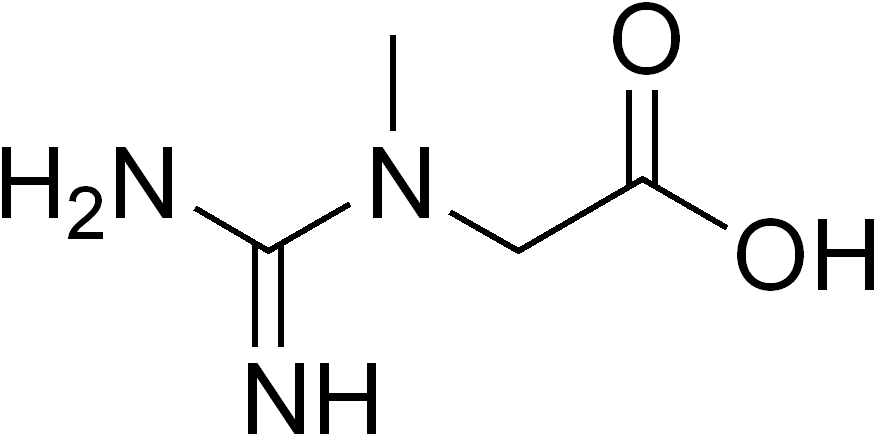
creatine. It is not the main fuel like glucose, but an
instant backup battery: a chemical energy store for neurons racing to complete tasks — from remembering a teacher's name to holding back from screaming when angry. Without creatine, the brain does not die — but it becomes weak, slow, easily lost, and ultimately, unable to build the synaptic bridges needed for learning, emotions, and adaptation.
Guanidinoacetate methyltransferase deficiency (GAMT deficiency) is not just a nutrient deficiency. It is a failure in the production of the battery within the brain's own biochemical factory. The GAMT enzyme — like a microscopic technician inside the mitochondria — is responsible for attaching a methyl atom to guanidinoacetate to turn it into creatine. When this enzyme is missing, the raw materials accumulate, become toxic, and the final product is absent. As a result: two simultaneous issues — a lack of energy and neurological toxicity. This is why children with GAMT deficiency often experience seizures that do not respond to medication, fragmented sleep throughout the night, and behaviors that appear like autism — even though their brains are screaming in a chemical language no one hears.
The Numbers That Save: 6 Months, 3 Medications, and a Critical Window
Globally, only about 120 cases of GAMT deficiency have been confirmed since it was first reported in 1994. In Malaysia, official numbers are still missing — not because there are no patients, but because there is no neonatal screening system that tests for these metabolites. Yet, a simple screening test can be done using a cord blood sample: measure the levels of guanidinoacetate (GAA) and creatinine in plasma; or more accurately, look for a 'black hole' on an MRI scan of the brain — the place where creatine signals should shine brightly, but instead disappear without a trace.
The most urgent issue: its therapeutic window is narrow. If treatment starts before six months of age — before the brain's synapses freeze into inefficient patterns — children can achieve near-normal development. But once it's too late, each passing month is a nerve branch that will never regrow. The treatment is not a miracle drug, but a strict daily protocol: creatine monohydrate (to replace the deficiency), L-ornithine (to eliminate toxic GAA), and sodium benzoate (as an alternative 'blocker' for GAA production in the liver). Three medications. Four to six doses a day. Mixed in milk, swallowed patiently, monitored through blood tests every three months. Not just treatment — this is re-education for the family: how to read food labels to avoid excess arginine, how to recognize early signs of seizures caused by ammonia buildup, how to explain to neighbors why their child 'looks normal' but cannot be left with a regular babysitter.
When the Wrong Diagnosis Becomes a Prison
Dr. Amina Yusof, a clinical geneticist at the University of Malaya Medical Centre, once met a 17-year-old teenager who had been diagnosed with 'severe autism spectrum disorder' since the age of three. No seizures, but chronic insomnia and persistent stereotypical movements — tapping fingers, twisting rings, repeatedly slapping the forehead. An MRI showed 'frontal hypometabolism'. Only at the age of 15, after further neurological complications and repeated genetic investigations, the diagnosis of GAMT deficiency emerged — from a homozygous mutation on chromosome 19, the
GAMT gene. "He was never autistic," said Dr. Amina softly. "He was a starving brain that had adapted to starvation for 15 years. Like a blind person learning Braille — not because he was disabled, but because his world only gave him one way to survive."
Voices from Behind the Black Hole
Among all inherited metabolic disorders, GAMT deficiency is unique because it leaves a very specific chemical trail — not just in the blood, but in the
smell of the sweat and urine of untreated children: a fishy or sharp ammonia odor, the result of accumulated guanidinoacetate. It is the body's voice crying out — but most doctors are not taught to listen. At a clinic in Johor Bahru, a mother described how her seven-year-old son began showing his first progress in reading after six months of treatment: not because his brain suddenly 'healed', but because for the first time, his nerve cells had enough energy to strengthen the connection between letters and sounds. "He's not smart now," she said, holding a notebook full of blue and red scribbles. "But he finally
wants to try."
What Is Not Said in the Genetic Report
The genetic report states:
biallelic pathogenic variants in the GAMT gene. But it does not mention the silence of the clinic waiting room when the mother first reads that sentence — how her breath stops for a moment, how her hands grip the phone as if wanting to call the past and ask for permission to conduct a neonatal screening test that does not exist in her country. It also does not write about the courage of a father who learns to calculate creatine doses on a napkin, or about a teacher who transforms her classroom into a 'low-energy space' — with dimmed lights, visual schedules, and breaks every 25 minutes — not to 'calm the child', but to give the brain a chance to rest and recharge.
GAMT deficiency is not a story about a rare disease. It is a mirror of our healthcare system: how we choose what is 'worthy' of screening, who is 'worthy' of being heard, and when we are willing to admit that sometimes, the answer is not in the genes — but in a small pill, a critical window of time, and a decision to not give up before the first test is completed.
Because sometimes, what saves a life is not the most expensive technology — but the wisdom to ask: ‘Why can't this child sleep? Why can't he remember what he learned? And is it… possibly… that his brain is just hungry?’
---
Rujukan: Guanidinoacetate methyltransferase deficiency — Wikipedia
This Child Cannot Walk, Speak, or Sleep — But There Is One Pill That Can Change Everything. In a small village in Sabah, a five-year-old child still cannot say his mother's name. His brain is not lacking oxygen, nor is it due to a virus or common genetics — but rather a rare enzyme deficiency, with only 120 reported cases worldwide. Surprisingly, if detected before six months of age, almost all symptoms can be prevented. Why does it remain hidden behind the diagnosis of 'autism' or 'developmental delay'?. In the Courtroom of the Starving Brain
Imagine the human brain as a megacity — with roads that never stop moving, traffic lights blinking in unison, and power stations supplying every corner in milliseconds. In the middle of this city, there is a small power station called creatine . It is not the main fuel like glucose, but an instant backup battery : a chemical energy store for neurons racing to complete tasks — from remembering a teacher's name to holding back from screaming when angry. Without creatine, the brain does not die — but it becomes weak, slow, easily lost, and ultimately, unable to build the synaptic bridges needed for learning, emotions, and adaptation.
Guanidinoacetate methyltransferase deficiency GAMT deficiency is not just a nutrient deficiency. It is a failure in the production of the battery within the brain's own biochemical factory. The GAMT enzyme — like a microscopic technician inside the mitochondria — is responsible for attaching a methyl atom to guanidinoacetate to turn it into creatine. When this enzyme is missing, the raw materials accumulate, become toxic, and the final product is absent. As a result: two simultaneous issues — a lack of energy and neurological toxicity. This is why children with GAMT deficiency often experience seizures that do not respond to medication, fragmented sleep throughout the night, and behaviors that appear like autism — even though their brains are screaming in a chemical language no one hears.
The Numbers That Save: 6 Months, 3 Medications, and a Critical Window
Globally, only about 120 cases of GAMT deficiency have been confirmed since it was first reported in 1994. In Malaysia, official numbers are still missing — not because there are no patients, but because there is no neonatal screening system that tests for these metabolites. Yet, a simple screening test can be done using a cord blood sample: measure the levels of guanidinoacetate GAA and creatinine in plasma; or more accurately, look for a 'black hole' on an MRI scan of the brain — the place where creatine signals should shine brightly, but instead disappear without a trace.
The most urgent issue: its therapeutic window is narrow. If treatment starts before six months of age — before the brain's synapses freeze into inefficient patterns — children can achieve near-normal development. But once it's too late, each passing month is a nerve branch that will never regrow. The treatment is not a miracle drug, but a strict daily protocol: creatine monohydrate to replace the deficiency , L-ornithine to eliminate toxic GAA , and sodium benzoate as an alternative 'blocker' for GAA production in the liver . Three medications. Four to six doses a day. Mixed in milk, swallowed patiently, monitored through blood tests every three months. Not just treatment — this is re-education for the family: how to read food labels to avoid excess arginine, how to recognize early signs of seizures caused by ammonia buildup, how to explain to neighbors why their child 'looks normal' but cannot be left with a regular babysitter.
When the Wrong Diagnosis Becomes a Prison
Dr. Amina Yusof, a clinical geneticist at the University of Malaya Medical Centre, once met a 17-year-old teenager who had been diagnosed with 'severe autism spectrum disorder' since the age of three. No seizures, but chronic insomnia and persistent stereotypical movements — tapping fingers, twisting rings, repeatedly slapping the forehead. An MRI showed 'frontal hypometabolism'. Only at the age of 15, after further neurological complications and repeated genetic investigations, the diagnosis of GAMT deficiency emerged — from a homozygous mutation on chromosome 19, the GAMT gene. "He was never autistic," said Dr. Amina softly. "He was a starving brain that had adapted to starvation for 15 years. Like a blind person learning Braille — not because he was disabled, but because his world only gave him one way to survive."
Voices from Behind the Black Hole
Among all inherited metabolic disorders, GAMT deficiency is unique because it leaves a very specific chemical trail — not just in the blood, but in the smell of the sweat and urine of untreated children: a fishy or sharp ammonia odor, the result of accumulated guanidinoacetate. It is the body's voice crying out — but most doctors are not taught to listen. At a clinic in Johor Bahru, a mother described how her seven-year-old son began showing his first progress in reading after six months of treatment: not because his brain suddenly 'healed', but because for the first time, his nerve cells had enough energy to strengthen the connection between letters and sounds. "He's not smart now," she said, holding a notebook full of blue and red scribbles. "But he finally wants to try."
What Is Not Said in the Genetic Report
The genetic report states: biallelic pathogenic variants in the GAMT gene . But it does not mention the silence of the clinic waiting room when the mother first reads that sentence — how her breath stops for a moment, how her hands grip the phone as if wanting to call the past and ask for permission to conduct a neonatal screening test that does not exist in her country. It also does not write about the courage of a father who learns to calculate creatine doses on a napkin, or about a teacher who transforms her classroom into a 'low-energy space' — with dimmed lights, visual schedules, and breaks every 25 minutes — not to 'calm the child', but to give the brain a chance to rest and recharge.
GAMT deficiency is not a story about a rare disease. It is a mirror of our healthcare system: how we choose what is 'worthy' of screening, who is 'worthy' of being heard, and when we are willing to admit that sometimes, the answer is not in the genes — but in a small pill, a critical window of time, and a decision to not give up before the first test is completed.
Because sometimes, what saves a life is not the most expensive technology — but the wisdom to ask: ‘Why can't this child sleep? Why can't he remember what he learned? And is it… possibly… that his brain is just hungry?’
---
Rujukan: Guanidinoacetate methyltransferase deficiency — Wikipedia https://en.wikipedia.org/wiki/Guanidinoacetate methyltransferase deficiency