First Act: The Living Fire, Burning Souls
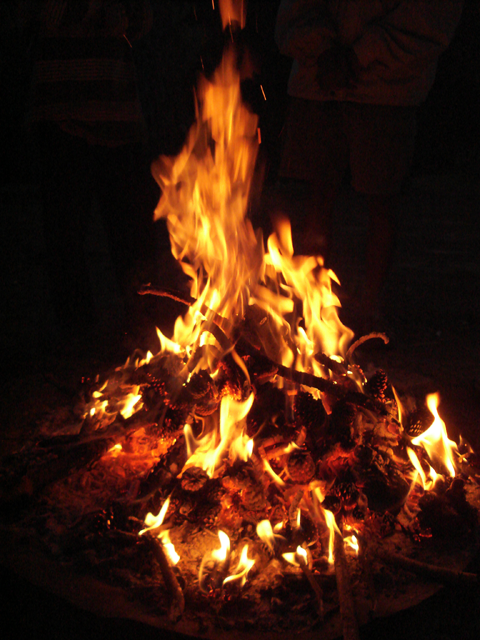
Imagine a night in the wilderness. Cold air pierces the bones, darkness covers every corner. Suddenly, a spark ignites. From a dry log, small flames begin to wrap around the surrounding branches. Within minutes, the campfire starts to rise. It is not just a source of light; it is the center of life. This is where the story begins—between the beating heart and the sound of cracking wood.
A campfire is not just a burning ember. It is the pulse of the camp, where we melt our fears, build bonds, and cook food better than a five-star restaurant. But have you ever thought about why this simple fire has played such a huge role in human history? The answer lies in science, psychology, and the primitive instincts still alive in our DNA.
Science Behind the Flames: Why Fire Seems 'Alive'?
A campfire is a remarkable chemical phenomenon. When wood is heated to a certain temperature, the cellulose inside it breaks down into flammable gases. These gases mix with oxygen in the air and produce fire. The temperature of a campfire can reach up to 800°C to 1,000°C at its core—hot enough to melt aluminum. But why does it seem 'alive'? Because fire itself is a continuous process that requires three basic elements: heat, fuel, and oxygen. If one is missing, it dies. This makes a campfire like an organism—it breathes, moves, and changes shape.
Even more fascinating, the color of the flame depends on the temperature and minerals. A typical yellow flame comes from incomplete carbon combustion. However, if the wood contains calcium (from the bark), the flame will appear reddish-orange. Want a blue flame? Add copper—but don't try this at home. This is the science that makes each campfire unique, like a fingerprint.
From Ancient Rituals to Symbols of Rebellion
Human history cannot be separated from the campfire. Early humans used fire to protect themselves from predators, cook meat, and warm their bodies during the Ice Age. But there was a deeper function: rituals. Across the world, ancient tribes held ceremonies around the campfire to worship gods, celebrate harvest seasons, or commemorate war victories. Fire was seen as a mediator between the human world and spirits.
In modern times, the campfire became a symbol of rebellion. In the 1960s, civil rights activists in the United States often gathered around campfires to plan protests. The sound of crackling wood and songs of freedom became the backdrop of the struggle. This is not just nostalgia; it is proof of how a campfire can unite brave souls.
Psychology of the Campfire: Why Do We Feel Calm?
Have you ever sat by a campfire and felt all your problems disappear? It's not just imagination. Studies show that watching a campfire lowers blood pressure and reduces cortisol (stress) hormones. The sound of crackling wood and the random movement of the flames stimulate alpha brain waves—similar to meditation. This may be an evolutionary legacy: our ancestors who sat around fires felt safe because predators feared fire. So, our brains associate campfires with protection and calmness.
In social psychology, the campfire is also known as a 'bonding center'. When a group of people sit around a fire, they automatically face each other. This facilitates interaction, reduces conflict, and increases trust. No wonder group therapy sessions often use fire elements to start conversations.
Campfire and Survival: More Than Just Light
In emergency situations, a campfire can be a lifesaver. It is not just for cooking or warming the body, but also for emergency signals. Smoke from a campfire can be seen from a distance during the day, while the flames at night can be spotted from airplanes. In the forest, a campfire also acts as an insect and predator deterrent. The smell of certain woods—like cedar—can repel mosquitoes and snakes.
But there are specific techniques. A survival campfire must be built in a wind-protected area, away from dry trees, and using dry fuel. The 'teepee' (cone-shaped) technique is most effective for starting a fire in wet weather. Don't forget, water or sand must always be nearby to extinguish the fire—you don't want a forest fire due to carelessness.
Campfire Traditions: From Marshmallows to Ghost Stories
What would a campfire be without marshmallows? Roasting marshmallows over a campfire is a modern ritual that began in the 19th century. But it has a dark history: original marshmallows were made from the root of Althaea officinalis, and only the aristocracy could enjoy them. Today, it is a democratic treat—whether you like it or not, it remains a symbol of simplicity.
Ghost stories around the campfire are oral traditions that date back thousands of years. From the story of 'The Hook' to 'La Llorona', these tales use the campfire as a setting to create tension. Psychology explains that in the flickering light, our brains tend to see moving shadows—making horror stories more convincing. So, don't blame those who suddenly scream; it's a natural reaction.
The Future of the Campfire: Between Nostalgia and Ecology
Now, campfires face challenges. Climate change has caused more frequent wildfires, and some national parks have banned open campfires. Instead, modern 'fire pits' use gas or alcohol, which are more controlled. But are they the same? Many argue that a real campfire cannot be replaced—its smell, sound, and the warmth on the skin are experiences that cannot be simulated.
Nevertheless, there is a conservation movement encouraging the use of 'low-impact campfires'—using dead wood, not living trees, and leaving no trace. This is a balance between nostalgia and responsibility. Because ultimately, a campfire is not just fire; it is a symbol of our relationship with nature and with each other.
Conclusion: Fire Lives As Long As We Remember
Every campfire is a small episode in the journey of humanity. It is a witness to laughter, tears, secrets, and dreams. Although the times change, the campfire remains a gravitational center that attracts us—inviting us to sit, be quiet, and reflect. So, the next time you light a campfire, don't just think about marshmallows or warmth. Remember that you are continuing a tradition that began when the first humans dared to step into the darkness and called fire a friend.
Happy camping, and don't forget to put out the fire before going to sleep.
---
Reference: Campfire — Wikipedia
Campfire Is More Than Just Embers: Ancient Secrets Behind the Flames That Changed Human History. A campfire is more than just a source of light and heat at a campsite. It is a silent witness to human civilization, from ancient rituals to dramatic moments of survival. Discover how this simple flame holds secrets of science, psychology, and spiritual power that can save lives. You will never look at a campfire the same way again after reading this article.. First Act: The Living Fire, Burning Souls
Imagine a night in the wilderness. Cold air pierces the bones, darkness covers every corner. Suddenly, a spark ignites. From a dry log, small flames begin to wrap around the surrounding branches. Within minutes, the campfire starts to rise. It is not just a source of light; it is the center of life. This is where the story begins—between the beating heart and the sound of cracking wood.
A campfire is not just a burning ember. It is the pulse of the camp, where we melt our fears, build bonds, and cook food better than a five-star restaurant. But have you ever thought about why this simple fire has played such a huge role in human history? The answer lies in science, psychology, and the primitive instincts still alive in our DNA.
Science Behind the Flames: Why Fire Seems 'Alive'?
A campfire is a remarkable chemical phenomenon. When wood is heated to a certain temperature, the cellulose inside it breaks down into flammable gases. These gases mix with oxygen in the air and produce fire. The temperature of a campfire can reach up to 800°C to 1,000°C at its core—hot enough to melt aluminum. But why does it seem 'alive'? Because fire itself is a continuous process that requires three basic elements: heat, fuel, and oxygen. If one is missing, it dies. This makes a campfire like an organism—it breathes, moves, and changes shape.
Even more fascinating, the color of the flame depends on the temperature and minerals. A typical yellow flame comes from incomplete carbon combustion. However, if the wood contains calcium from the bark , the flame will appear reddish-orange. Want a blue flame? Add copper—but don't try this at home. This is the science that makes each campfire unique, like a fingerprint.
From Ancient Rituals to Symbols of Rebellion
Human history cannot be separated from the campfire. Early humans used fire to protect themselves from predators, cook meat, and warm their bodies during the Ice Age. But there was a deeper function: rituals. Across the world, ancient tribes held ceremonies around the campfire to worship gods, celebrate harvest seasons, or commemorate war victories. Fire was seen as a mediator between the human world and spirits.
In modern times, the campfire became a symbol of rebellion. In the 1960s, civil rights activists in the United States often gathered around campfires to plan protests. The sound of crackling wood and songs of freedom became the backdrop of the struggle. This is not just nostalgia; it is proof of how a campfire can unite brave souls.
Psychology of the Campfire: Why Do We Feel Calm?
Have you ever sat by a campfire and felt all your problems disappear? It's not just imagination. Studies show that watching a campfire lowers blood pressure and reduces cortisol stress hormones. The sound of crackling wood and the random movement of the flames stimulate alpha brain waves—similar to meditation. This may be an evolutionary legacy: our ancestors who sat around fires felt safe because predators feared fire. So, our brains associate campfires with protection and calmness.
In social psychology, the campfire is also known as a 'bonding center'. When a group of people sit around a fire, they automatically face each other. This facilitates interaction, reduces conflict, and increases trust. No wonder group therapy sessions often use fire elements to start conversations.
Campfire and Survival: More Than Just Light
In emergency situations, a campfire can be a lifesaver. It is not just for cooking or warming the body, but also for emergency signals. Smoke from a campfire can be seen from a distance during the day, while the flames at night can be spotted from airplanes. In the forest, a campfire also acts as an insect and predator deterrent. The smell of certain woods—like cedar—can repel mosquitoes and snakes.
But there are specific techniques. A survival campfire must be built in a wind-protected area, away from dry trees, and using dry fuel. The 'teepee' cone-shaped technique is most effective for starting a fire in wet weather. Don't forget, water or sand must always be nearby to extinguish the fire—you don't want a forest fire due to carelessness.
Campfire Traditions: From Marshmallows to Ghost Stories
What would a campfire be without marshmallows? Roasting marshmallows over a campfire is a modern ritual that began in the 19th century. But it has a dark history: original marshmallows were made from the root of Althaea officinalis, and only the aristocracy could enjoy them. Today, it is a democratic treat—whether you like it or not, it remains a symbol of simplicity.
Ghost stories around the campfire are oral traditions that date back thousands of years. From the story of 'The Hook' to 'La Llorona', these tales use the campfire as a setting to create tension. Psychology explains that in the flickering light, our brains tend to see moving shadows—making horror stories more convincing. So, don't blame those who suddenly scream; it's a natural reaction.
The Future of the Campfire: Between Nostalgia and Ecology
Now, campfires face challenges. Climate change has caused more frequent wildfires, and some national parks have banned open campfires. Instead, modern 'fire pits' use gas or alcohol, which are more controlled. But are they the same? Many argue that a real campfire cannot be replaced—its smell, sound, and the warmth on the skin are experiences that cannot be simulated.
Nevertheless, there is a conservation movement encouraging the use of 'low-impact campfires'—using dead wood, not living trees, and leaving no trace. This is a balance between nostalgia and responsibility. Because ultimately, a campfire is not just fire; it is a symbol of our relationship with nature and with each other.
Conclusion: Fire Lives As Long As We Remember
Every campfire is a small episode in the journey of humanity. It is a witness to laughter, tears, secrets, and dreams. Although the times change, the campfire remains a gravitational center that attracts us—inviting us to sit, be quiet, and reflect. So, the next time you light a campfire, don't just think about marshmallows or warmth. Remember that you are continuing a tradition that began when the first humans dared to step into the darkness and called fire a friend.
Happy camping, and don't forget to put out the fire before going to sleep.
---
Reference: Campfire — Wikipedia https://en.wikipedia.org/wiki/Campfire