When Everyone Becomes a Genius Investor
In hipster cafes in Kuala Lumpur, in the WhatsApp group chats of families, and in the open-plan offices, one topic dominates: stocks. "Have you bought tech stocks yet?" "I made a 30% profit in a week!" These voices echo like a euphoric symphony. Yet, behind this excitement lies a truth rarely acknowledged: when taxi drivers start giving stock tips, the bubble is already inflating.
This phenomenon is not new. History records that stock market bubbles are a type of economic bubble that occurs when market participants drive stock prices far above their actual value, based on any stock valuation system. Behavioral finance theory links these bubbles to cognitive biases that lead to group thinking and herd behavior. In other words, we are unaware that we are being swept along.
The Psychology of the Herd: Why We Believe What We Want to Believe
Imagine you are in a room full of people. Everyone is clapping. You don't know why, but you join in. That is the nature of a stock market bubble. It starts with an idea—perhaps about new technology or a sector seen as world-changing. Then, as more people buy, prices rise. And as prices rise, more people believe they will keep rising.
This is confirmation bias in action. We seek evidence that supports our beliefs—"Look, the price has gone up 50% this year!"—and ignore warning signs such as unreasonable price-to-earnings ratios. Behavioral finance theory explains that bubbles do not only occur in real-world unpredictable markets, but also in highly predictable experimental markets. This means, even though we know it's a bubble, we still get caught.
Rational Bubbles: When Logic Itself Is a Trap
There is an interesting argument: stock market bubbles may be rational, intrinsic, and contagious. Meaning, investors know that prices are too high, but they believe they can sell to someone even dumber (the "greater fool" theory). This is called a rational bubble—we know it's a bubble, but we think we can exit before it bursts.
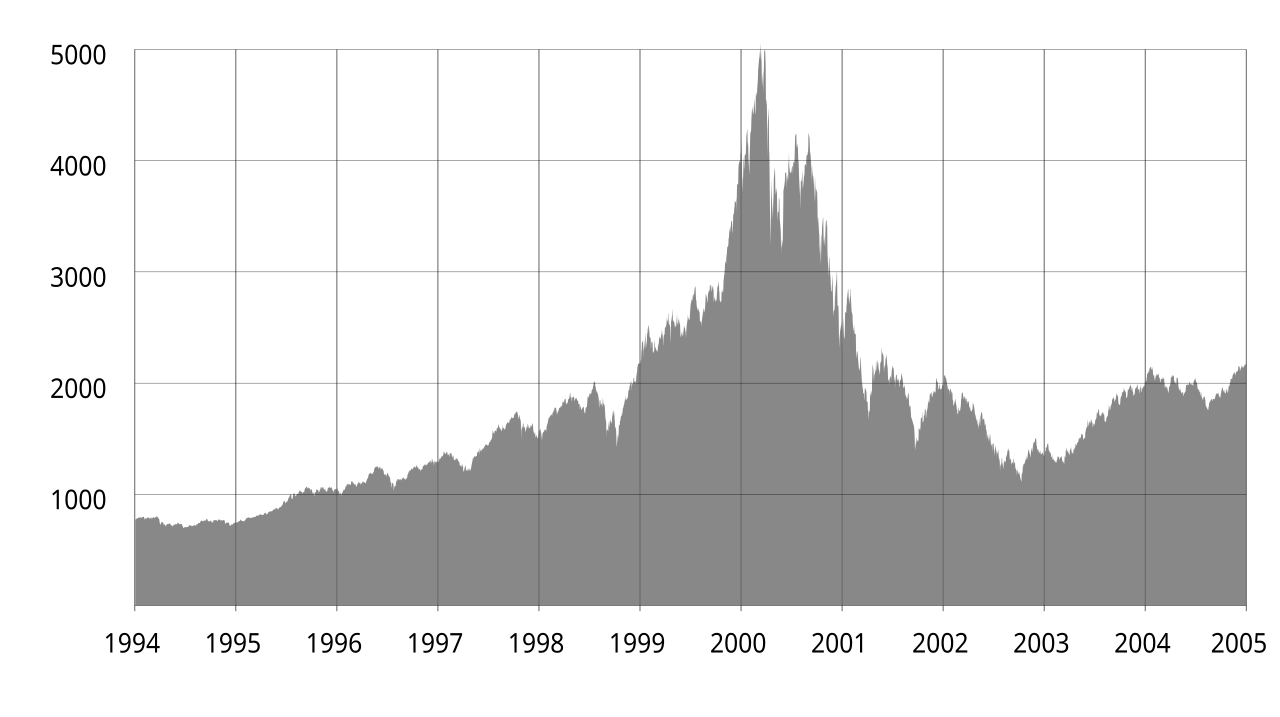
However, the problem is that bubbles are intrinsic and contagious. They spread like a virus. When an investor successfully exits with a profit, it signals others that it's safe. And when the bubble finally bursts—as happened with the South Sea Bubble in 1720 or the dot-com bubble in 2000—the destruction is swift and brutal. Prices fall not just 10%, but 50%, 70%, even 90%.
Signs of a Bubble That Are Often Overlooked
How do we know we're in a bubble? First, watch the media. When major newspapers start publishing stories about ordinary people becoming millionaires through stock investments, that's a sign the bubble is almost mature. Second, look at basic metrics like the price-to-earnings ratio (P/E). If the P/E surges far above historical averages (for example, over 30 for the US market), that's a warning.
Third, listen to conversations around you. If a colleague who never reads financial reports suddenly talks about tech company IPOs, that's a red flag. Fourth, observe the company's behavior itself. When companies start issuing new shares to take advantage of high prices, or when founders begin selling their shares in large quantities, that's a red flag.
Saving Yourself Before the Explosion
So, what should you do? First, don't be fooled by narratives. Remember that every bubble has a convincing story—whether it's the "internet revolution" or the "digital economy." Second, set your own investment rules. For example, don't invest more than you can afford to lose, and don't buy stocks just because others are buying them.
Third, take profits gradually. When prices rise, sell a portion to lock in gains. This may seem contrary to the instinct to hold on, but it's a smart strategy. Fourth, remember that the market will always recover, but your portfolio might not. Bubbles burst without warning, and those unprepared become victims.
Conclusion: Between Greed and Fear
Stock market bubbles are a mirror of human nature—greed and fear alternating in control. It is a reminder that markets are not always rational, and that we, as investors, must remain vigilant. Don't let the allure of short-term gains blind you to clear risks. As Warren Buffett said, "When the tide goes out, you find out who's been swimming without a swimsuit."
Thus, the real question is not "when will the bubble burst?" but "are we ready for that moment?" The answer lies in our ability to stay calm, think critically, and not be swept away by the crowd's excitement. Because ultimately, the stock market isn't about being the smartest, but about surviving.
Rujukan: Stock market bubble — Wikipedia
When Will the Stock Market Bubble Burst? Here Are the Signs That Many Miss. A stock market bubble is not just an unfamiliar economic term. It is a phenomenon that has occurred many times in history, destroying wealth in the blink of an eye. This article explores the psychology behind the bubble, how it forms, and the signs often overlooked by investors until it's too late.. When Everyone Becomes a Genius Investor
In hipster cafes in Kuala Lumpur, in the WhatsApp group chats of families, and in the open-plan offices, one topic dominates: stocks. "Have you bought tech stocks yet?" "I made a 30% profit in a week!" These voices echo like a euphoric symphony. Yet, behind this excitement lies a truth rarely acknowledged: when taxi drivers start giving stock tips, the bubble is already inflating.
This phenomenon is not new. History records that stock market bubbles are a type of economic bubble that occurs when market participants drive stock prices far above their actual value, based on any stock valuation system. Behavioral finance theory links these bubbles to cognitive biases that lead to group thinking and herd behavior. In other words, we are unaware that we are being swept along.
The Psychology of the Herd: Why We Believe What We Want to Believe
Imagine you are in a room full of people. Everyone is clapping. You don't know why, but you join in. That is the nature of a stock market bubble. It starts with an idea—perhaps about new technology or a sector seen as world-changing. Then, as more people buy, prices rise. And as prices rise, more people believe they will keep rising.
This is confirmation bias in action. We seek evidence that supports our beliefs—"Look, the price has gone up 50% this year!"—and ignore warning signs such as unreasonable price-to-earnings ratios. Behavioral finance theory explains that bubbles do not only occur in real-world unpredictable markets, but also in highly predictable experimental markets. This means, even though we know it's a bubble, we still get caught.
Rational Bubbles: When Logic Itself Is a Trap
There is an interesting argument: stock market bubbles may be rational, intrinsic, and contagious. Meaning, investors know that prices are too high, but they believe they can sell to someone even dumber the "greater fool" theory . This is called a rational bubble—we know it's a bubble, but we think we can exit before it bursts.
However, the problem is that bubbles are intrinsic and contagious. They spread like a virus. When an investor successfully exits with a profit, it signals others that it's safe. And when the bubble finally bursts—as happened with the South Sea Bubble in 1720 or the dot-com bubble in 2000—the destruction is swift and brutal. Prices fall not just 10%, but 50%, 70%, even 90%.
Signs of a Bubble That Are Often Overlooked
How do we know we're in a bubble? First, watch the media. When major newspapers start publishing stories about ordinary people becoming millionaires through stock investments, that's a sign the bubble is almost mature. Second, look at basic metrics like the price-to-earnings ratio P/E . If the P/E surges far above historical averages for example, over 30 for the US market , that's a warning.
Third, listen to conversations around you. If a colleague who never reads financial reports suddenly talks about tech company IPOs, that's a red flag. Fourth, observe the company's behavior itself. When companies start issuing new shares to take advantage of high prices, or when founders begin selling their shares in large quantities, that's a red flag.
Saving Yourself Before the Explosion
So, what should you do? First, don't be fooled by narratives. Remember that every bubble has a convincing story—whether it's the "internet revolution" or the "digital economy." Second, set your own investment rules. For example, don't invest more than you can afford to lose, and don't buy stocks just because others are buying them.
Third, take profits gradually. When prices rise, sell a portion to lock in gains. This may seem contrary to the instinct to hold on, but it's a smart strategy. Fourth, remember that the market will always recover, but your portfolio might not. Bubbles burst without warning, and those unprepared become victims.
Conclusion: Between Greed and Fear
Stock market bubbles are a mirror of human nature—greed and fear alternating in control. It is a reminder that markets are not always rational, and that we, as investors, must remain vigilant. Don't let the allure of short-term gains blind you to clear risks. As Warren Buffett said, "When the tide goes out, you find out who's been swimming without a swimsuit."
Thus, the real question is not "when will the bubble burst?" but "are we ready for that moment?" The answer lies in our ability to stay calm, think critically, and not be swept away by the crowd's excitement. Because ultimately, the stock market isn't about being the smartest, but about surviving.
Rujukan: Stock market bubble — Wikipedia https://en.wikipedia.org/wiki/Stock market bubble