That morning, the clock showed 6:17 a.m. Zara's mother gently pulled the blanket from Aiman, her four-year-old son's body. Before she could touch his shoulder, Aiman began to tremble — his body stiff as an iron rod, eyes rolling back, breathing labored. The mother did not scream. She took a deep breath, laid Aiman on his side, and counted the seconds. One... two... five... ten. The tonic seizure ended in 12 seconds. But before she could put water to his lips, Aiman started convulsing again — this time rhythmically, like a marionette being pulled by an irregular string. A myoclonic seizure. Then, within 45 minutes, there were three more absence seizures — vacant eyes, meaningless smiles, bodies frozen for 8 seconds. Total that day: 314 seizures. Not a guess. Not an exaggeration. This is the daily data recorded by his mother in a blue logbook — a book now 17 cm thick.
A Baby Born with a Brain 'Too Fast'
Aiman was born full-term, weighing 3.1 kg, crying strongly. No signs of danger. However, at seven months old, he began to repeatedly lower his head — a reflex known as
infantile spasms. Doctors called it
West syndrome. An EEG showed a
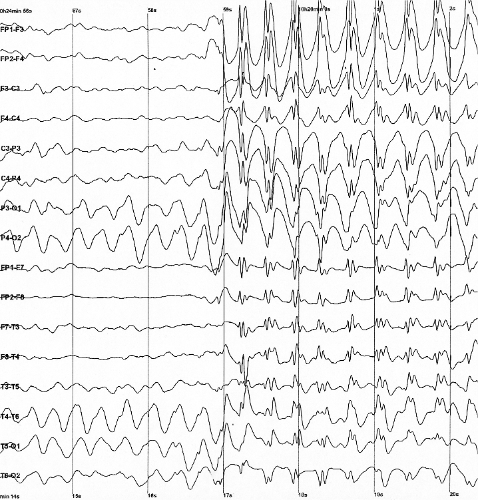
hipsarrhythmia pattern: chaotic electrical activity in the brain like a storm in a glass. Treatment began with ACTH hormones. The seizures decreased — but did not disappear. At age three, a new EEG revealed a darker truth:
slow spike-and-wave waves below 2.5 Hz, accompanied by progressive cognitive decline. The final diagnosis came like lightning:
Lennox–Gastaut syndrome. Not just epilepsy. It is a systemic brain failure — where no single neural pathway can be trusted anymore.
Names Written in Blood and Brain Waves
This syndrome is not a made-up name. It is the legacy of two men who walked on two continents, yet faced the same problem: children losing their childhood not because of a common illness, but because their own brains became a battlefield. Dr. William G. Lennox in Boston, USA, published his first clinical report in 1938 — describing 12 children with 'multiple seizure types, developmental disabilities, and slow EEGs'. In Marseille, France, Dr. Henri Gastaut confirmed these findings through a detailed EEG study on 23 patients in 1966. They never met. But their names are now etched into every neurological record — as a reminder that some diseases can only be recognized when two different eyes see the same truth.
Where Genes, Birth, and Viruses Meet to Cause Seizures
LGS is not a disease — it is an
end-stage syndrome, the intersection of various neurological injuries. Around 30% of cases are related to genetic abnormalities: mutations in the
STXBP1,
CDKL5, or
SCN1A genes. Another 25% arise after perinatal injury — such as oxygen deprivation during birth, or congenital infections (toxoplasma, CMV). Some begin from small brain tumors, cortical malformations, or tuberous sclerosis — where benign growths appear in the brain, kidneys, and skin like secret clues of the body. The saddest part? About 10% of cases never find a definite cause — even after MRI, whole-exome sequencing, and metabolic tests. Their brains have seizures not because something is 'wrong', but because
all control systems have failed simultaneously.
Numbers That Never Lie: 5%, 90%, and One Day in November
Statistics of LGS are not ordinary numbers. They are lifelines measured in seizure seconds and years of loss. Early death — 5% in childhood — mostly due to
SUDEP (Sudden Unexpected Death in Epilepsy) or complications from status epilepticus. The rest? More than 90% of adults with LGS still suffer from seizures — not occasionally, but daily, weekly, or dozens of times a day. No spontaneous remission. No 'full recovery'. There is only reduction: from 300 to 80 seizures a day. From not being able to sit without supervision, to being able to hold a cup for 45 seconds. That is why November 1st has been established as
International LGS Awareness Day: not to celebrate victory, but to remind the world that every child like Aiman deserves early diagnosis, access to clinically approved cannabidiol (CBD), vagus nerve stimulation, or a ketogenic diet — not as options, but as neurological human rights.
The Brain That Never Stops Talking
Today, Aiman is seven years old. He does not attend a regular school. But he learns to read letters through LED lights flashing according to the frequency of his brain waves. He does not speak, but uses a tablet with AAC (Augmentative and Alternative Communication) to choose images:
‘love’, ‘water’, ‘sleep’, ‘father is coming’. The latest EEG shows a 40% reduction in slow-wave activity — not healing, but
control. And on one afternoon, while his mother was reading a prayer, Aiman turned, looked into her eyes, and held her fingers — for 11 full seconds. No seizure. No disturbance. Just two humans, one moment of absolute presence. That is the strongest evidence: that behind every chaotic EEG wave, behind every seizure that tears through time, the brain of children with LGS never stops trying — to communicate, to connect, to
be. And perhaps, that is the most human language ever produced by a brain at war.
This Child Suffers 300 Seizures a Day — But the Brain Never Stops Fighting. In a small house in Kelantan, a four-year-old child wakes up every morning with a reality that most people never experience: his brain is at war — not once or twice, but hundreds of times a day. This is not a fictional story. This is Lennox–Gastaut syndrome — the most severe form of epilepsy ever recorded in pediatric neurology. And it is closer to us than we think.. That morning, the clock showed 6:17 a.m. Zara's mother gently pulled the blanket from Aiman, her four-year-old son's body. Before she could touch his shoulder, Aiman began to tremble — his body stiff as an iron rod, eyes rolling back, breathing labored. The mother did not scream. She took a deep breath, laid Aiman on his side, and counted the seconds. One... two... five... ten. The tonic seizure ended in 12 seconds. But before she could put water to his lips, Aiman started convulsing again — this time rhythmically, like a marionette being pulled by an irregular string. A myoclonic seizure. Then, within 45 minutes, there were three more absence seizures — vacant eyes, meaningless smiles, bodies frozen for 8 seconds. Total that day: 314 seizures. Not a guess. Not an exaggeration. This is the daily data recorded by his mother in a blue logbook — a book now 17 cm thick.
A Baby Born with a Brain 'Too Fast'
Aiman was born full-term, weighing 3.1 kg, crying strongly. No signs of danger. However, at seven months old, he began to repeatedly lower his head — a reflex known as infantile spasms . Doctors called it West syndrome . An EEG showed a hipsarrhythmia pattern: chaotic electrical activity in the brain like a storm in a glass. Treatment began with ACTH hormones. The seizures decreased — but did not disappear. At age three, a new EEG revealed a darker truth: slow spike-and-wave waves below 2.5 Hz, accompanied by progressive cognitive decline. The final diagnosis came like lightning: Lennox–Gastaut syndrome . Not just epilepsy. It is a systemic brain failure — where no single neural pathway can be trusted anymore.
Names Written in Blood and Brain Waves
This syndrome is not a made-up name. It is the legacy of two men who walked on two continents, yet faced the same problem: children losing their childhood not because of a common illness, but because their own brains became a battlefield. Dr. William G. Lennox in Boston, USA, published his first clinical report in 1938 — describing 12 children with 'multiple seizure types, developmental disabilities, and slow EEGs'. In Marseille, France, Dr. Henri Gastaut confirmed these findings through a detailed EEG study on 23 patients in 1966. They never met. But their names are now etched into every neurological record — as a reminder that some diseases can only be recognized when two different eyes see the same truth.
Where Genes, Birth, and Viruses Meet to Cause Seizures
LGS is not a disease — it is an end-stage syndrome , the intersection of various neurological injuries. Around 30% of cases are related to genetic abnormalities: mutations in the STXBP1 , CDKL5 , or SCN1A genes. Another 25% arise after perinatal injury — such as oxygen deprivation during birth, or congenital infections toxoplasma, CMV . Some begin from small brain tumors, cortical malformations, or tuberous sclerosis — where benign growths appear in the brain, kidneys, and skin like secret clues of the body. The saddest part? About 10% of cases never find a definite cause — even after MRI, whole-exome sequencing, and metabolic tests. Their brains have seizures not because something is 'wrong', but because all control systems have failed simultaneously .
Numbers That Never Lie: 5%, 90%, and One Day in November
Statistics of LGS are not ordinary numbers. They are lifelines measured in seizure seconds and years of loss. Early death — 5% in childhood — mostly due to SUDEP Sudden Unexpected Death in Epilepsy or complications from status epilepticus. The rest? More than 90% of adults with LGS still suffer from seizures — not occasionally, but daily, weekly, or dozens of times a day. No spontaneous remission. No 'full recovery'. There is only reduction: from 300 to 80 seizures a day. From not being able to sit without supervision, to being able to hold a cup for 45 seconds. That is why November 1st has been established as International LGS Awareness Day : not to celebrate victory, but to remind the world that every child like Aiman deserves early diagnosis, access to clinically approved cannabidiol CBD , vagus nerve stimulation, or a ketogenic diet — not as options, but as neurological human rights.
The Brain That Never Stops Talking
Today, Aiman is seven years old. He does not attend a regular school. But he learns to read letters through LED lights flashing according to the frequency of his brain waves. He does not speak, but uses a tablet with AAC Augmentative and Alternative Communication to choose images: ‘love’, ‘water’, ‘sleep’, ‘father is coming’ . The latest EEG shows a 40% reduction in slow-wave activity — not healing, but control . And on one afternoon, while his mother was reading a prayer, Aiman turned, looked into her eyes, and held her fingers — for 11 full seconds. No seizure. No disturbance. Just two humans, one moment of absolute presence. That is the strongest evidence: that behind every chaotic EEG wave, behind every seizure that tears through time, the brain of children with LGS never stops trying — to communicate, to connect, to be . And perhaps, that is the most human language ever produced by a brain at war.