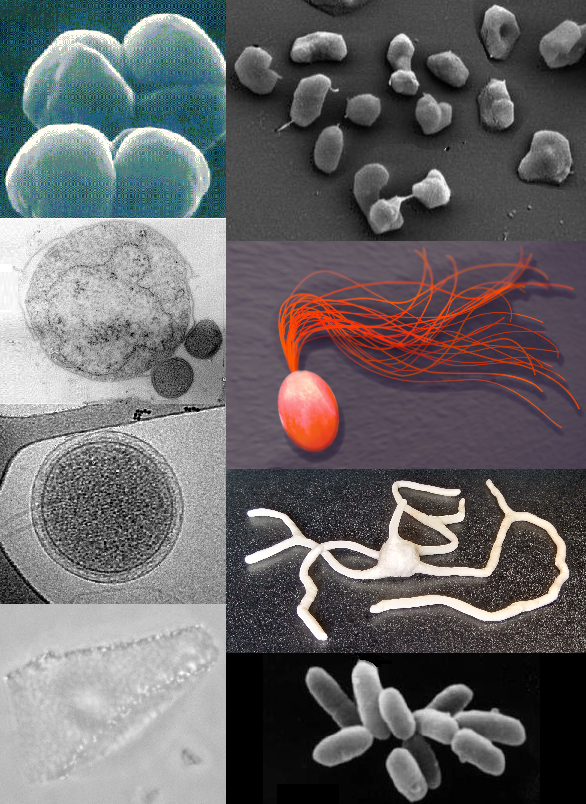
Not Bacteria, Not 'Us' — But Closer Than You Think
Imagine: you're watching a documentary about early life on Earth. Lava erupts, the atmosphere is full of methane and ammonia, no free oxygen — a place that's 'dead' for most creatures today. But there... something is swimming. Not bacteria. Not plants. Not animals. Not fungi. It is
Archaea — ancient creatures whose name means 'the oldest' in ancient Greek (
arkhaîon). The secret? They are not just relics of the prehistoric era — they are
direct ancestors of all eukaryotic creatures... including
you.
But don't imagine 'ancestors' as primitive versions of humans. Not at all. Archaea are prokaryotes — no nucleus, no complex organelles. Yet their genetics? Wow. Modern DNA analysis proves: the evolutionary path that led to human, plant, and fungal cells actually branched off from one branch of Archaea — specifically from a group called Asgardarchaeota, first discovered at the bottom of the northern Norwegian Sea in 2015. The name 'Asgard' is no joke: like Norse gods, they are truly the 'founders of the biological universe'.
Membran yang Tak Pernah Rosak — Rahsia Hidup di Neraka Dunia Nyata
If bacteria use ester-linked lipids (like cooking oil), Archaea use
ether-linked lipids — a much more stable chemical bond. Imagine: it's like comparing a hemp rope with a steel cable. Ether bonds don't easily break under high temperatures, extreme pH, or immense pressure. That's why archaea can live in active volcanic craters (like in Yellowstone), in underwater geothermal vents ('black smokers'), or in salt lakes with salt concentrations five times higher than seawater. There, bacteria would burst — but archaea? They
eat methane,
breathe hydrogen sulfide, and
reproduce normally. One species,
Methanopyrus kandleri, has been recorded growing at 122°C — a temperature where human proteins completely disintegrate.
Methanogen: Gas Producer That Changed Climate (and Cows' Stomachs)
More than 90% of methane in Earth's atmosphere is produced by archaea — especially
methanogens. They don't need oxygen. In fact, oxygen kills them. They 'breathe' in a unique way: combining hydrogen and carbon dioxide (or acetate) to produce methane (CH₄). And this isn't just science: methanogens are silent stars in the digestive systems of ruminants. Yes — every time a cow or a buffalo farts or belches, 70–90% of the gas comes from
archaea in their rumen. Without them, livestock couldn't digest grass. Without them, many anaerobic ecosystems (like rice paddies or waste disposal sites) wouldn't function. They are not pests — they are the
power providers in the world without air.
Not Archaebacteria — And Why the Name Was Completely Dropped
In the past, we called them 'archaebacteria' — as if they were a 'primitive' version of bacteria. But in 1977, microbiologist Carl Woese and his colleagues changed everything. By comparing ribosomal RNA sequences (a kind of 'genetic ID card'), they found: Archaea are more different from bacteria than bacteria are from humans! The genetic difference between Archaea and Bacteria is greater than between humans and pine trees. So, Woese created a
third domain — besides Bacteria and Eukarya. The term 'archaebacteria' was discarded because it was misleading: they are not bacteria, never were bacteria, and are not directly evolutionarily related to most bacteria. They are a separate branch — and this branch eventually became the root of the
Eukarya branch.
Asgardarchaeota: Creatures from the Ocean Floor That Rewrote Biology Books
In 2015, a team of scientists in Japan and Canada took water samples from 2.5 km deep on the ocean floor. There, they found genes that... were strange. Genes that had only been known in eukaryotic cells: genes for cytoskeleton proteins (like actin), genes for vesicle formation, genes for the process of 'eating' other cells (phagocytosis). These creatures were named
Lokiarchaeota, followed by
Thorarchaeota,
Odinarchaeota, and
Heimdallarchaeota — all part of the
Asgardarchaeota group. Now, scientists have successfully cultured
Candidatus Prometheoarchaeum syntrophicum — the first Asgard species to grow in a lab. And what did they find? It lives in tight symbiosis, forming structures like 'tentacles', and may —
may — be a model of how the first eukaryotic cells emerged: not through random mutations, but through intimate collaboration between archaea and ancient bacteria.
So, next time you drink water, look up at the sky, or even brush your teeth — remember: inside your mouth, inside your gut, under your feet, and in the darkest depths of the ocean... there are creatures that are 3.5 billion years old, which are not bacteria, not 'us', but part of our origin. They are not fossils. They are not legends. They are real. And they are alive — right before our eyes. We're just beginning to learn how to see them.
This Ancient Creature Is Not a Bacterium, Nor a Human Cell — But Are Our Real Ancestors?. There is a group of living organisms that have existed since the Earth was hot, swimming in acid pools and boiling at the bottom of the sea — but not bacteria. They are closer to *you* than you think. And yes, the cells in your body also have ancestors from this group. Who are they really?. Not Bacteria, Not 'Us' — But Closer Than You Think
Imagine: you're watching a documentary about early life on Earth. Lava erupts, the atmosphere is full of methane and ammonia, no free oxygen — a place that's 'dead' for most creatures today. But there... something is swimming. Not bacteria. Not plants. Not animals. Not fungi. It is Archaea — ancient creatures whose name means 'the oldest' in ancient Greek arkhaîon . The secret? They are not just relics of the prehistoric era — they are direct ancestors of all eukaryotic creatures... including you .
But don't imagine 'ancestors' as primitive versions of humans. Not at all. Archaea are prokaryotes — no nucleus, no complex organelles. Yet their genetics? Wow. Modern DNA analysis proves: the evolutionary path that led to human, plant, and fungal cells actually branched off from one branch of Archaea — specifically from a group called Asgardarchaeota , first discovered at the bottom of the northern Norwegian Sea in 2015. The name 'Asgard' is no joke: like Norse gods, they are truly the 'founders of the biological universe'.
Membran yang Tak Pernah Rosak — Rahsia Hidup di Neraka Dunia Nyata
If bacteria use ester-linked lipids like cooking oil , Archaea use ether-linked lipids — a much more stable chemical bond. Imagine: it's like comparing a hemp rope with a steel cable. Ether bonds don't easily break under high temperatures, extreme pH, or immense pressure. That's why archaea can live in active volcanic craters like in Yellowstone , in underwater geothermal vents 'black smokers' , or in salt lakes with salt concentrations five times higher than seawater. There, bacteria would burst — but archaea? They eat methane, breathe hydrogen sulfide, and reproduce normally. One species, Methanopyrus kandleri , has been recorded growing at 122°C — a temperature where human proteins completely disintegrate.
Methanogen: Gas Producer That Changed Climate and Cows' Stomachs
More than 90% of methane in Earth's atmosphere is produced by archaea — especially methanogens . They don't need oxygen. In fact, oxygen kills them. They 'breathe' in a unique way: combining hydrogen and carbon dioxide or acetate to produce methane CH₄ . And this isn't just science: methanogens are silent stars in the digestive systems of ruminants. Yes — every time a cow or a buffalo farts or belches, 70–90% of the gas comes from archaea in their rumen. Without them, livestock couldn't digest grass. Without them, many anaerobic ecosystems like rice paddies or waste disposal sites wouldn't function. They are not pests — they are the power providers in the world without air.
Not Archaebacteria — And Why the Name Was Completely Dropped
In the past, we called them 'archaebacteria' — as if they were a 'primitive' version of bacteria. But in 1977, microbiologist Carl Woese and his colleagues changed everything. By comparing ribosomal RNA sequences a kind of 'genetic ID card' , they found: Archaea are more different from bacteria than bacteria are from humans! The genetic difference between Archaea and Bacteria is greater than between humans and pine trees. So, Woese created a third domain — besides Bacteria and Eukarya. The term 'archaebacteria' was discarded because it was misleading: they are not bacteria, never were bacteria, and are not directly evolutionarily related to most bacteria. They are a separate branch — and this branch eventually became the root of the Eukarya branch.
Asgardarchaeota: Creatures from the Ocean Floor That Rewrote Biology Books
In 2015, a team of scientists in Japan and Canada took water samples from 2.5 km deep on the ocean floor. There, they found genes that... were strange. Genes that had only been known in eukaryotic cells: genes for cytoskeleton proteins like actin , genes for vesicle formation, genes for the process of 'eating' other cells phagocytosis . These creatures were named Lokiarchaeota , followed by Thorarchaeota , Odinarchaeota , and Heimdallarchaeota — all part of the Asgardarchaeota group. Now, scientists have successfully cultured Candidatus Prometheoarchaeum syntrophicum — the first Asgard species to grow in a lab. And what did they find? It lives in tight symbiosis, forming structures like 'tentacles', and may — may — be a model of how the first eukaryotic cells emerged: not through random mutations, but through intimate collaboration between archaea and ancient bacteria.
So, next time you drink water, look up at the sky, or even brush your teeth — remember: inside your mouth, inside your gut, under your feet, and in the darkest depths of the ocean... there are creatures that are 3.5 billion years old, which are not bacteria, not 'us', but part of our origin . They are not fossils. They are not legends. They are real. And they are alive — right before our eyes. We're just beginning to learn how to see them.