Sudden Glowing Spheres
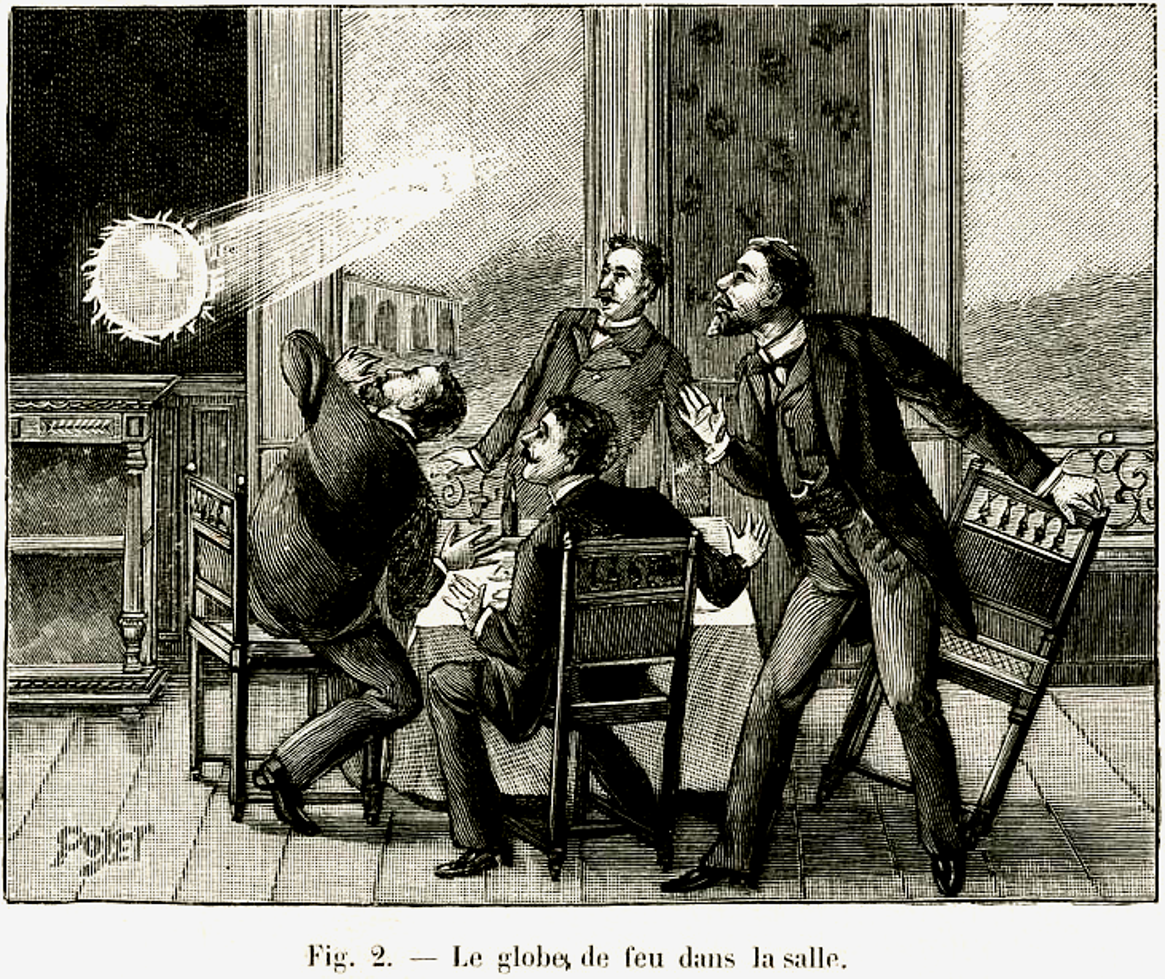
Imagine you are sitting in your living room during heavy rain and thunder. Suddenly, a ball of light the size of a tennis ball floats through the window, slowly hovers over the floor, and then zooms out again without leaving any burn marks. This scene is not from a science fiction movie; it is one of thousands of eyewitness reports about a phenomenon known as ball lightning (ball lightning).
This phenomenon was first recorded scientifically in the 19th century, but stories about it have existed in folktales of various cultures for centuries. In the 12th century in England, a monk named Gervase of Canterbury recorded seeing a "spherical firestone" during a storm. In ancient China, it was described as "dragon fire." However, to this day, ball lightning remains one of the most difficult atmospheric mysteries for modern science to explain.
Unusual and Contradictory Physical Properties
What distinguishes ball lightning from other electrical phenomena such as Saint Elmo's fire or regular lightning is its longevity. Regular lightning lasts only a fraction of a second, while ball lightning can last from several seconds to a minute. Its size is also remarkably varied: some reports mention it as small as a peanut, others as large as a basketball, and even some reaching several meters in diameter.
The color of ball lightning is also not fixed. Most reports mention white, yellow, orange, or red, but there are also accounts of blue, green, or purple. More mysteriously, it can move in various ways—some appear to float stationary, some move horizontally as if blown by the wind, some bounce around, and some seem to follow metal objects like fences or electric wires.
Another strange feature is its smell. Many witnesses report a strong sulfur smell after the ball lightning explodes, similar to the smell of a burnt match. This raises the question: does ball lightning contain sulfur or specific chemical compounds? Or is the smell the result of an electrical reaction with the air?
Scientific Theories: Plasma, Microwaves, or Burning Silicon?
For several decades, scientists have proposed various mechanisms to explain ball lightning. None of them have been fully accepted, but some main theories deserve attention:
The trapped plasma theory states that ball lightning is plasma—superheated ionized gas—that is trapped in a magnetic field or air vortex. Plasma usually spreads quickly, but if it can be twisted into a torus (donut shape), it might last longer. However, such hot plasma should burn anything it touches, yet many reports state that ball lightning leaves no burn marks.
The burning silicon theory is quite intriguing. In 2000, John Abrahamson and James Dinniss from the University of Canterbury, New Zealand, suggested that when regular lightning strikes soil rich in silicon (such as sand or clay), it can vaporize the silicon. The silicon vapor then oxidizes in the air, producing glowing balls made of burning silicon particles. This theory has been tested with laboratory simulations that produced small glowing balls resembling ball lightning.
The microwave theory argues that ball lightning is a pocket of heated air caused by microwaves from lightning. These microwaves may be trapped in air bubbles that act like resonant cavities, producing stable light and heat.
First Scientific Evidence: The 2014 Optical Spectrum
For years, ball lightning was known only through eyewitness accounts and laboratory experiments. There was no direct physical evidence that could be studied. However, in January 2014, a breakthrough occurred. A group of researchers from Northwest University in China accidentally recorded the optical spectrum of ball lightning while studying a thunderstorm on the Qinghai Plateau.
Using a spectrometer and high-speed camera, they captured images of a ball lightning event lasting 1.6 seconds. The obtained spectrum showed emission lines from silicon, iron, and calcium—elements commonly found in soil. This supports the burning silicon theory, but does not prove it definitively.
This data is the first direct scientific evidence regarding the composition of ball lightning, but it is just one incident. Many scientists are still waiting for replication and more data before drawing conclusions.
Famous Cases and Modern Reports
One of the most frequently mentioned ball lightning incidents occurred in 1994 in Uppsala, Sweden. A physicist named C. E. R. Bruce reported seeing a soccer-ball-sized ball lightning enter his room through a window, hover around the ceiling, and then explode with a loud bang. No physical damage was reported.
In Malaysia itself, there were reports from a farmer in Kedah in 2018 who claimed to see a ball of light the size of a coconut falling from the sky and bouncing around in a rice field before disappearing. Although there is no scientific documentation, such stories suggest that this phenomenon may occur more frequently than recorded.
In the digital age, video recordings of ball lightning are becoming easier to obtain. However, most videos are low quality and hard to distinguish from other phenomena such as flashlights, drones, or camera effects. This makes it difficult for scientific efforts to collect reliable data.
Implications and Future Research
Why should we care about ball lightning? Besides its fascinating nature, understanding this phenomenon can have significant implications in various fields. First, it can help us better understand the physics of plasma and atmospheric electricity. Second, if ball lightning can indeed enter buildings without causing damage, it may provide insights into how to protect critical infrastructure such as power stations or data centers from electrical disturbances.
Third, ball lightning may be related to other phenomena such as UFOs (unidentified flying objects). Many UFO reports involving glowing spherical objects moving strangely may actually be misinterpreted ball lightning. Therefore, research on ball lightning can help reduce false reports and improve public understanding of atmospheric science.
Questions That Remain Unanswered
Although progress has been made, many questions remain open. How can ball lightning last so long without an external energy source? Why does it sometimes appear to penetrate walls or windows without leaving a hole? Is it truly dangerous? Reports of injuries caused by ball lightning are very rare, but some claim it can cause electric shocks or burns.
Perhaps the biggest question is: is ball lightning a single phenomenon with one mechanism, or is it a collection of different phenomena that look similar? If the latter is true, then each theory may only explain part of the cases, and we need to study ball lightning on a case-by-case basis.
Conclusion: A Mystery Waiting for an Answer
Ball lightning remains one of the most fascinating natural puzzles. It reminds us that even though science has advanced so far, there are still common phenomena that we cannot fully explain. Perhaps one day, with better high-speed cameras, more storm monitoring stations, and closer international cooperation, we will be able to uncover the secrets of these glowing spheres. Until then, ball lightning will continue to be a subject that is mesmerizing—and confusing—for scientists and the general public.
If you have ever witnessed ball lightning, don't think it's just a fantasy. Note down the details, share them with local researchers, and you may help solve a mystery that has lasted for centuries.
---
Reference: Ball lightning — Wikipedia
Mysterious Lightning Balls: A Glowing Phenomenon That Still Baffles Modern Scientists. Ball lightning is a rare atmospheric phenomenon that produces glowing spherical objects usually during thunderstorms. Reports dating back centuries describe them as the size of a bean to several meters in diameter, capable of exploding with a sulfur smell, and lasting much longer than ordinary lightning. However, scientific data remains limited, and various theories attempt to explain its mechanism—from trapped plasma to burning silicon—without a definitive conclusion. This article explores the mystery, current evidence, and questions that continue to confuse researchers.. Sudden Glowing Spheres
Imagine you are sitting in your living room during heavy rain and thunder. Suddenly, a ball of light the size of a tennis ball floats through the window, slowly hovers over the floor, and then zooms out again without leaving any burn marks. This scene is not from a science fiction movie; it is one of thousands of eyewitness reports about a phenomenon known as ball lightning ball lightning .
This phenomenon was first recorded scientifically in the 19th century, but stories about it have existed in folktales of various cultures for centuries. In the 12th century in England, a monk named Gervase of Canterbury recorded seeing a "spherical firestone" during a storm. In ancient China, it was described as "dragon fire." However, to this day, ball lightning remains one of the most difficult atmospheric mysteries for modern science to explain.
Unusual and Contradictory Physical Properties
What distinguishes ball lightning from other electrical phenomena such as Saint Elmo's fire or regular lightning is its longevity. Regular lightning lasts only a fraction of a second, while ball lightning can last from several seconds to a minute. Its size is also remarkably varied: some reports mention it as small as a peanut, others as large as a basketball, and even some reaching several meters in diameter.
The color of ball lightning is also not fixed. Most reports mention white, yellow, orange, or red, but there are also accounts of blue, green, or purple. More mysteriously, it can move in various ways—some appear to float stationary, some move horizontally as if blown by the wind, some bounce around, and some seem to follow metal objects like fences or electric wires.
Another strange feature is its smell. Many witnesses report a strong sulfur smell after the ball lightning explodes, similar to the smell of a burnt match. This raises the question: does ball lightning contain sulfur or specific chemical compounds? Or is the smell the result of an electrical reaction with the air?
Scientific Theories: Plasma, Microwaves, or Burning Silicon?
For several decades, scientists have proposed various mechanisms to explain ball lightning. None of them have been fully accepted, but some main theories deserve attention:
The trapped plasma theory states that ball lightning is plasma—superheated ionized gas—that is trapped in a magnetic field or air vortex. Plasma usually spreads quickly, but if it can be twisted into a torus donut shape , it might last longer. However, such hot plasma should burn anything it touches, yet many reports state that ball lightning leaves no burn marks.
The burning silicon theory is quite intriguing. In 2000, John Abrahamson and James Dinniss from the University of Canterbury, New Zealand, suggested that when regular lightning strikes soil rich in silicon such as sand or clay , it can vaporize the silicon. The silicon vapor then oxidizes in the air, producing glowing balls made of burning silicon particles. This theory has been tested with laboratory simulations that produced small glowing balls resembling ball lightning.
The microwave theory argues that ball lightning is a pocket of heated air caused by microwaves from lightning. These microwaves may be trapped in air bubbles that act like resonant cavities, producing stable light and heat.
First Scientific Evidence: The 2014 Optical Spectrum
For years, ball lightning was known only through eyewitness accounts and laboratory experiments. There was no direct physical evidence that could be studied. However, in January 2014, a breakthrough occurred. A group of researchers from Northwest University in China accidentally recorded the optical spectrum of ball lightning while studying a thunderstorm on the Qinghai Plateau.
Using a spectrometer and high-speed camera, they captured images of a ball lightning event lasting 1.6 seconds. The obtained spectrum showed emission lines from silicon, iron, and calcium—elements commonly found in soil. This supports the burning silicon theory, but does not prove it definitively.
This data is the first direct scientific evidence regarding the composition of ball lightning, but it is just one incident. Many scientists are still waiting for replication and more data before drawing conclusions.
Famous Cases and Modern Reports
One of the most frequently mentioned ball lightning incidents occurred in 1994 in Uppsala, Sweden. A physicist named C. E. R. Bruce reported seeing a soccer-ball-sized ball lightning enter his room through a window, hover around the ceiling, and then explode with a loud bang. No physical damage was reported.
In Malaysia itself, there were reports from a farmer in Kedah in 2018 who claimed to see a ball of light the size of a coconut falling from the sky and bouncing around in a rice field before disappearing. Although there is no scientific documentation, such stories suggest that this phenomenon may occur more frequently than recorded.
In the digital age, video recordings of ball lightning are becoming easier to obtain. However, most videos are low quality and hard to distinguish from other phenomena such as flashlights, drones, or camera effects. This makes it difficult for scientific efforts to collect reliable data.
Implications and Future Research
Why should we care about ball lightning? Besides its fascinating nature, understanding this phenomenon can have significant implications in various fields. First, it can help us better understand the physics of plasma and atmospheric electricity. Second, if ball lightning can indeed enter buildings without causing damage, it may provide insights into how to protect critical infrastructure such as power stations or data centers from electrical disturbances.
Third, ball lightning may be related to other phenomena such as UFOs unidentified flying objects . Many UFO reports involving glowing spherical objects moving strangely may actually be misinterpreted ball lightning. Therefore, research on ball lightning can help reduce false reports and improve public understanding of atmospheric science.
Questions That Remain Unanswered
Although progress has been made, many questions remain open. How can ball lightning last so long without an external energy source? Why does it sometimes appear to penetrate walls or windows without leaving a hole? Is it truly dangerous? Reports of injuries caused by ball lightning are very rare, but some claim it can cause electric shocks or burns.
Perhaps the biggest question is: is ball lightning a single phenomenon with one mechanism, or is it a collection of different phenomena that look similar? If the latter is true, then each theory may only explain part of the cases, and we need to study ball lightning on a case-by-case basis.
Conclusion: A Mystery Waiting for an Answer
Ball lightning remains one of the most fascinating natural puzzles. It reminds us that even though science has advanced so far, there are still common phenomena that we cannot fully explain. Perhaps one day, with better high-speed cameras, more storm monitoring stations, and closer international cooperation, we will be able to uncover the secrets of these glowing spheres. Until then, ball lightning will continue to be a subject that is mesmerizing—and confusing—for scientists and the general public.
If you have ever witnessed ball lightning, don't think it's just a fantasy. Note down the details, share them with local researchers, and you may help solve a mystery that has lasted for centuries.
---
Reference: Ball lightning — Wikipedia https://en.wikipedia.org/wiki/Ball lightning