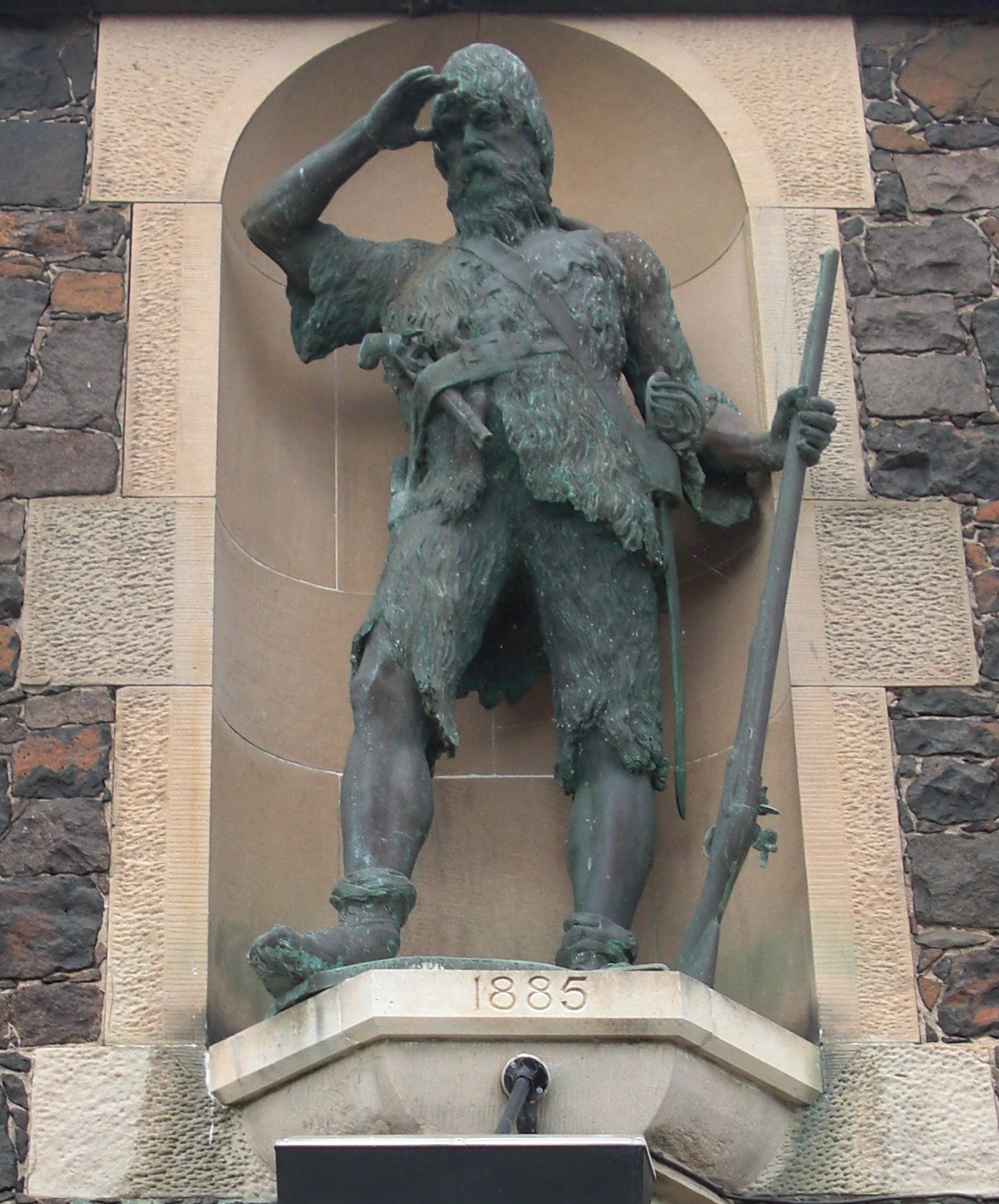
The Island That Waited Before He Came
In 18th-century nautical charts, Juan Fernández was not a name — it was a blank spot. A group of three volcanic islands rising from the Pacific like the spine of a sleeping dragon, 670 kilometers northwest of Chile. No harbor, no local name, no trace of humans other than the dust of a Spanish ship that had briefly stopped there two centuries earlier. Here, on October 12, 1704, the
Cinque Ports anchored with creaking wood and whistling ropes — not for trade or conquest, but for water, firewood, and a brief rest from the relentless waves. And here, Alexander Selkirk stepped ashore — not as a prisoner, not as a victim, but as a choice. He asked to be left behind. Not because he was mad, not because he was desperate — but because he
heard the ship whisper:
I will die at sea.
The Voice of Cracked Wood
Selkirk was not an ordinary sailor. He was born in Lower Largo, Fife — a fishing town where the wind carried the smell of salt and despair. From a young age, he struggled with authority: ran away from training as a carpenter, joined a warship without permission, then joined a pirate ship under the Spanish War of Succession. He knew the language of ships better than the language of the church: he could recognize subtle cracks in the hull from the vibration of the anchor, could smell the stench of wet wood from two decks away, could feel the structural weakness from the way the sails
complained when the wind changed. When the
Cinque Ports anchored on the island, he inspected the hull, tested the nails, tapped the main mast — then asked Captain Thomas Stradling to leave him. The request was made calmly, but Selkirk's eyes never blinked. Stradling thought him a mutineer. He agreed — then left, leaving one wooden chest, a knife, a pistol, four bullets, a piece of tobacco, and a leather-bound Bible.
Four Years Four Months in a Silent Language
Time did not move — it
crept. The first day, Selkirk still counted. On the fifth day, he began speaking aloud to a wild goat watching him from the cliff. On the 47th day, he found a cave — not an ordinary rock cave, but a natural space under the roots of a
Drimys winteri tree, with a thick layer of moss on the floor and walls that absorbed sound like cotton. There he slept. There he learned that hunger was not a feeling — but
the loss of a name: he forgot his mother's name, forgot the name of the last ship he had sailed on, forgot what it felt like to be called by his full name. He hunted goats with a self-made spear, purified water with sand and leaves, made shoes from preserved goat hide. Most surprisingly: he never lost his mind. He kept a journal — not with ink, but with charcoal and tree sap — recording changes in the seasons, the cycle of the moon, the number of eggs he found in bird nests. He even set up a 'clock' with the shadow of a stone on the ground.
When the Ship Returned — and He No Longer Recognized Human Voices
On February 1, 1709, the
Duke, led by Woodes Rogers, appeared on the horizon. Selkirk saw it from the peak of Cerro San Bosco — but he did not run. He crouched, watched the movement of the sails, calculated the angle of the wind. Only when the ship anchored and human voices broke the silence —
"Who are you?" — did he rise… then stood still, like a statue suddenly brought back to life. He did not answer. He just stared. When he finally spoke, his voice was hoarse, broken, as if his tongue had forgotten the shape of words. Rogers recorded in his diary:
"He looked wilder than the goats he herded." But more shocking: when given bread, Selkirk refused. He asked for raw meat. When given shoes, he asked for goat skin and a knife — then made his own sandals on the deck of the ship, under the amazed gaze of the crew.
A Legacy That Never Dries Up
Selkirk returned to England in 1711 — not as a hero, but as a phenomenon. His story was reported in
The Englishman, retold by Daniel Defoe in
Robinson Crusoe (though Defoe denied direct influence), and studied by 20th-century anthropologists as a study of extreme psychological resilience. But Selkirk's true legacy is not in books or maps — it is in every person who has ever chosen silence for the truth that cannot be heard in the noise of the crowd. The island is now named Isla Alejandro Selkirk — not because he conquered it, but because he
allowed it to change him. And if you have ever stood at the edge of the sea, gazing at the endless horizon, and felt — not fear, but
longing — for the deep silence… then you are hearing the same whisper that made Selkirk step off the ship: not the end of everything — but the beginning of your true self.
---
Rujukan: Alexander Selkirk — Wikipedia
He Asked to Be Left on a Deserted Island — Then Lived 4 Years 4 Months Without Humans. In 1704, a 28-year-old Scottish sailor asked his captain to leave him on an uninhabited island in the South Pacific. He was not escaping punishment — but escaping certain death. What happened when the ship actually sank three weeks later? And how did an ordinary man become a creature who spoke to wild cats, slept in moss-covered caves, and counted days with knife marks on tree trunks?. The Island That Waited Before He Came
In 18th-century nautical charts, Juan Fernández was not a name — it was a blank spot. A group of three volcanic islands rising from the Pacific like the spine of a sleeping dragon, 670 kilometers northwest of Chile. No harbor, no local name, no trace of humans other than the dust of a Spanish ship that had briefly stopped there two centuries earlier. Here, on October 12, 1704, the Cinque Ports anchored with creaking wood and whistling ropes — not for trade or conquest, but for water, firewood, and a brief rest from the relentless waves. And here, Alexander Selkirk stepped ashore — not as a prisoner, not as a victim, but as a choice. He asked to be left behind. Not because he was mad, not because he was desperate — but because he heard the ship whisper: I will die at sea.
The Voice of Cracked Wood
Selkirk was not an ordinary sailor. He was born in Lower Largo, Fife — a fishing town where the wind carried the smell of salt and despair. From a young age, he struggled with authority: ran away from training as a carpenter, joined a warship without permission, then joined a pirate ship under the Spanish War of Succession. He knew the language of ships better than the language of the church: he could recognize subtle cracks in the hull from the vibration of the anchor, could smell the stench of wet wood from two decks away, could feel the structural weakness from the way the sails complained when the wind changed. When the Cinque Ports anchored on the island, he inspected the hull, tested the nails, tapped the main mast — then asked Captain Thomas Stradling to leave him. The request was made calmly, but Selkirk's eyes never blinked. Stradling thought him a mutineer. He agreed — then left, leaving one wooden chest, a knife, a pistol, four bullets, a piece of tobacco, and a leather-bound Bible.
Four Years Four Months in a Silent Language
Time did not move — it crept . The first day, Selkirk still counted. On the fifth day, he began speaking aloud to a wild goat watching him from the cliff. On the 47th day, he found a cave — not an ordinary rock cave, but a natural space under the roots of a Drimys winteri tree, with a thick layer of moss on the floor and walls that absorbed sound like cotton. There he slept. There he learned that hunger was not a feeling — but the loss of a name : he forgot his mother's name, forgot the name of the last ship he had sailed on, forgot what it felt like to be called by his full name. He hunted goats with a self-made spear, purified water with sand and leaves, made shoes from preserved goat hide. Most surprisingly: he never lost his mind. He kept a journal — not with ink, but with charcoal and tree sap — recording changes in the seasons, the cycle of the moon, the number of eggs he found in bird nests. He even set up a 'clock' with the shadow of a stone on the ground.
When the Ship Returned — and He No Longer Recognized Human Voices
On February 1, 1709, the Duke , led by Woodes Rogers, appeared on the horizon. Selkirk saw it from the peak of Cerro San Bosco — but he did not run. He crouched, watched the movement of the sails, calculated the angle of the wind. Only when the ship anchored and human voices broke the silence — "Who are you?" — did he rise… then stood still, like a statue suddenly brought back to life. He did not answer. He just stared. When he finally spoke, his voice was hoarse, broken, as if his tongue had forgotten the shape of words. Rogers recorded in his diary: "He looked wilder than the goats he herded." But more shocking: when given bread, Selkirk refused. He asked for raw meat. When given shoes, he asked for goat skin and a knife — then made his own sandals on the deck of the ship, under the amazed gaze of the crew.
A Legacy That Never Dries Up
Selkirk returned to England in 1711 — not as a hero, but as a phenomenon. His story was reported in The Englishman , retold by Daniel Defoe in Robinson Crusoe though Defoe denied direct influence , and studied by 20th-century anthropologists as a study of extreme psychological resilience. But Selkirk's true legacy is not in books or maps — it is in every person who has ever chosen silence for the truth that cannot be heard in the noise of the crowd. The island is now named Isla Alejandro Selkirk — not because he conquered it, but because he allowed it to change him. And if you have ever stood at the edge of the sea, gazing at the endless horizon, and felt — not fear, but longing — for the deep silence… then you are hearing the same whisper that made Selkirk step off the ship: not the end of everything — but the beginning of your true self.
---
Rujukan: Alexander Selkirk — Wikipedia https://en.wikipedia.org/wiki/Alexander Selkirk