AI
Kandungan Ditaja (Sponsored)
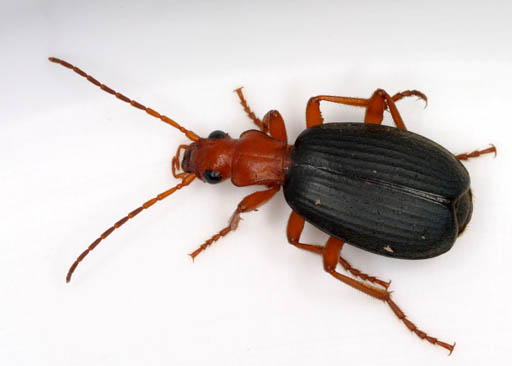
Chemical Canisters Under the Wings: How Bombardier Beetles Produce the Fastest Chemical Explosions in Their Bodies. The bombardier beetle is a terrestrial insect from the Carabidae family with the most advanced chemical defense system in the animal kingdom – capable of producing a high-temperature, toxic spray through a tightly controlled exothermic reaction in its body. With over 500 species spread across the world, particularly in temperate to tropical regions, its mechanism is not just a 'chemical spray' but a combination of precise anatomical design, fast chemical reaction kinetics, and dynamic pressure regulation. This system has become an important reference in the design of microreactors and active material delivery systems in medical technology.. Microreactor Anatomy: Two Separate Storage Chambers at the Back of the Body
The bombardier beetle Brachininae and Paussinae groups in the Carabidae family does not store 'ready-to-use' bombs in its body. Instead, it has two special chambers in the pygidial glands at the tip of the abdomen: one chamber stores an aqueous solution of hydroquinone and hydrogen peroxide H2O2 , and another chamber is a vestibule – a layered muscle reaction chamber that acts as a microreactor. Both chemicals are stored separately and stably in their physiological state, as catalytic enzymes like catalase and peroxidase are not present in the storage chamber. When a threat is detected through mechanical or chemical stimulation of the cuticle receptors, the sphincter muscles in the connecting channel relax immediately, allowing the mixture to enter the vestibule. It is here that the chemical reaction begins – not spontaneously, but tightly controlled by the presence of catalytic enzymes that are only active at specific pH and temperature levels.
Exothermic Reaction Controlled: From Cold Solution to Boiling Spray in Milliseconds
When hydroquinone and H2O2 combine in the vestibule, two types of enzymes work synergistically: catalase breaks down H2O2 into water and oxygen gas, while peroxidase oxidizes hydroquinone to benzoquinone – a toxic, pungent compound that causes strong irritation to the mucous membranes of predators. The overall reaction is highly exothermic: the local temperature rises from around 25°C to 100°C in less than 1 millisecond. The resulting oxygen gas pressure, along with water vapor, drives the hot mixture out through a 0.1–0.3 mm diameter exit channel. The spray's velocity reaches 9–12 m/s, with a rhythmic popping frequency ‘popping sound’ of 500–1000 Hz, resulting from the repeated opening and closing of the sphincter muscles. Thermographic measurements show that the maximum temperature of the spray does not exceed 102°C – high enough to burn soft tissues but not enough to damage the beetle's own protein structures, thanks to the high-density protective cuticle layer surrounding the glands.
Directional Accuracy and Defense Strategy: Not Just ‘Spraying Forward'
Unlike many chemical defense insects, the bombardier beetle can direct its spray up to 270 degrees – forward, backward, sideways, or even downward – without needing to change its body position. This is achieved through a rotating nozzle rotatable turret controlled by fine thoracic muscles. Field observations show that species like Brachinus crepitans in Europe can adjust the spray direction based on the location of the predator: if a spider approaches from behind, the spray is directed posteriorly; if an ant attacks from the side, the nozzle rotates 90° in 40 ms. Laboratory tests with natural predators like the spider Pardosa amentata show a defense success rate of over 93% – much higher than non-mechanism-equipped beetles. Some species also combine the spray with a ‘false death' movement feigned death with chemical release , deceiving predators in a critical phase.
Technological Inspiration: From Evolution to Medical Microreactor Design
The bombardier beetle's system has become a biomi-microfluidic model for materials engineers and pharmacists. The principles of separating reactive materials until activation, using biological catalysts to control reaction rates, and releasing gas pressure for precise delivery – all are applied in the development of ‘microrockets' for delivering drugs to tumors. A silicon microreactor prototype inspired by the beetle's vestibule developed by the ETH Zurich team in 2021 can produce high-speed micro-sprays with a volumetric accuracy of ±2.3 nL per pulse. In agricultural applications, similar technology is being tested for controlled release of quinone-based biopesticides at peak insect attack times, reducing dosage and environmental pollution.
Outstanding Questions: What Are the Limits of Chemical Reaction Evolution in Animals?
Although this mechanism has been studied for over 50 years, several questions remain unanswered. How can evolution ‘coordinate' two different metabolic pathways hydroquinone biosynthesis and H2O2 accumulation to act in sync without internal toxicity? Why have no vertebrate animals developed a similar system, despite many species producing H2O2 as a byproduct of metabolism? And most intriguingly: can this system be used as an analogy for designing micro-scale chemical energy storage systems – where energy is released not as heat, but as tightly controlled mechanical pressure?