AI
Kandungan Ditaja (Sponsored)
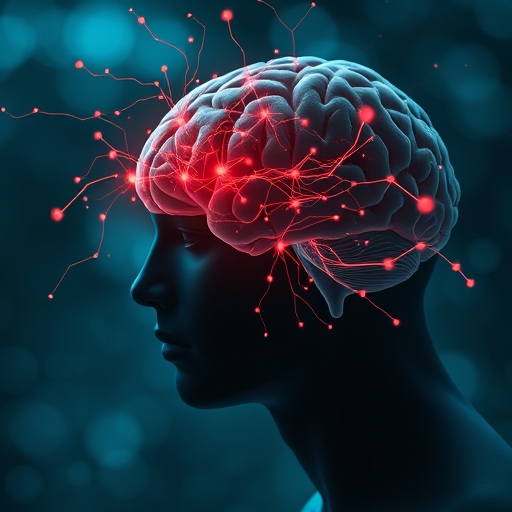
Ephaptic Coupling: Discovery That Human Brains Communicate Without Synapses Challenges Classic Neuroscience Theory. The latest research in neuroscience reveals that human brain cells can communicate with each other through electric fields generated by neuronal activity, without the need for chemical or electrical synapses. This phenomenon, known as ephaptic coupling, challenges the classic understanding of how the brain processes information and opens new perspectives in treating neurological diseases such as epilepsy and Parkinson's.. Introduction: A Silent Revolution in Neuroscience
For over a century, the prevailing paradigm in neuroscience has assumed that communication between neurons occurs solely through synapses—specialized junctions that transmit chemical or electrical signals from one cell to another. However, recent discoveries published in the journal Nature Reviews Neuroscience 2023 by a team of researchers from Case Western Reserve University and the University of California, San Francisco, have shaken the scientific world. They found that the human brain possesses an alternative communication mechanism known as ephaptic coupling, which is the direct interaction between electric fields generated by neurons without the need for physical connections. This discovery not only challenges fundamental neuroscience theories but also has the potential to revolutionize our understanding of consciousness, memory, and brain diseases.
Study Methodology: Detecting Hidden Electric Fields
Researchers employed high-speed optical imaging techniques and microelectrode arrays to record electrical activity in rat brain tissue and human brain samples obtained from epilepsy surgeries. They focused on the cortical layers of the cerebrum, particularly in areas involved in sensory processing. Using complex mathematical models, the team was able to separate synaptic signals from ephaptic signals. The results indicated that when a group of neurons is active simultaneously, the resulting electric field is strong enough to influence neighboring neurons within a few micrometers, even if no synapses exist between them. This was further validated through experiments where synaptic activity was chemically blocked, yet communication between neurons still occurred via electric fields.
Biochemical Mechanism: How Electric Fields Alter Membrane Potential
Ephaptic coupling operates on basic physical principles: each active neuron generates an electric field around itself. This field, though weak, can alter the membrane potential of neighboring neurons by influencing the distribution of ions outside the cell. When many neurons are active at the same time, the electric fields accumulate and become strong enough to trigger or inhibit action potentials in other neurons. This implies that the brain has an 'electric network' operating in parallel with the synaptic network. Researchers found that ephaptic coupling is most pronounced when neurons are in a 'ready' state near-threshold , allowing even small electric fields to have a significant impact. This phenomenon helps explain why brain activity often exhibits synchronized wave patterns, such as gamma and theta waves, which are difficult to account for by synapses alone.
Implications for Understanding Neurological Diseases
The discovery of ephaptic coupling has significant implications for the treatment of epilepsy. Previously, seizures were thought to be caused solely by uncontrolled synaptic activity. However, this study suggests that ephaptic electric fields can propagate seizure activity more rapidly and widely than synapses. This could explain why antiepileptic drugs that block synapses often fail to fully control seizures. The research team is now developing neuromodulation devices that use external electric fields to disrupt ephaptic propagation, offering new hope for treatment-resistant epilepsy patients. Furthermore, ephaptic coupling is also implicated in Parkinson's disease, where disruptions in the synchronization of electric fields between neurons in the basal ganglia lead to tremors and muscle rigidity.
Challenges to Theories of Consciousness and Memory
One of the most controversial aspects of this discovery is its implication for theories of consciousness. Philosophers and scientists have long debated how distributed neuronal activity gives rise to unified subjective experience. Ephaptic coupling offers a physical mechanism for global coordination of brain activity without requiring complex synaptic connections. Research by Dr. György Buzsáki from New York University suggests that ephaptic fields may be responsible for synchronizing brain waves across hemispheres, enabling information from various brain regions to be integrated into a single conscious perception. In the realm of memory, ephaptic coupling might play a role in short-term memory formation, where neurons need to maintain co-activity for a few seconds without continuous synaptic input.
Comparison with Synaptic Communication: Advantages and Disadvantages
While ephaptic coupling offers near-instantaneous communication as it relies on the speed of light rather than neurotransmitter transmission , it has drawbacks in terms of specificity. Synapses allow for precise one-to-one communication, whereas ephaptic coupling is diffuse, affecting all neurons within a certain range. This makes ephaptic coupling suitable for coordinating the activity of large neuronal populations but not for transmitting detailed information. Therefore, the brain uses both mechanisms simultaneously: synapses for precise communication, and ephaptic coupling for global coordination. This discovery changes how we view the brain as a hybrid electrical-chemical system, rather than solely a synaptic network.
Future Research Directions
The research team is currently investigating whether ephaptic coupling can be manipulated to enhance cognitive functions. Early experiments in rodents suggest that weak external electric fields can improve learning and memory. If successful in humans, this could lead to non-invasive therapies for cognitive disorders like dementia. Additionally, scientists are exploring the role of ephaptic coupling in migraines, where slow waves of electrical activity cortical spreading depression might be propagated through ephaptic mechanisms. Further studies are needed to understand how ephaptic coupling interacts with neurotransmitter systems and how it changes with aging.
Conclusion: A New Paradigm in Neuroscience
The discovery of ephaptic coupling serves as a reminder that our understanding of the brain is far from complete. For so long, we assumed synapses were the only way neurons communicated, but the reality is far more complex. The electric fields generated by neuronal activity are not mere byproducts but active components in the brain's information processing. This finding not only reshapes fundamental neuroscience theories but also opens doors to new treatments for neurological diseases that have long been intractable. As stated by Prof. Dominique Durand, the lead researcher: 'We've only scratched the surface. Ephaptic coupling may hold the key to understanding the mysteries of human consciousness and intelligence.'
Tags: