The Origin of the Name Hiding a Heavy Secret
In the 18th century, when European chemists were still grappling with the concepts of 'elements' and 'compounds', a word from ancient Greek suddenly appeared in laboratory records:
barys — meaning 'heavy'. This word was not just descriptive; it was a sharp geological clue. White milky or bluish-gray minerals — often found in tin mines in Cornwall, England, or in German limestone areas — attracted attention because of their extraordinary density: almost twice that of calcium or strontium. Mineralogists called it
baryta, and from there came the name
barium. However, behind the name meaning 'heavy', there was a paradox: the metal itself is as soft as sodium, easily cut with a knife, and reacts vigorously with water — but was never seen in its pure form until more than three decades after its identification.
Discovery Without a Metal: David, Scheele, and the Mystery of 'Baryta'
The year 1772 became a turning point — not because barium was discovered as a metal, but because Carl Wilhelm Scheele, a Swedish chemist, isolated
baryta as a new oxide from barite. He tested samples from the Falun mine and found that when heated with charcoal, it did not produce a metal like iron or copper, but only a stable oxide that was difficult to reduce. Almost simultaneously, Sir Humphry Davy in England also studied the material — but he rejected the idea that it was an element and was more inclined to consider it a variant of calcium. It was not until 1808, after Davy invented electrolysis, that he conducted a revolutionary experiment at the Royal Institution in London: by using a molten solution of
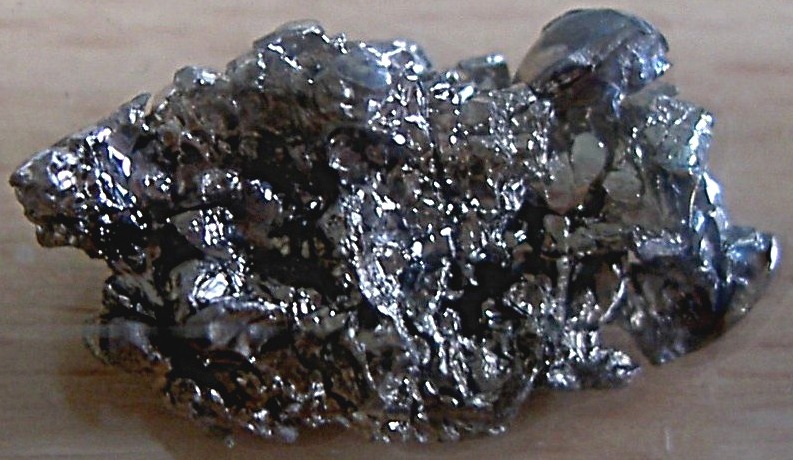
barium mercury, he finally obtained silver-gray particles — the first barium metal in human history. It was not the result of distillation or carbon reduction, but the creation through electric current — a birth of an element determined by technology, not geology.
Underground: Barite and Witherite — Two Hidden Cities in the Pre-Industrial Age
Before barium became a material in modern superconductors, it had been for centuries a 'guardian of secrets' in the world of mining. Barite (BaSO₄), the most abundant mineral, often mixed with galena (lead sulfide) — so Victorian miners called it
heavy spar because it 'balanced the scales' when separating ores. In the Kalk Mountain in Germany, another mineral — witherite (BaCO₃) — was found by William Withering in 1784, becoming key to understanding the chemical variations within the alkaline earth group. Surprisingly, both minerals formed not in active volcanic areas, but in ancient sea beds — where barium ions from granite weathering precipitated with sulfate or carbonate in anoxic environments. Microfossils in the barite layers in the Black Sea show that these deposits are over 35 million years old — proving that barium had 'waited' in stone long before humans understood what atoms were.
From Vacuum Tubes to Superconductors: An Unexpected Journey of an Element
The 20th century brought barium to a technological stage never predicted by Davy. In the early radio and television era, barium oxide was used as an
emissive coating on vacuum tube cathodes — a thin layer that released electrons when heated, allowing moving images to appear on screens. Without it, the BBC's 1936 broadcast might never have succeeded. Then, in 1986, a big surprise: German and Swiss scientists discovered YBCO —
yttrium-barium-copper oxide — a superconductor that operates at liquid nitrogen temperature (−196°C), not helium (−269°C) as before. Here, barium is not just a filler: its position in the YBCO crystal structure stabilizes the copper-oxygen layer that becomes a resistance-free electron channel. A single barium atom — with its unique ionic radius — becomes the 'rhythm setter' for future electric currents.
The Invisible Legacy: Why Barium Is Still Relevant Today
Today, barium is no longer used in cosmetics (after the 1920s poisoning incidents) or as a pigment (due to the toxicity of Ba²⁺), but its legacy lives in hidden infrastructure: in high-pressure-resistant steel for deep-sea oil pipelines, in piezoelectric ceramics for medical ultrasounds, and even in X-ray radiation shields in hospitals — where barite is mixed into concrete to form 'impenetrable' walls. Most intriguingly: in modern astrophysics, the barium spectrum in old stars is a key indicator of nucleosynthesis in early supernovae — because barium is only formed through the
s-process in red giant stars. So, every time a doctor takes an X-ray image, or an engineer builds an oil platform in the South China Sea, or an astronomer studies light from a 12-billion-year-old star — they are dealing with traces of an element that was first 'heard' through its name, 'heavy', and finally 'seen' through an electric spark in a London laboratory in the summer of 1808.
---
References: Barium — Wikipedia
This 'Heavy' Metal Was Discovered Since 1772 — But Only Extracted From Stone in 1808. Barium is not an ordinary metal: it is so reactive that it never exists freely in nature — only hidden in dense, millions-year-old white rocks. How did 18th-century scientists identify it without seeing it as a metal? And why did the discovery of this 'metal that was never seen' change the way we understand chemical elements forever?. The Origin of the Name Hiding a Heavy Secret
In the 18th century, when European chemists were still grappling with the concepts of 'elements' and 'compounds', a word from ancient Greek suddenly appeared in laboratory records: barys — meaning 'heavy'. This word was not just descriptive; it was a sharp geological clue. White milky or bluish-gray minerals — often found in tin mines in Cornwall, England, or in German limestone areas — attracted attention because of their extraordinary density: almost twice that of calcium or strontium. Mineralogists called it baryta , and from there came the name barium . However, behind the name meaning 'heavy', there was a paradox: the metal itself is as soft as sodium, easily cut with a knife, and reacts vigorously with water — but was never seen in its pure form until more than three decades after its identification.
Discovery Without a Metal: David, Scheele, and the Mystery of 'Baryta'
The year 1772 became a turning point — not because barium was discovered as a metal, but because Carl Wilhelm Scheele, a Swedish chemist, isolated baryta as a new oxide from barite. He tested samples from the Falun mine and found that when heated with charcoal, it did not produce a metal like iron or copper, but only a stable oxide that was difficult to reduce. Almost simultaneously, Sir Humphry Davy in England also studied the material — but he rejected the idea that it was an element and was more inclined to consider it a variant of calcium. It was not until 1808, after Davy invented electrolysis, that he conducted a revolutionary experiment at the Royal Institution in London: by using a molten solution of barium mercury , he finally obtained silver-gray particles — the first barium metal in human history. It was not the result of distillation or carbon reduction, but the creation through electric current — a birth of an element determined by technology, not geology.
Underground: Barite and Witherite — Two Hidden Cities in the Pre-Industrial Age
Before barium became a material in modern superconductors, it had been for centuries a 'guardian of secrets' in the world of mining. Barite BaSO₄ , the most abundant mineral, often mixed with galena lead sulfide — so Victorian miners called it heavy spar because it 'balanced the scales' when separating ores. In the Kalk Mountain in Germany, another mineral — witherite BaCO₃ — was found by William Withering in 1784, becoming key to understanding the chemical variations within the alkaline earth group. Surprisingly, both minerals formed not in active volcanic areas, but in ancient sea beds — where barium ions from granite weathering precipitated with sulfate or carbonate in anoxic environments. Microfossils in the barite layers in the Black Sea show that these deposits are over 35 million years old — proving that barium had 'waited' in stone long before humans understood what atoms were.
From Vacuum Tubes to Superconductors: An Unexpected Journey of an Element
The 20th century brought barium to a technological stage never predicted by Davy. In the early radio and television era, barium oxide was used as an emissive coating on vacuum tube cathodes — a thin layer that released electrons when heated, allowing moving images to appear on screens. Without it, the BBC's 1936 broadcast might never have succeeded. Then, in 1986, a big surprise: German and Swiss scientists discovered YBCO — yttrium-barium-copper oxide — a superconductor that operates at liquid nitrogen temperature −196°C , not helium −269°C as before. Here, barium is not just a filler: its position in the YBCO crystal structure stabilizes the copper-oxygen layer that becomes a resistance-free electron channel. A single barium atom — with its unique ionic radius — becomes the 'rhythm setter' for future electric currents.
The Invisible Legacy: Why Barium Is Still Relevant Today
Today, barium is no longer used in cosmetics after the 1920s poisoning incidents or as a pigment due to the toxicity of Ba²⁺ , but its legacy lives in hidden infrastructure: in high-pressure-resistant steel for deep-sea oil pipelines, in piezoelectric ceramics for medical ultrasounds, and even in X-ray radiation shields in hospitals — where barite is mixed into concrete to form 'impenetrable' walls. Most intriguingly: in modern astrophysics, the barium spectrum in old stars is a key indicator of nucleosynthesis in early supernovae — because barium is only formed through the s-process in red giant stars. So, every time a doctor takes an X-ray image, or an engineer builds an oil platform in the South China Sea, or an astronomer studies light from a 12-billion-year-old star — they are dealing with traces of an element that was first 'heard' through its name, 'heavy', and finally 'seen' through an electric spark in a London laboratory in the summer of 1808.
---
References: Barium — Wikipedia https://en.wikipedia.org/wiki/Barium