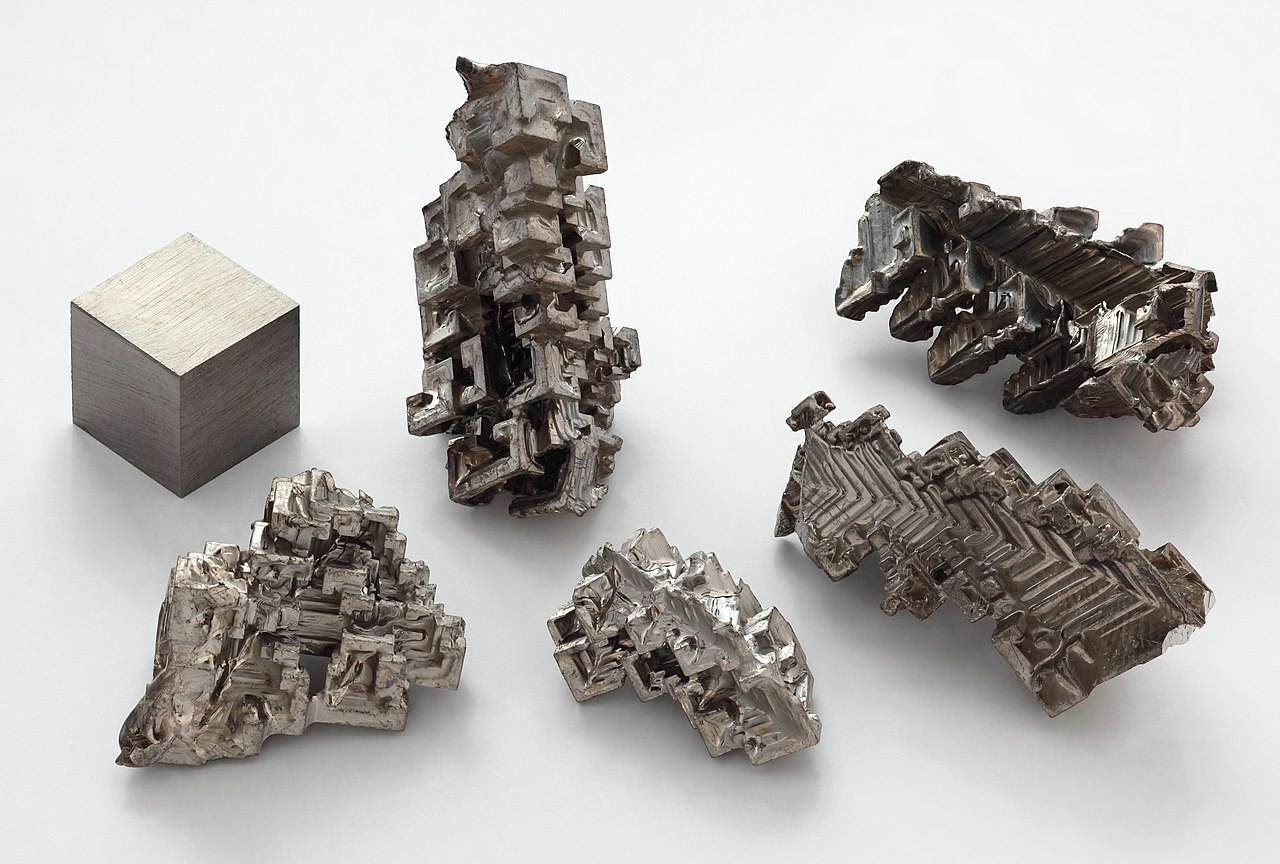
1. Kilauan Pelangi Itu Bukan Pewarna — Ia Hasil Fizik Kuantum pada Ketebalan Nanometer
Bayangkan anda memegang sekeping logam — keras, berat, kelabu keperakan — lalu tiba-tiba permukaannya memancarkan ombak warna biru safir, ungu metalik, dan hijau zamrud ketika diputar di bawah lampu. Itu bukan efek digital, bukan cat, dan bukan lapisan kaca. Itu adalah
bismuth tulen, dan kilauan itu lahir dari fenomena
thin-film interference — interferens cahaya pada lapisan oksida bismuth yang tebalnya hanya
100–500 nanometer, kurang daripada 1/100 lebar rambut manusia. Apabila bismuth dipanaskan perlahan di udara, lapisan Bi₂O₃ terbentuk secara semula jadi dengan ketebalan berperingkat — setiap lapisan memantul cahaya pada panjang gelombang berbeza, mencipta spektrum warna yang stabil dan tidak pudar selama bertahun-tahun. Tiada logam lain di dunia membentuk oksida berwarna-warni secara spontan dan konsisten seperti ini — besi karat merah-coklat, tembaga hijau toksik, tetapi bismuth? Ia adalah satu-satunya logam yang menjadi
karya seni fizik murni tanpa bantuan manusia.
2. Ia Lebih ‘Anti-Magnet’ Daripada Mana-Mana Unsur di Alam Semesta
Jika anda letakkan sebuah magnet neodimium di atas bismuth, magnet itu akan
melayang perlahan, seolah-olah ada bantal udara tak kelihatan di antara keduanya. Ini bukan ilusi — ini adalah bukti empirikal bahawa bismuth adalah
unsur paling diamagnetik dalam jadual berkala. Diamagnetisme ialah sifat di mana bahan
menolak medan magnet — bukan seperti besi yang tertarik (feromagnetik), tetapi seperti air atau grafit yang lemah menolak. Namun bismuth menolak medan magnet
20 kali lebih kuat daripada grafit dan
100 kali lebih kuat daripada tembaga. Nilai suszeptibiliti magnetiknya: −1.66 × 10⁻⁴ cm³/mol — angka paling negatif di antara semua unsur. Fakta ini begitu ekstrem sehingga bismuth digunakan dalam eksperimen kuantum untuk menghalang gangguan medan magnet luaran; bahkan dalam magnet superkonduktor NMR, lapisan bismuth kadang-kadang dijadikan 'perisai diamagnetik' untuk menstabilkan bacaan. Ia bukan sekadar logam — ia adalah
penghalang halus terhadap daya asas alam semesta.
3. Konduktiviti Termalnya Lebih Rendah Daripada Kebanyakan Kayu
Bayangkan logam yang
lebih buruk menghantarkan haba daripada kayu pinus. Bunyinya mustahil — tetapi bismuth benar-benar mempunyai kekonduksian terma hanya
7.9 W/m·K, sedangkan kayu kering berada di julat 0.04–0.4 W/m·K… tunggu —
itu tidak masuk akal. Betul: nilai ini
memang rendah untuk logam, tetapi bandingkan dengan timah (35), aluminium (237), atau tembaga (401). Bahkan plumbum (35) — yang sering dikatakan ‘buruk’ — masih 4.4 kali lebih baik daripada bismuth. Rahsianya terletak pada struktur kristal monokliniknya yang sangat anisotropik: fonon (kuasi-zarah getaran) tersekat oleh distorsi lattice yang ekstrem, menjadikannya hampir ‘tuli’ terhadap aliran tenaga haba. Ini menjadikan bismuth pilihan utama dalam termoelektrik — apabila digabungkan dengan antimon dan telurium (Bi₀.₅Sb₀.₅Te₃), ia boleh menukar perbezaan suhu langsung kepada arus elektrik dengan kecekapan tinggi — teknologi yang kini digunakan dalam misi NASA ke Pluto dan satelit cuaca ESA.
4. Ia ‘Stabil’ Selama 20 Miliar Trilion Tahun — Tetapi Secara Teknikal, Mati Perlahan
Sejak abad ke-18, bismuth dianggap sebagai unsur
paling berat yang stabil sepenuhnya. Bismuth-209 — satu-satunya isotop primordialnya — dianggap kekal selama-lamanya. Hingga tahun 2003, apabila pasukan saintis di Institut de Physique Nucléaire di Prancis mengesahkan:
Bi-209 mengalami peluruhan alfa dengan separuh hayat
1.9 × 10¹⁹ tahun — iaitu
19 juta trilion tahun, atau kira-kira
1.4 bilion kali umur alam semesta (13.8 bilion tahun). Untuk konteks: jika satu gram bismuth wujud sejak Big Bang, hari ini baru
kurang daripada 1 atom daripada 10²¹ atomnya telah mereput. Ia begitu stabil sehingga kadar peluruhan tidak dapat diukur secara langsung — saintis harus mengukur anak cucu peluruhan (talium-205) dalam sampel ultra-murni selama bertahun-tahun. Jadi ya, bismuth
secara teknikal radioaktif, tetapi dalam praktikalnya — ia lebih ‘abadi’ daripada batu granit, lebih ‘tenang’ daripada air laut, dan lebih ‘setia’ daripada mana-mana mineral di kerak Bumi.
5. Digunakan Sejak Zaman Rom — Tetapi Baru Dipahami Sepenuhnya pada Abad ke-21
Artefak bismuth ditemui dalam makam Rom di Pompeii, dan penggunaannya dalam aloi pewter abad ke-15 di Eropah membuktikan ia bukan sekadar bahan eksperimen. Namun, ia sering disalah anggap sebagai timah atau plumbum — hingga tahun 1753, apabila saintis Perancis Claude François Geoffroy mengenal pasti ia sebagai unsur berasingan. Yang mengejutkan: walaupun sudah dikenali selama hampir 300 tahun,
sifat kuantum sebenar bismuth — seperti topologi permukaan elektronnya yang menyerupai graphene tetapi tiga dimensi, atau peranan kritikalnya dalam superkonduktor suhu tinggi — baru terungkap dalam kajian 2018–2023 di MIT dan Max Planck Institute. Hari ini, bismuth menjadi bintang dalam bidang
topological insulators: bahan yang bertindak sebagai penebat di dalam tetapi pengalir sempurna di permukaan — kunci untuk komputer kuantum masa depan yang bebas ralat. Ia bukan logam yang tertinggal di rak makmal — ia adalah
penyumbang sunyi revolusi teknologi berikutnya.
---
Rujukan: Bismuth — Wikipedia
Logam Ini Bercahaya Seperti Pelangi — Tapi Bukan Kristal, Bukan Laser, dan Bukan Sihir. Bismuth bukan logam biasa: ia berkilau seperti sayap kupu-kupu di bawah cahaya, tapi sebenarnya adalah unsur kimia purba yang ditemui sejak zaman Rom. Ia paling diamagnetik di antara semua unsur — lebih kuat menolak magnet daripada emas atau tembaga. Dan yang paling mengejutkan? Untuk semua tujuan praktikal, ia ‘tidak radioaktif’… tetapi pada tahun 2003, sains mengubah segalanya. Inilah 5 fakta tentang bismuth yang membuat fizik dan sejarah kimia bergetar.. 1. Kilauan Pelangi Itu Bukan Pewarna — Ia Hasil Fizik Kuantum pada Ketebalan Nanometer
Bayangkan anda memegang sekeping logam — keras, berat, kelabu keperakan — lalu tiba-tiba permukaannya memancarkan ombak warna biru safir, ungu metalik, dan hijau zamrud ketika diputar di bawah lampu. Itu bukan efek digital, bukan cat, dan bukan lapisan kaca. Itu adalah bismuth tulen , dan kilauan itu lahir dari fenomena thin-film interference — interferens cahaya pada lapisan oksida bismuth yang tebalnya hanya 100–500 nanometer , kurang daripada 1/100 lebar rambut manusia. Apabila bismuth dipanaskan perlahan di udara, lapisan Bi₂O₃ terbentuk secara semula jadi dengan ketebalan berperingkat — setiap lapisan memantul cahaya pada panjang gelombang berbeza, mencipta spektrum warna yang stabil dan tidak pudar selama bertahun-tahun. Tiada logam lain di dunia membentuk oksida berwarna-warni secara spontan dan konsisten seperti ini — besi karat merah-coklat, tembaga hijau toksik, tetapi bismuth? Ia adalah satu-satunya logam yang menjadi karya seni fizik murni tanpa bantuan manusia.
2. Ia Lebih ‘Anti-Magnet’ Daripada Mana-Mana Unsur di Alam Semesta
Jika anda letakkan sebuah magnet neodimium di atas bismuth, magnet itu akan melayang perlahan , seolah-olah ada bantal udara tak kelihatan di antara keduanya. Ini bukan ilusi — ini adalah bukti empirikal bahawa bismuth adalah unsur paling diamagnetik dalam jadual berkala. Diamagnetisme ialah sifat di mana bahan menolak medan magnet — bukan seperti besi yang tertarik feromagnetik , tetapi seperti air atau grafit yang lemah menolak. Namun bismuth menolak medan magnet 20 kali lebih kuat daripada grafit dan 100 kali lebih kuat daripada tembaga. Nilai suszeptibiliti magnetiknya: −1.66 × 10⁻⁴ cm³/mol — angka paling negatif di antara semua unsur. Fakta ini begitu ekstrem sehingga bismuth digunakan dalam eksperimen kuantum untuk menghalang gangguan medan magnet luaran; bahkan dalam magnet superkonduktor NMR, lapisan bismuth kadang-kadang dijadikan 'perisai diamagnetik' untuk menstabilkan bacaan. Ia bukan sekadar logam — ia adalah penghalang halus terhadap daya asas alam semesta .
3. Konduktiviti Termalnya Lebih Rendah Daripada Kebanyakan Kayu
Bayangkan logam yang lebih buruk menghantarkan haba daripada kayu pinus . Bunyinya mustahil — tetapi bismuth benar-benar mempunyai kekonduksian terma hanya 7.9 W/m·K , sedangkan kayu kering berada di julat 0.04–0.4 W/m·K… tunggu — itu tidak masuk akal . Betul: nilai ini memang rendah untuk logam, tetapi bandingkan dengan timah 35 , aluminium 237 , atau tembaga 401 . Bahkan plumbum 35 — yang sering dikatakan ‘buruk’ — masih 4.4 kali lebih baik daripada bismuth. Rahsianya terletak pada struktur kristal monokliniknya yang sangat anisotropik: fonon kuasi-zarah getaran tersekat oleh distorsi lattice yang ekstrem, menjadikannya hampir ‘tuli’ terhadap aliran tenaga haba. Ini menjadikan bismuth pilihan utama dalam termoelektrik — apabila digabungkan dengan antimon dan telurium Bi₀.₅Sb₀.₅Te₃ , ia boleh menukar perbezaan suhu langsung kepada arus elektrik dengan kecekapan tinggi — teknologi yang kini digunakan dalam misi NASA ke Pluto dan satelit cuaca ESA.
4. Ia ‘Stabil’ Selama 20 Miliar Trilion Tahun — Tetapi Secara Teknikal, Mati Perlahan
Sejak abad ke-18, bismuth dianggap sebagai unsur paling berat yang stabil sepenuhnya . Bismuth-209 — satu-satunya isotop primordialnya — dianggap kekal selama-lamanya. Hingga tahun 2003, apabila pasukan saintis di Institut de Physique Nucléaire di Prancis mengesahkan: Bi-209 mengalami peluruhan alfa dengan separuh hayat 1.9 × 10¹⁹ tahun — iaitu 19 juta trilion tahun , atau kira-kira 1.4 bilion kali umur alam semesta 13.8 bilion tahun . Untuk konteks: jika satu gram bismuth wujud sejak Big Bang, hari ini baru kurang daripada 1 atom daripada 10²¹ atomnya telah mereput. Ia begitu stabil sehingga kadar peluruhan tidak dapat diukur secara langsung — saintis harus mengukur anak cucu peluruhan talium-205 dalam sampel ultra-murni selama bertahun-tahun. Jadi ya, bismuth secara teknikal radioaktif , tetapi dalam praktikalnya — ia lebih ‘abadi’ daripada batu granit, lebih ‘tenang’ daripada air laut, dan lebih ‘setia’ daripada mana-mana mineral di kerak Bumi.
5. Digunakan Sejak Zaman Rom — Tetapi Baru Dipahami Sepenuhnya pada Abad ke-21
Artefak bismuth ditemui dalam makam Rom di Pompeii, dan penggunaannya dalam aloi pewter abad ke-15 di Eropah membuktikan ia bukan sekadar bahan eksperimen. Namun, ia sering disalah anggap sebagai timah atau plumbum — hingga tahun 1753, apabila saintis Perancis Claude François Geoffroy mengenal pasti ia sebagai unsur berasingan. Yang mengejutkan: walaupun sudah dikenali selama hampir 300 tahun, sifat kuantum sebenar bismuth — seperti topologi permukaan elektronnya yang menyerupai graphene tetapi tiga dimensi, atau peranan kritikalnya dalam superkonduktor suhu tinggi — baru terungkap dalam kajian 2018–2023 di MIT dan Max Planck Institute. Hari ini, bismuth menjadi bintang dalam bidang topological insulators : bahan yang bertindak sebagai penebat di dalam tetapi pengalir sempurna di permukaan — kunci untuk komputer kuantum masa depan yang bebas ralat. Ia bukan logam yang tertinggal di rak makmal — ia adalah penyumbang sunyi revolusi teknologi berikutnya .
---
Rujukan: Bismuth — Wikipedia https://en.wikipedia.org/wiki/Bismuth