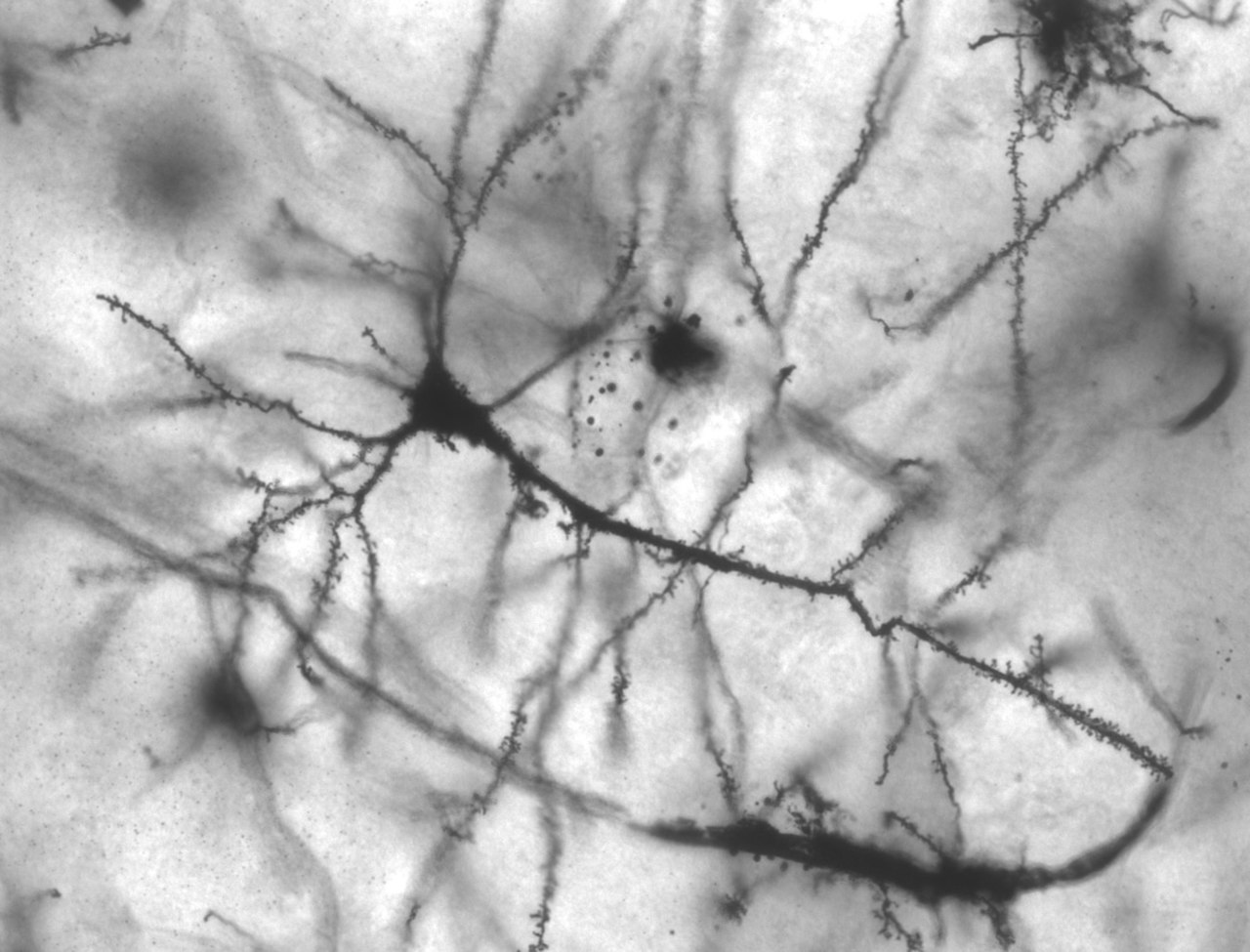
The Brain Is Not a Computer — But We Often Treat It Like One
We always imagine the brain like a laptop: if there is an error, just restart. If it's slow, add RAM. If there is physical damage, replace the component. But the reality? The brain is more like an orchestra — thousands of musicians (neurons), each playing on their own frequency, time, and tone. If one player plays the wrong note, the whole performance can stop. That is the essence of a neurological disorder: not that the brain is 'broken', but that
communication between nerve cells is disrupted — whether due to a lack of certain chemicals, unpredictable electrical currents, or slightly 'crooked' neural pathways since birth.
And the most surprising thing? This disruption is not always visible. No wound, no bruise, no X-ray showing 'a problem'. A teacher can teach brilliantly in the morning, then in the afternoon suddenly unable to remember their student's name — not because of laziness, not because of old age, but because the signal from the hippocampus to the frontal cortex was cut off for 90 seconds. It's not 'normal forgetting'. It is a neurological episode — and it occurs more often than we think.
1 Billion People — An Number That Is Not Just A Statistic, But Names & Stories
The WHO report from 2006 — yes, almost 20 years ago — is still relevant:
one billion people in the world live with at least one neurological disorder. Not 'maybe', not 'rough estimate', but
one billion. Imagine: if each of them stood in a line from Kuala Lumpur to London, the line would stretch
more than 10,000 times to the moon. And within this number? There is your younger sibling who has epilepsy but never has seizures — only 'losing time' for 20 seconds while sitting in class. There is your mother who feels her hands 'shake on their own' every morning — not Parkinson's, but essential tremor, a neurological disorder often mistaken for 'common nerves'. There is a teenager on TikTok who uploads a video of 'suddenly being unable to speak for 3 minutes' — then gets comments like 'act already' — when in fact it is
transient aphasia, an early symptom of complex migraine or a mild autoimmune disorder.
The saddest part? Half of them have never received an accurate diagnosis. Not because doctors don't want to, but because their symptoms are 'too common': excessive fatigue, difficulty focusing, a feeling of 'brain fog', recurring headaches. How long will we call all of this 'stress' or 'lack of sleep' — when it might be an early sign of multiple sclerosis, narcolepsy, or even a very rare prion disease?
'I'm Not Sick, My Brain Just Sometimes Goes Offline'
There is one phrase that is increasingly heard in neurology clinics today:
'My brain sometimes goes offline.' This phrase is not a joke — it is the most accurate description a patient can give to a doctor. Because neurological disorders
are not about constant illness, but about
inconsistency. Today, the brain works perfectly. Tomorrow, suddenly it can't send signals to the legs — then the legs 'don't listen' for 5 minutes. The day after, blurred vision for 45 seconds, with no injury to the eyes. This is not mental weakness. This is
temporary disruption of nerve communication, like Wi-Fi that 'disconnects' even though the router is on.
And this is what makes diagnosis so difficult: MRI scans can be 'normal', EEGs can be 'normal', blood tests can be 'normal' — but the brain still 'goes offline'. Therefore, doctors now rely more on stories: when it happens, how long it lasts, what was felt before and after, and how it affects daily life. Because neurological disorders are not just about biology — they are also about human context.
Rehabilitation Is Not For 'Disability', But For 'Reconnecting'
Many people remember 'neurological rehabilitation' as a place for people after a stroke — with walkers and hours of physical therapy. But today, neurological rehabilitation is also for teenagers with ADHD learning how to
reorganize attention pathways; for office workers with chronic migraines who train
autonomic nerve control through biofeedback; for women after childbirth who experience 'brain fog' due to hormonal changes disrupting GABA neurotransmitters.
This is not about 'fixing a broken brain', but training the brain to find new paths. Human brains have neuroplasticity — meaning they can 'rewrite their map' themselves. And that is the biggest hope: neurological disorders are not a lifetime punishment. They are a challenge that can be learned, managed, and often — controlled until they no longer interfere with a person's identity.
Don't Call Him 'Forgets' — Call Him 'A Person Whose Brain Is Trying To Adapt'
We are still too quick to label. 'Lazy', 'emotional', 'overreacting', 'attention seeker' — all these labels often stick to people with undiagnosed neurological disorders. Yet, they are not pretending. They are not 'not wanting to'. They are fighting with a system that
does not give clear signals — like trying to drive a car without a fuel meter, without traffic lights, and sometimes without a rearview mirror.
So, next time you meet someone who 'suddenly goes quiet', 'looks empty', 'stumbles without reason', or 'speaks slowly and in fragments' — don't jump to conclusions. Ask gently: 'What's going on with your brain today?' Because this question, more than just four words, is the beginning of recognition, understanding, and finally — truly humane recovery.
---
Rujukan: Neurological disorder — Wikipedia
Your Brain Can 'Go Offline' — And 1 in 7 People in the World Experience This. Imagine: your brain stops 'talking' to your body — not because of a stroke, not because of trauma, but because the nervous system itself suddenly 'resets'. It's not fiction. It happens every day — on people around you, at your child's school, and even on yourself without realizing. Why do we still call it a 'mysterious disease'?. The Brain Is Not a Computer — But We Often Treat It Like One
We always imagine the brain like a laptop: if there is an error, just restart. If it's slow, add RAM. If there is physical damage, replace the component. But the reality? The brain is more like an orchestra — thousands of musicians neurons , each playing on their own frequency, time, and tone. If one player plays the wrong note, the whole performance can stop. That is the essence of a neurological disorder: not that the brain is 'broken', but that communication between nerve cells is disrupted — whether due to a lack of certain chemicals, unpredictable electrical currents, or slightly 'crooked' neural pathways since birth.
And the most surprising thing? This disruption is not always visible . No wound, no bruise, no X-ray showing 'a problem'. A teacher can teach brilliantly in the morning, then in the afternoon suddenly unable to remember their student's name — not because of laziness, not because of old age, but because the signal from the hippocampus to the frontal cortex was cut off for 90 seconds . It's not 'normal forgetting'. It is a neurological episode — and it occurs more often than we think.
1 Billion People — An Number That Is Not Just A Statistic, But Names & Stories
The WHO report from 2006 — yes, almost 20 years ago — is still relevant: one billion people in the world live with at least one neurological disorder . Not 'maybe', not 'rough estimate', but one billion . Imagine: if each of them stood in a line from Kuala Lumpur to London, the line would stretch more than 10,000 times to the moon. And within this number? There is your younger sibling who has epilepsy but never has seizures — only 'losing time' for 20 seconds while sitting in class. There is your mother who feels her hands 'shake on their own' every morning — not Parkinson's, but essential tremor, a neurological disorder often mistaken for 'common nerves'. There is a teenager on TikTok who uploads a video of 'suddenly being unable to speak for 3 minutes' — then gets comments like 'act already' — when in fact it is transient aphasia , an early symptom of complex migraine or a mild autoimmune disorder.
The saddest part? Half of them have never received an accurate diagnosis . Not because doctors don't want to, but because their symptoms are 'too common': excessive fatigue, difficulty focusing, a feeling of 'brain fog', recurring headaches. How long will we call all of this 'stress' or 'lack of sleep' — when it might be an early sign of multiple sclerosis, narcolepsy, or even a very rare prion disease?
'I'm Not Sick, My Brain Just Sometimes Goes Offline'
There is one phrase that is increasingly heard in neurology clinics today: 'My brain sometimes goes offline.' This phrase is not a joke — it is the most accurate description a patient can give to a doctor. Because neurological disorders are not about constant illness , but about inconsistency . Today, the brain works perfectly. Tomorrow, suddenly it can't send signals to the legs — then the legs 'don't listen' for 5 minutes. The day after, blurred vision for 45 seconds, with no injury to the eyes. This is not mental weakness. This is temporary disruption of nerve communication , like Wi-Fi that 'disconnects' even though the router is on.
And this is what makes diagnosis so difficult: MRI scans can be 'normal', EEGs can be 'normal', blood tests can be 'normal' — but the brain still 'goes offline'. Therefore, doctors now rely more on stories : when it happens, how long it lasts, what was felt before and after , and how it affects daily life. Because neurological disorders are not just about biology — they are also about human context.
Rehabilitation Is Not For 'Disability', But For 'Reconnecting'
Many people remember 'neurological rehabilitation' as a place for people after a stroke — with walkers and hours of physical therapy. But today, neurological rehabilitation is also for teenagers with ADHD learning how to reorganize attention pathways ; for office workers with chronic migraines who train autonomic nerve control through biofeedback; for women after childbirth who experience 'brain fog' due to hormonal changes disrupting GABA neurotransmitters.
This is not about 'fixing a broken brain', but training the brain to find new paths . Human brains have neuroplasticity — meaning they can 'rewrite their map' themselves. And that is the biggest hope: neurological disorders are not a lifetime punishment. They are a challenge that can be learned, managed, and often — controlled until they no longer interfere with a person's identity .
Don't Call Him 'Forgets' — Call Him 'A Person Whose Brain Is Trying To Adapt'
We are still too quick to label. 'Lazy', 'emotional', 'overreacting', 'attention seeker' — all these labels often stick to people with undiagnosed neurological disorders. Yet, they are not pretending. They are not 'not wanting to'. They are fighting with a system that does not give clear signals — like trying to drive a car without a fuel meter, without traffic lights, and sometimes without a rearview mirror.
So, next time you meet someone who 'suddenly goes quiet', 'looks empty', 'stumbles without reason', or 'speaks slowly and in fragments' — don't jump to conclusions. Ask gently: 'What's going on with your brain today?' Because this question, more than just four words, is the beginning of recognition, understanding, and finally — truly humane recovery.
---
Rujukan: Neurological disorder — Wikipedia https://en.wikipedia.org/wiki/Neurological disorder