🌍 Global coverage 24/7 • 🏯 East Asia: China, Japan, Korea • 🛕 South Asia: India • 🏰 Europe • 🗽 Americas • 🌍 Africa • 🕌 Middle East • 🇵🇸 Palestine Solidarity •
This article is a translation from the original language.
🌍 World
The First Air Conditioner: An Innovation That Changed Industry and Daily Life
Over a century ago, a young engineer revolutionized the world with the invention of the first air conditioner, not for human comfort, but to solve a critical problem in the printing industry, simultaneously triggering a wave of economic and social change that endures to this day.
In a lithographic printing plant in Brooklyn, New York, during the summer of 1902, workers struggled with extreme heat and humidity. Paper became damp and expanded, ink failed to adhere, and colors were uneven, leading to defective prints and significant losses. This was not a minor issue; it was a serious threat to productivity and quality in many industries of the era. It was in this environment that a young engineer named Willis Haviland Carrier, working for the Buffalo Forge Company, was entrusted with a seemingly impossible task: controlling temperature and humidity. Unbeknownst to them, his mission would give birth to one of the most transformative innovations of the 20th century.
When Humidity Threatened Printing
Before the 20th century, managing temperature and humidity in buildings, especially in industrial areas, was a major challenge. Textile mills, tobacco factories, and particularly printing plants often faced issues with raw materials sensitive to climate changes. Paper, for instance, is hygroscopic – it absorbs and releases moisture according to its environment, causing it to expand or contract. In color printing, where each color layer must be precisely aligned over the previous one, small changes in paper size could ruin the entire product. These conditions not only reduced quality but also slowed down production processes, significantly impacting company profits. The Sackett-Wilhelms Printing Company in Brooklyn was desperate for a solution and turned to the Buffalo Forge Company, where Carrier worked, for answers.
The Genius Touch of Willis Carrier
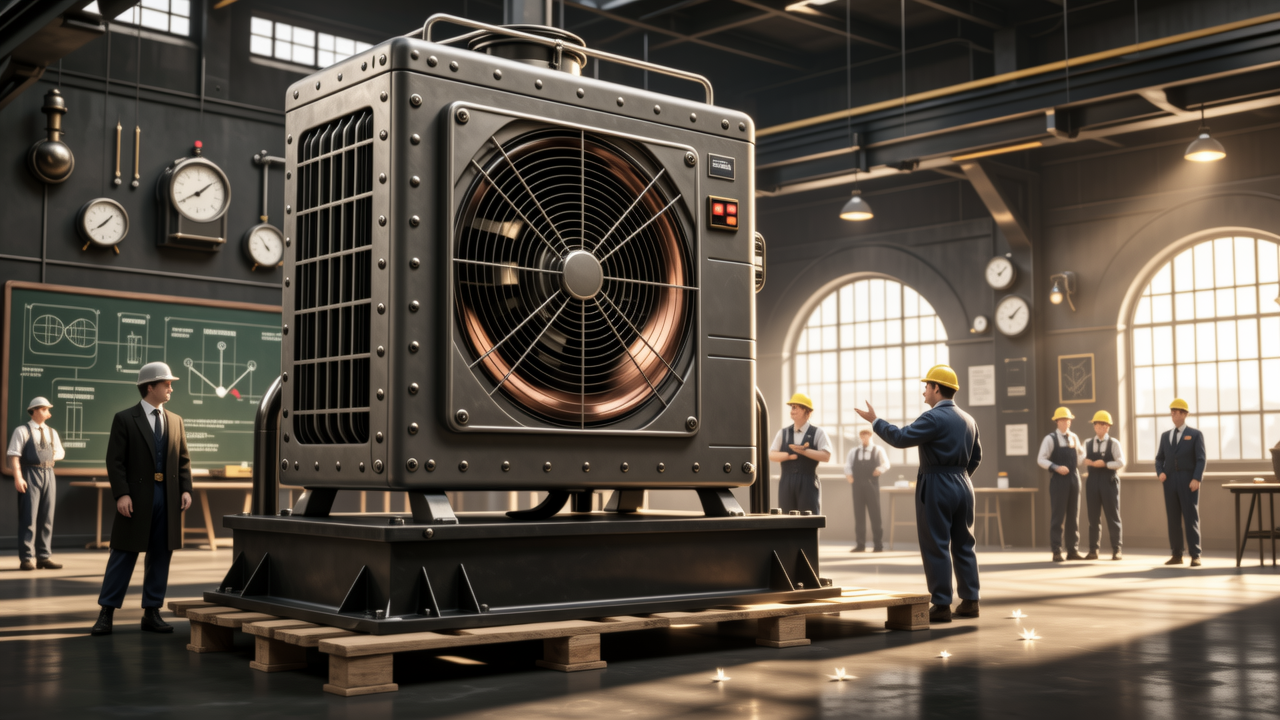
Willis Carrier, then just 25 years old, a Cornell University graduate with expertise in electrical engineering, accepted the challenge. His approach was different. Instead of merely trying to cool the air, he realized that the key was humidity control. He applied newly understood scientific principles about the relationship between temperature, humidity, and dew point. On July 17, 1902, Carrier's first 'Apparatus for Treating Air' design was completed. This system worked by blowing air over coils cooled by water. As the air cooled, the water vapor within it would condense, reducing humidity. This drier, cooler air was then recirculated into the plant. This not only cooled the space but, more importantly, controlled humidity at a consistent level, solving the problem of swelling paper and improperly drying ink.
In 1906, Carrier patented his invention, known as the 'Apparatus for Treating Air,' which became the foundation for modern air conditioning technology. Its basic principles – cooling, dehumidifying, cleaning, and circulating air – remain relevant today. Initially, this innovation was a highly specific industrial solution, a game-changer for industries reliant on controlled climates, such as film manufacturing, pharmaceuticals, and textiles. It proved that innovation often arises from urgent industrial needs, not solely from the pursuit of luxury.
From Process Control to Public Comfort
In the following decades, air conditioning gradually moved out of factories and into public spaces. In the 1920s, movie theaters were among the earliest adopters, introducing air conditioning to the public. The ability to offer cool comfort during the summer drew massive audiences, creating the 'summer blockbuster' phenomenon that persists today. Subsequently, department stores, offices, and trains began adopting this technology. However, it remained a large and expensive luxury amenity. It wasn't until after World War II, with technological advancements and increased purchasing power, that smaller, more affordable home air conditioning units began entering the market, transforming the way millions of people lived and worked.
Reshaping Economies and Geography
The impact of air conditioning on the global economy has been monumental. It increased worker productivity in offices and factories, enabling people to work more comfortably and efficiently regardless of the weather outside. Furthermore, it has reshaped demographics and geography. Areas previously considered uncomfortable or unsuitable for development, particularly in the U.S. 'Sun Belt' such as Florida, Arizona, and Texas, experienced rapid population and economic growth. Major cities like Dubai and Singapore, located in hot and humid climate zones, could not have achieved their modern levels of progress without effective air conditioning. The tourism, hospitality, and data center industries all heavily rely on the temperature-controlled environments provided by this technology.
Today's air conditioning market is a multi-billion dollar industry. According to reports, the global air conditioner market size is projected to reach USD 215.9 billion by 2030, indicating continued growth driven by urbanization, economic development in developing countries, and climate change leading to rising global temperatures. This reflects the indispensable nature of this technology in modern life, no longer a luxury but a basic necessity in many places.
Modern Challenges and an Enduring Legacy
While air conditioning has brought immense progress, it also comes with its own challenges. The high energy consumption of air conditioning units contributes to greenhouse gas emissions, exacerbating the climate change issue, which ironically increases the demand for cooling. This is the modern dilemma. The industry is now actively seeking more energy-efficient and environmentally friendly solutions, such as alternative refrigerants and passive cooling technologies. Cooling technology is constantly evolving, from Carrier's original vapor-compression systems to today's smart and energy-efficient VRF (Variable Refrigerant Flow) systems.
Willis Carrier's invention, which began as a solution to ink and paper problems, has evolved into a backbone of global infrastructure. It is not merely a device for cooling air but a catalyst for economic development, social mobility, and our way of life today. From the comfort of our homes to the operation of data centers supporting the internet, the legacy of the first air conditioner remains inextricably linked to the structure of modern civilization. It is a testament to the fact that the most impactful innovations often arise from solving specific, practical problems, with consequences that far exceed the expectations of their creators.
The First Air Conditioner: An Innovation That Changed Industry and Daily Life. Over a century ago, a young engineer revolutionized the world with the invention of the first air conditioner, not for human comfort, but to solve a critical problem in the printing industry, simultaneously triggering a wave of economic and social change that endures to this day.. In a lithographic printing plant in Brooklyn, New York, during the summer of 1902, workers struggled with extreme heat and humidity. Paper became damp and expanded, ink failed to adhere, and colors were uneven, leading to defective prints and significant losses. This was not a minor issue; it was a serious threat to productivity and quality in many industries of the era. It was in this environment that a young engineer named Willis Haviland Carrier, working for the Buffalo Forge Company, was entrusted with a seemingly impossible task: controlling temperature and humidity. Unbeknownst to them, his mission would give birth to one of the most transformative innovations of the 20th century.
When Humidity Threatened Printing
Before the 20th century, managing temperature and humidity in buildings, especially in industrial areas, was a major challenge. Textile mills, tobacco factories, and particularly printing plants often faced issues with raw materials sensitive to climate changes. Paper, for instance, is hygroscopic – it absorbs and releases moisture according to its environment, causing it to expand or contract. In color printing, where each color layer must be precisely aligned over the previous one, small changes in paper size could ruin the entire product. These conditions not only reduced quality but also slowed down production processes, significantly impacting company profits. The Sackett-Wilhelms Printing Company in Brooklyn was desperate for a solution and turned to the Buffalo Forge Company, where Carrier worked, for answers.
The Genius Touch of Willis Carrier
Willis Carrier, then just 25 years old, a Cornell University graduate with expertise in electrical engineering, accepted the challenge. His approach was different. Instead of merely trying to cool the air, he realized that the key was humidity control. He applied newly understood scientific principles about the relationship between temperature, humidity, and dew point. On July 17, 1902, Carrier's first 'Apparatus for Treating Air' design was completed. This system worked by blowing air over coils cooled by water. As the air cooled, the water vapor within it would condense, reducing humidity. This drier, cooler air was then recirculated into the plant. This not only cooled the space but, more importantly, controlled humidity at a consistent level, solving the problem of swelling paper and improperly drying ink.
In 1906, Carrier patented his invention, known as the 'Apparatus for Treating Air,' which became the foundation for modern air conditioning technology. Its basic principles – cooling, dehumidifying, cleaning, and circulating air – remain relevant today. Initially, this innovation was a highly specific industrial solution, a game-changer for industries reliant on controlled climates, such as film manufacturing, pharmaceuticals, and textiles. It proved that innovation often arises from urgent industrial needs, not solely from the pursuit of luxury.
From Process Control to Public Comfort
In the following decades, air conditioning gradually moved out of factories and into public spaces. In the 1920s, movie theaters were among the earliest adopters, introducing air conditioning to the public. The ability to offer cool comfort during the summer drew massive audiences, creating the 'summer blockbuster' phenomenon that persists today. Subsequently, department stores, offices, and trains began adopting this technology. However, it remained a large and expensive luxury amenity. It wasn't until after World War II, with technological advancements and increased purchasing power, that smaller, more affordable home air conditioning units began entering the market, transforming the way millions of people lived and worked.
Reshaping Economies and Geography
The impact of air conditioning on the global economy has been monumental. It increased worker productivity in offices and factories, enabling people to work more comfortably and efficiently regardless of the weather outside. Furthermore, it has reshaped demographics and geography. Areas previously considered uncomfortable or unsuitable for development, particularly in the U.S. 'Sun Belt' such as Florida, Arizona, and Texas, experienced rapid population and economic growth. Major cities like Dubai and Singapore, located in hot and humid climate zones, could not have achieved their modern levels of progress without effective air conditioning. The tourism, hospitality, and data center industries all heavily rely on the temperature-controlled environments provided by this technology.
Today's air conditioning market is a multi-billion dollar industry. According to reports, the global air conditioner market size is projected to reach USD 215.9 billion by 2030 , indicating continued growth driven by urbanization, economic development in developing countries, and climate change leading to rising global temperatures. This reflects the indispensable nature of this technology in modern life, no longer a luxury but a basic necessity in many places.
Modern Challenges and an Enduring Legacy
While air conditioning has brought immense progress, it also comes with its own challenges. The high energy consumption of air conditioning units contributes to greenhouse gas emissions, exacerbating the climate change issue, which ironically increases the demand for cooling. This is the modern dilemma. The industry is now actively seeking more energy-efficient and environmentally friendly solutions, such as alternative refrigerants and passive cooling technologies. Cooling technology is constantly evolving, from Carrier's original vapor-compression systems to today's smart and energy-efficient VRF Variable Refrigerant Flow systems.
Willis Carrier's invention, which began as a solution to ink and paper problems, has evolved into a backbone of global infrastructure. It is not merely a device for cooling air but a catalyst for economic development, social mobility, and our way of life today. From the comfort of our homes to the operation of data centers supporting the internet, the legacy of the first air conditioner remains inextricably linked to the structure of modern civilization. It is a testament to the fact that the most impactful innovations often arise from solving specific, practical problems, with consequences that far exceed the expectations of their creators.