1. Midway Atoll: An Aircraft Carrier Without Propellers, Crew, or a Single Knot of Speed
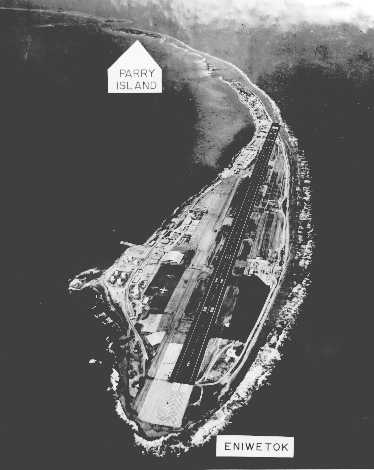
Midway Atoll is not a ship. It is two small islands — Sand Island and Eastern Island — that rose from the ocean floor 28 million years ago, the result of an underwater volcanic eruption. Its total area is only 6.2 km² — smaller than a professional soccer field. No harbor, no dock, no air defense system. However, on June 4, 1942, when three American aircraft carriers (USS Enterprise, USS Hornet, and USS Yorktown) were fighting for survival under Japanese air attacks, Midway functioned
like a fourth aircraft carrier. PBY Catalina planes from Midway spotted the Japanese fleet earlier; Marine Corps F4F Wildcat and SBD Dauntless planes took off from its sandy runway to attack the carriers Akagi, Kaga, and Sōryū — all destroyed within less than five minutes. Critical fact: Midway was never moved, never repaired during the battle, and was never
built for war — it
existed, and that was enough.
2. The Term 'Unsinkable Aircraft Carrier' Is Not a Metaphor — It Is a Strategic Doctrine Tested in Blood
This term was first officially used by the U.S. military in early 1942, not as a joke or rhetoric, but as an operational classification. In the Secret Pacific Fleet Document No. 37-42, islands like Wake, Guam, and Midway were categorized as
‘Fixed Air Projection Platforms’ — fixed air platforms — with the code ‘UAC’ (Unsinkable Aircraft Carrier). The difference from conventional aircraft carriers was not only about being unsinkable, but also
strategically indestructible: to destroy Midway, Japan would have had to land, occupy the land, build artillery bunkers, and besiege it for months — while the U.S. only needed to send one squadron of bombers to stop any landing attempt. Historical data proves it: between January 1942 and December 1944, Japan launched 17 air attacks on Midway —
none succeeded in destroying its main runway. The runway remained operational. Radar continued to function. Communications stayed open. It truly
did not sink — not because it was strong, but because it was
too expensive to sink.
3. Seabees: The Construction Team That Turned Sand Into a Combat Runway in 72 Hours
When U.S. Marines landed on Midway in December 1941, there was no concrete runway — just sand, coral, and seabirds. The task was given to the
Naval Construction Battalions, more commonly known as Seabees. They were not combat soldiers, but engineers, carpenters, and soil experts — and they created a logistical miracle. Within 72 hours after landing, the Seabees had built a 1,500-meter runway from a mixture of volcanic sand, broken rocks, and
Marston Mat — corrugated steel plates nailed together like giant mats. This runway could withstand the weight of 12-ton B-17 Flying Fortresses and handle 40 landings per hour during peak battle times. Even more surprisingly: they used seawater to mix cement — an experimental formula that only worked in Midway and was never repeated elsewhere. To this day, remnants of Marston Mat are still buried beneath the surface of Eastern Island — a physical proof that military strength can be built not from steel, but from
the agility of decisions.
4. Other Islands That Were 'Made Into Aircraft Carriers' — And One of Them Is Still Used Today
Midway was not the only one. Saipan in the Mariana Islands became a static aircraft carrier for B-29 Superfortresses that bombed Tokyo in 1945 — its runway is still active as Saipan International Airport. In the South Pacific, Guadalcanal has Henderson Field, which was seized from Japan in a bloody six-month battle — and from there, U.S. planes controlled the entire Solomon Strait. Most surprisingly: Diego Garcia Island in the Indian Ocean — now the most secret U.S. military base — is officially classified as
‘UAC-Alpha’ in the 2019 Pentagon documents. It has a 3,600-meter runway, storage capacity of 10 million liters of jet fuel, and aircraft maintenance facilities
without needing to return to the continent. It has never been attacked since 1971 — not because it is protected, but because
no world power is willing to pay the political and logistical price to attack an island that never moves.
5. Why This Concept Is Still Relevant — Even Though Modern Aircraft Carriers Can Sail 30 Knots
The Gerald R. Ford-class aircraft carrier costs USD13 billion and can move quickly — but it needs a port, anti-submarine protection, and a billion-dollar air defense system. In contrast, a modern UAC like Palau or Yap can be activated in 48 hours with communication satellites, spy drones, and Patriot missile defense systems — operational cost: less than 0.3% of an aircraft carrier. In today's South China Sea conflict, China has built three 'new UACs': Fiery Cross Reef, Subi Reef, and Mischief Reef — all constructed on coral reefs using sand pumped from the ocean floor, complete with 3,000-meter runways and jet detection radar. They cannot sink — because they
are land. And in 21st-century geopolitics, land — not steel — remains the most irreplaceable currency.
---
Rujukan: Unsinkable aircraft carrier — Wikipedia
This Island Was 'Counted' as the Fourth American Aircraft Carrier in the Battle of Midway — But It Had No Engine, Steel, or Bullets. In the vast Pacific Ocean, a small, uninhabited atoll played the role of a real aircraft carrier — not with technology, but with geography and the resilience of coral rock. It never moved, never sank, and on a historic day in 1942, it saved the American fleet from a major defeat. How could an island become the most tactical weapon in the largest naval war of the 20th century?. 1. Midway Atoll: An Aircraft Carrier Without Propellers, Crew, or a Single Knot of Speed
Midway Atoll is not a ship. It is two small islands — Sand Island and Eastern Island — that rose from the ocean floor 28 million years ago, the result of an underwater volcanic eruption. Its total area is only 6.2 km² — smaller than a professional soccer field. No harbor, no dock, no air defense system. However, on June 4, 1942, when three American aircraft carriers USS Enterprise, USS Hornet, and USS Yorktown were fighting for survival under Japanese air attacks, Midway functioned like a fourth aircraft carrier . PBY Catalina planes from Midway spotted the Japanese fleet earlier; Marine Corps F4F Wildcat and SBD Dauntless planes took off from its sandy runway to attack the carriers Akagi, Kaga, and Sōryū — all destroyed within less than five minutes. Critical fact: Midway was never moved, never repaired during the battle, and was never built for war — it existed , and that was enough.
2. The Term 'Unsinkable Aircraft Carrier' Is Not a Metaphor — It Is a Strategic Doctrine Tested in Blood
This term was first officially used by the U.S. military in early 1942, not as a joke or rhetoric, but as an operational classification. In the Secret Pacific Fleet Document No. 37-42, islands like Wake, Guam, and Midway were categorized as ‘Fixed Air Projection Platforms’ — fixed air platforms — with the code ‘UAC’ Unsinkable Aircraft Carrier . The difference from conventional aircraft carriers was not only about being unsinkable, but also strategically indestructible : to destroy Midway, Japan would have had to land, occupy the land, build artillery bunkers, and besiege it for months — while the U.S. only needed to send one squadron of bombers to stop any landing attempt. Historical data proves it: between January 1942 and December 1944, Japan launched 17 air attacks on Midway — none succeeded in destroying its main runway. The runway remained operational. Radar continued to function. Communications stayed open. It truly did not sink — not because it was strong, but because it was too expensive to sink .
3. Seabees: The Construction Team That Turned Sand Into a Combat Runway in 72 Hours
When U.S. Marines landed on Midway in December 1941, there was no concrete runway — just sand, coral, and seabirds. The task was given to the Naval Construction Battalions , more commonly known as Seabees. They were not combat soldiers, but engineers, carpenters, and soil experts — and they created a logistical miracle. Within 72 hours after landing, the Seabees had built a 1,500-meter runway from a mixture of volcanic sand, broken rocks, and Marston Mat — corrugated steel plates nailed together like giant mats. This runway could withstand the weight of 12-ton B-17 Flying Fortresses and handle 40 landings per hour during peak battle times. Even more surprisingly: they used seawater to mix cement — an experimental formula that only worked in Midway and was never repeated elsewhere. To this day, remnants of Marston Mat are still buried beneath the surface of Eastern Island — a physical proof that military strength can be built not from steel, but from the agility of decisions .
4. Other Islands That Were 'Made Into Aircraft Carriers' — And One of Them Is Still Used Today
Midway was not the only one. Saipan in the Mariana Islands became a static aircraft carrier for B-29 Superfortresses that bombed Tokyo in 1945 — its runway is still active as Saipan International Airport. In the South Pacific, Guadalcanal has Henderson Field, which was seized from Japan in a bloody six-month battle — and from there, U.S. planes controlled the entire Solomon Strait. Most surprisingly: Diego Garcia Island in the Indian Ocean — now the most secret U.S. military base — is officially classified as ‘UAC-Alpha’ in the 2019 Pentagon documents. It has a 3,600-meter runway, storage capacity of 10 million liters of jet fuel, and aircraft maintenance facilities without needing to return to the continent . It has never been attacked since 1971 — not because it is protected, but because no world power is willing to pay the political and logistical price to attack an island that never moves .
5. Why This Concept Is Still Relevant — Even Though Modern Aircraft Carriers Can Sail 30 Knots
The Gerald R. Ford-class aircraft carrier costs USD13 billion and can move quickly — but it needs a port, anti-submarine protection, and a billion-dollar air defense system. In contrast, a modern UAC like Palau or Yap can be activated in 48 hours with communication satellites, spy drones, and Patriot missile defense systems — operational cost: less than 0.3% of an aircraft carrier. In today's South China Sea conflict, China has built three 'new UACs': Fiery Cross Reef, Subi Reef, and Mischief Reef — all constructed on coral reefs using sand pumped from the ocean floor, complete with 3,000-meter runways and jet detection radar. They cannot sink — because they are land . And in 21st-century geopolitics, land — not steel — remains the most irreplaceable currency.
---
Rujukan: Unsinkable aircraft carrier — Wikipedia https://en.wikipedia.org/wiki/Unsinkable aircraft carrier