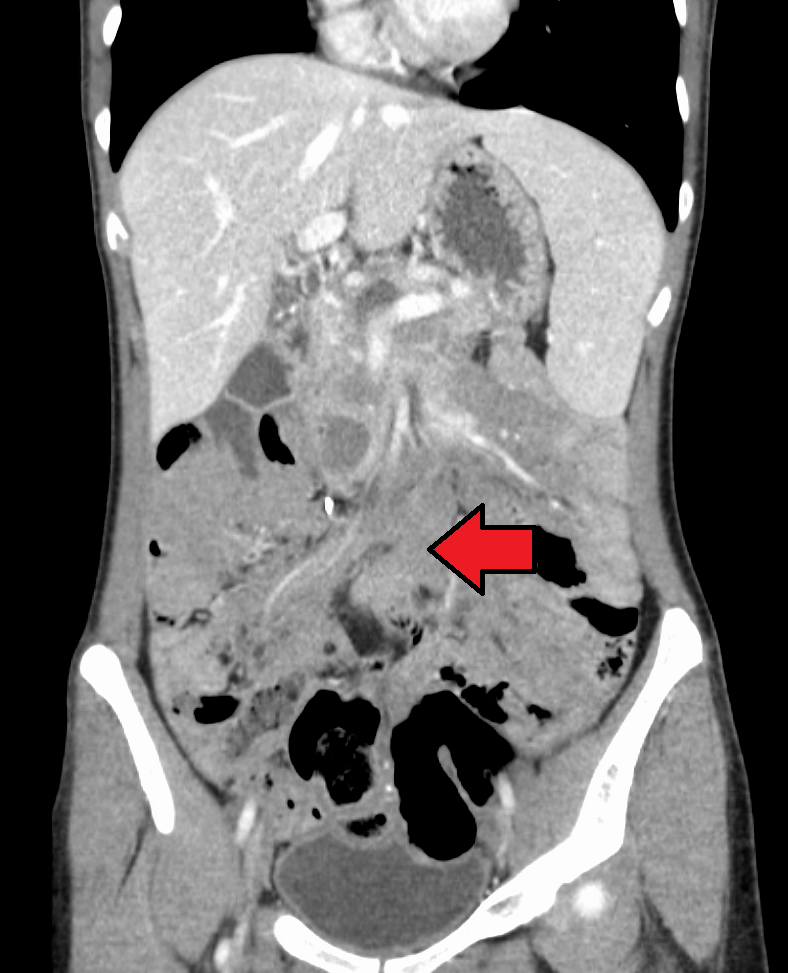
The Shadow Without a Shadow
In the pathology lab at the University of Malaya Hospital, a microscopic slide is placed under the lens. There, spindle-shaped cells arrange themselves like waves of dry sand — dense, calm, yet never stopping their movement. No signs of wild division. No mutations screaming 'cancer.' Yet, the pathologist takes a deep breath before writing the diagnosis:
desmoid tumor. Not cancer. Not benign. But —
aggressive fibromatosis. A name that sounds like a linguistic contradiction: 'aggressive' but 'fibro-' (from connective tissue), 'fibromatosis' usually considered benign — but with the word 'aggressive' attached like a shadow that never leaves the body.
It is one of the quietest tumors in oncology — silent on PET scans, not glowing on MRIs like other malignant tumors, and often ignored until it has taken over space in the body like an undocumented invader.
Roots Growing Into the Body's Walls
Fibroblasts — the quiet cells that usually work behind the scenes in cellular life — are the architects of connective tissue. They mend wounds, build stroma, and maintain organ shape. But in aggressive fibromatosis, these architects turn into destroyers. Mutations in the
CTNNB1 gene (in 85% of cases) or
APC mutations (especially in patients with Familial Adenomatous Polyposis/FAP) cause fibroblasts to lose their biological 'brake.' They keep dividing, producing collagen like an unending printing machine, and absorbing surrounding tissues — not by spreading new cells, but through mechanical pressure that is slow, sure, and deadly.
Imagine a tree root growing under a house floor: it doesn't 'jump' into the next room, but pushes beams, cracks tiles, and eventually undermines the building's foundation. This is how desmoid tumors — they don't metastasize, but locally invade with a tenacity rarely matched by other tumors.
Women in Their 30s: The Most Vulnerable — And Most Misunderstood Group
Statistics say: twice as common in women aged 25–35 years. Not by chance. Estrogen — especially in the context of pregnancy, oral contraceptives, or postpartum endocrine changes — acts like steel for this tumor. Clinical studies show an increase in desmoid size during pregnancy, and spontaneous remission after menopause. However, the narrative 'this is only a tumor of young women' has misled many doctors and patients. Men in their 70s can also be diagnosed. Children with Gardner syndrome can have tumors in the neck since age 8. The reality is: it knows no age, gender, or genetic background — only choosing strategic locations: abdominal muscles, thoracic walls, upper thighs, or inner arms and legs.
When Tumors Block Breathing, Stop Blood Flow, and Kill Without a Sound
Death from aggressive fibromatosis is not the result of distant organ failure — but local organ failure. A patient in Kuala Lumpur once came with complaints of 'persistent back pain.' An MRI showed a tumor the size of a hand around the abdominal aorta — not attacking, but
wrapping around the main artery like a constrictor snake. Blood flow to the legs was impaired. Blood pressure dropped. The risk of embolism increased. In Johor, a teenage boy suffered chronic intestinal obstruction for 14 months — only diagnosed as a desmoid in the posterior abdominal wall after three failed bowel surgeries. The tumor did not 'enter' the intestine; it 'pressed' on the intestine from the outside — like squeezing a tube full of liquid. And in Sarawak, a primary school teacher died in her sleep after a tumor in the mediastinum compressed the vagus nerve and trachea — not caused by metastasis, but by
progressive loss of respiratory function that was never expected.
Paradigm Shift: From 'Just Cut It' to 'Watch and Wait'
Previously, the sole answer was radical surgery — with the hope of 'removing all.' But global studies have proven: aggressive excision often causes disability, loss of function, and even
stimulate tumor recurrence — because surgical trauma triggers fibroblast activation. Now, the approach has changed:
active surveillance for stable tumors, anti-inflammatory therapy (NSAIDs + tamoxifen), and tyrosine kinase inhibitors like sorafenib for progressive cases. In 2020, the WHO officially classified desmoid tumors not as 'benign' or 'malignant,' but as
fibroblast/fibromuscular neoplasms with local invasive potential, emphasizing that it belongs to its own category — between two worlds, but subject to unique biological laws.
A Voice That Doesn't Make Noise, But Must Be Heard
Aggressive fibromatosis is not just a pathological diagnosis. It is a reminder that danger is not always loud, not always visible on scans, and not always moving from one organ to another. The deepest dangers often hide in delays — delayed diagnosis, delayed understanding, and delayed naming of something that is 'not malignant' but capable of threatening life slowly, systematically, and without mercy. In oncology departments across Southeast Asia, doctors now learn to recognize not only what is growing — but
how it grows,
where it chooses to take root, and
what it will do if left to speak in silence.
---
Reference: Aggressive fibromatosis — Wikipedia
Tumors That Can't Run — But Can Destroy Organs One by One. It is not cancer. It never spreads to the lungs or liver. Yet, in silence, it can compress nerves, wrap around the intestines, and stop the flow of blood — without a single metastasis. How can something 'non-malignant' become a more alarming life-threatening threat than other tumors?. The Shadow Without a Shadow
In the pathology lab at the University of Malaya Hospital, a microscopic slide is placed under the lens. There, spindle-shaped cells arrange themselves like waves of dry sand — dense, calm, yet never stopping their movement. No signs of wild division. No mutations screaming 'cancer.' Yet, the pathologist takes a deep breath before writing the diagnosis: desmoid tumor . Not cancer. Not benign. But — aggressive fibromatosis . A name that sounds like a linguistic contradiction: 'aggressive' but 'fibro-' from connective tissue , 'fibromatosis' usually considered benign — but with the word 'aggressive' attached like a shadow that never leaves the body.
It is one of the quietest tumors in oncology — silent on PET scans, not glowing on MRIs like other malignant tumors, and often ignored until it has taken over space in the body like an undocumented invader.
Roots Growing Into the Body's Walls
Fibroblasts — the quiet cells that usually work behind the scenes in cellular life — are the architects of connective tissue. They mend wounds, build stroma, and maintain organ shape. But in aggressive fibromatosis, these architects turn into destroyers. Mutations in the CTNNB1 gene in 85% of cases or APC mutations especially in patients with Familial Adenomatous Polyposis/FAP cause fibroblasts to lose their biological 'brake.' They keep dividing, producing collagen like an unending printing machine, and absorbing surrounding tissues — not by spreading new cells, but through mechanical pressure that is slow, sure, and deadly.
Imagine a tree root growing under a house floor: it doesn't 'jump' into the next room, but pushes beams, cracks tiles, and eventually undermines the building's foundation. This is how desmoid tumors — they don't metastasize, but locally invade with a tenacity rarely matched by other tumors.
Women in Their 30s: The Most Vulnerable — And Most Misunderstood Group
Statistics say: twice as common in women aged 25–35 years. Not by chance. Estrogen — especially in the context of pregnancy, oral contraceptives, or postpartum endocrine changes — acts like steel for this tumor. Clinical studies show an increase in desmoid size during pregnancy, and spontaneous remission after menopause. However, the narrative 'this is only a tumor of young women' has misled many doctors and patients. Men in their 70s can also be diagnosed. Children with Gardner syndrome can have tumors in the neck since age 8. The reality is: it knows no age, gender, or genetic background — only choosing strategic locations: abdominal muscles, thoracic walls, upper thighs, or inner arms and legs.
When Tumors Block Breathing, Stop Blood Flow, and Kill Without a Sound
Death from aggressive fibromatosis is not the result of distant organ failure — but local organ failure. A patient in Kuala Lumpur once came with complaints of 'persistent back pain.' An MRI showed a tumor the size of a hand around the abdominal aorta — not attacking, but wrapping around the main artery like a constrictor snake. Blood flow to the legs was impaired. Blood pressure dropped. The risk of embolism increased. In Johor, a teenage boy suffered chronic intestinal obstruction for 14 months — only diagnosed as a desmoid in the posterior abdominal wall after three failed bowel surgeries. The tumor did not 'enter' the intestine; it 'pressed' on the intestine from the outside — like squeezing a tube full of liquid. And in Sarawak, a primary school teacher died in her sleep after a tumor in the mediastinum compressed the vagus nerve and trachea — not caused by metastasis, but by progressive loss of respiratory function that was never expected.
Paradigm Shift: From 'Just Cut It' to 'Watch and Wait'
Previously, the sole answer was radical surgery — with the hope of 'removing all.' But global studies have proven: aggressive excision often causes disability, loss of function, and even stimulate tumor recurrence — because surgical trauma triggers fibroblast activation. Now, the approach has changed: active surveillance for stable tumors, anti-inflammatory therapy NSAIDs + tamoxifen , and tyrosine kinase inhibitors like sorafenib for progressive cases. In 2020, the WHO officially classified desmoid tumors not as 'benign' or 'malignant,' but as fibroblast/fibromuscular neoplasms with local invasive potential , emphasizing that it belongs to its own category — between two worlds, but subject to unique biological laws.
A Voice That Doesn't Make Noise, But Must Be Heard
Aggressive fibromatosis is not just a pathological diagnosis. It is a reminder that danger is not always loud, not always visible on scans, and not always moving from one organ to another. The deepest dangers often hide in delays — delayed diagnosis, delayed understanding, and delayed naming of something that is 'not malignant' but capable of threatening life slowly, systematically, and without mercy. In oncology departments across Southeast Asia, doctors now learn to recognize not only what is growing — but how it grows , where it chooses to take root , and what it will do if left to speak in silence .
---
Reference: Aggressive fibromatosis — Wikipedia https://en.wikipedia.org/wiki/Aggressive fibromatosis