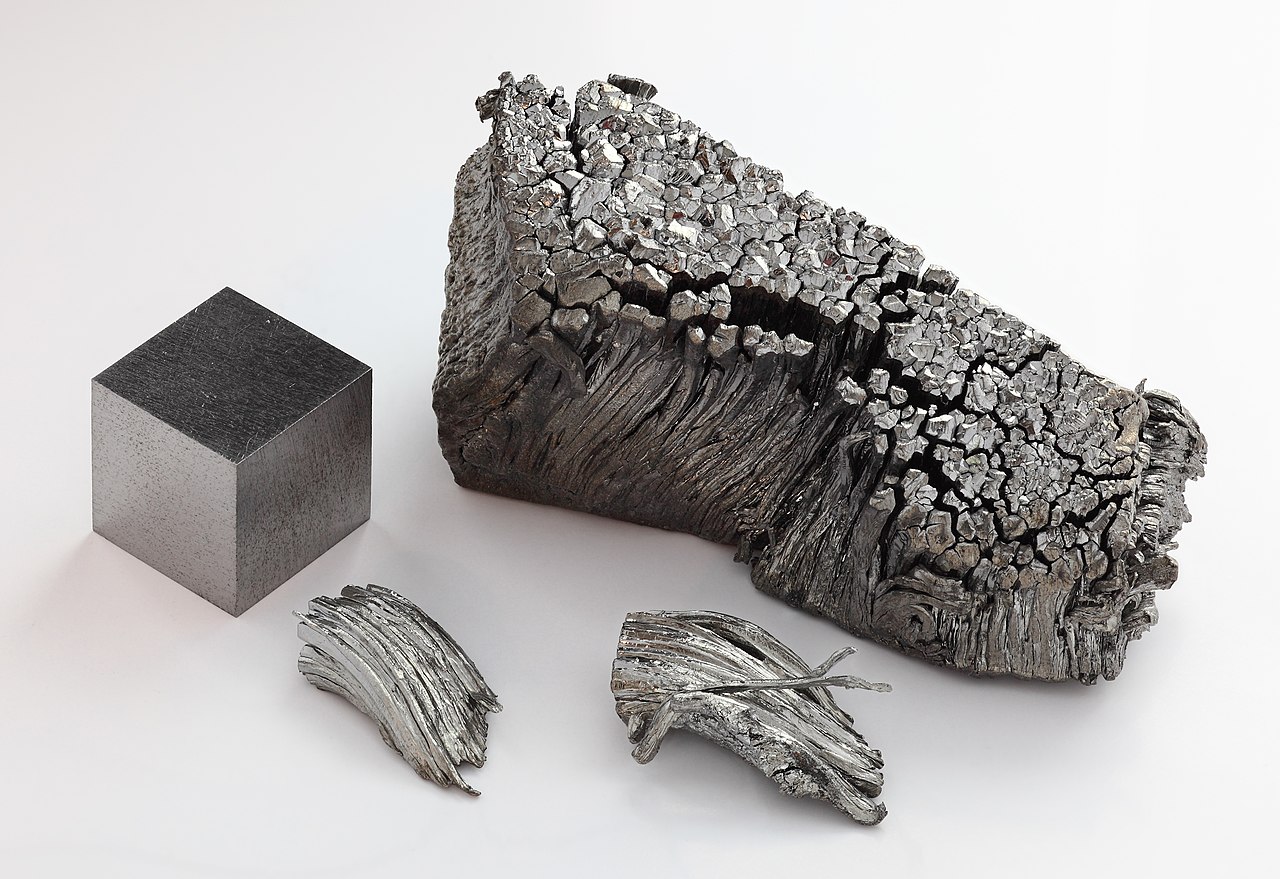
Not a Comic Book Hero — But the Most 'Hidden' Element in the World
If you have ever heard the name
thulium, it is likely when reading a small label on the back of a portable X-ray device, or stumbling upon the term 'doped solid-state laser' in a technical journal. But don't be mistaken: thulium (symbol
Tm, atomic number
69) is not just a letter in the periodic table — it is one of the most
hidden elements in modern chemistry history. Not because it is as mysterious as plutonium, or as dangerous as radium. But because it is so...
polite. It does not explode, it does not glow in the dark, it does not cause genetic mutations. It simply exists — calmly, very little, and with a very specific use.
Surprising fact? Thulium is the second rarest element in the Earth's crust in the lanthanide family — only beaten by promethium (which almost does not exist naturally because all its isotopes are radioactive and short-lived). If we take 1 ton of ordinary rock from Malaysian soil, we might get 0.5 grams of thulium... if we know where to look. And yes — the average human body contains about 0.4–0.5 grams of thulium. Not because we eat it intentionally, but because it enters along with minerals in vegetables, water, and dust. It has no biological function — no enzymes, no hormones, no 'task' in the cell. It just passes through — like an uninvited guest, but still given a seat.
Found in Stockholm, Purified in Germany, Used in Hospitals Around the World
The story of thulium began in
1879, in a small laboratory at Uppsala University, Sweden. A chemist named
Per Teodor Cleve — who was also the first person to isolate holmium — was studying a rare mineral called
erbia. From the gray powder, he separated two new oxides:
holmia (for holmium) and
thulia (for thulium). The name 'thulium' comes from
Thule, the mythological name for the northernmost land in Europe — symbolizing distance and difficulty in reaching something. Irony is that Cleve himself never saw pure thulium. His 'thulia' sample was still mixed with erbium oxide and ytterbium — two elements that are very similar chemically, making it like separating two drops of water in a glass with 1000 drops.
It was not until 1911 that French chemist Georges Urbain successfully obtained a sufficiently pure thulium oxide for spectral analysis. And it was not until 1936 that Wilhelm Klemm and Heinrich Bommer in Germany succeeded in extracting pure thulium metal — using the electrolytic reduction method of potassium fluorothulat. Imagine: 57 years from the discovery of the name to the birth of the actual metal. That was not a delay — that was a tribute to its complexity.
Why Do Medical Lasers Choose Thulium?
You may know lasers are used for eye surgery, skin cutting, or even tattoo removal. But did you know that
thulium-doped lasers (Tm:YAG) are now the preferred choice for urological procedures such as prostate surgery and lithotripsy (breaking kidney stones)? The secret is not in its power — but in its
wavelength:
2.0 micrometers. This wavelength is very well absorbed by water — and the human body is 60–70% water. Therefore, this laser does not 'penetrate' deep into tissues; it releases energy right on the surface — making it super precise, less bleeding, and faster recovery. Another advantage: thulium can be doped into yttrium aluminum garnet (YAG) crystals with high precision — something difficult to achieve with other elements. So, it's not because thulium is 'strong', but because it is
the most cooperative in chemical pairs.
From Pocket to Radiology Room: Mini X-ray Source
This may be the most surprising: thulium-170, a man-made radioactive isotope, is used as an X-ray source in portable devices — for example, for rapid examinations at disaster sites, on ships, or in rural clinics without stable electricity. How? It decays by emitting weak X-rays (energy ~50–80 keV), enough to image bones or metal objects, but safe enough to be handled without heavy shielding. No cables, no large generators — just a small cylinder containing 1–2 grams of thulium-170. Its half-life is 128 days, so it 'dies' gently after a few months — leaving no long-term radioactive waste. In a world where speed and safety are priorities, thulium offers a perfect compromise.
Why You Won't Find Thulium in the Supermarket (and You Don't Need To)
Thulium is not used in phones, batteries, or gold. It does not enter steel, traditional medicine, or supplements. Its price? Approximately
USD 50–100 per gram, depending on purity — expensive, but not because of 'dramatic rarity', but because of the high cost of separation from rare earth ores. It is not acutely toxic, does not cause cancer, and does not accumulate in the liver or bones. So, there is no need to worry if you eat thulium-containing vegetables — it will just pass through. Like rain falling on a roof: important for the system, but not something we need to hold ourselves.
Thulium reminds us that technological progress does not always come from the brightest or most dangerous elements. Sometimes, it comes from the most invisible elements — which exist in tiny amounts, but are enough to illuminate the darkness in an operating room, or help doctors see what is not visible. It is not the main star in the chemical drama. But without this small character, some important chapters in modern medicine may never have been written.
---
Reference: Thulium — Wikipedia
This Element Exists Only 0.5 Gram in the Entire Human Body — But Can Emit X-Rays from Your Pocket. Imagine: an element so rare—so that the entire human body contains less than half a gram—yet it can become a source of portable X-rays. Thulium is not sci-fi fiction. It exists, it is real, and it is quietly working in medical devices at nearby clinics. Why is it so hard to find… but so important when found?. Not a Comic Book Hero — But the Most 'Hidden' Element in the World
If you have ever heard the name thulium , it is likely when reading a small label on the back of a portable X-ray device, or stumbling upon the term 'doped solid-state laser' in a technical journal. But don't be mistaken: thulium symbol Tm , atomic number 69 is not just a letter in the periodic table — it is one of the most hidden elements in modern chemistry history. Not because it is as mysterious as plutonium, or as dangerous as radium. But because it is so... polite . It does not explode, it does not glow in the dark, it does not cause genetic mutations. It simply exists — calmly, very little, and with a very specific use.
Surprising fact? Thulium is the second rarest element in the Earth's crust in the lanthanide family — only beaten by promethium which almost does not exist naturally because all its isotopes are radioactive and short-lived . If we take 1 ton of ordinary rock from Malaysian soil, we might get 0.5 grams of thulium... if we know where to look. And yes — the average human body contains about 0.4–0.5 grams of thulium. Not because we eat it intentionally, but because it enters along with minerals in vegetables, water, and dust. It has no biological function — no enzymes, no hormones, no 'task' in the cell. It just passes through — like an uninvited guest, but still given a seat.
Found in Stockholm, Purified in Germany, Used in Hospitals Around the World
The story of thulium began in 1879 , in a small laboratory at Uppsala University, Sweden. A chemist named Per Teodor Cleve — who was also the first person to isolate holmium — was studying a rare mineral called erbia . From the gray powder, he separated two new oxides: holmia for holmium and thulia for thulium . The name 'thulium' comes from Thule , the mythological name for the northernmost land in Europe — symbolizing distance and difficulty in reaching something. Irony is that Cleve himself never saw pure thulium. His 'thulia' sample was still mixed with erbium oxide and ytterbium — two elements that are very similar chemically, making it like separating two drops of water in a glass with 1000 drops.
It was not until 1911 that French chemist Georges Urbain successfully obtained a sufficiently pure thulium oxide for spectral analysis. And it was not until 1936 that Wilhelm Klemm and Heinrich Bommer in Germany succeeded in extracting pure thulium metal — using the electrolytic reduction method of potassium fluorothulat. Imagine: 57 years from the discovery of the name to the birth of the actual metal. That was not a delay — that was a tribute to its complexity.
Why Do Medical Lasers Choose Thulium?
You may know lasers are used for eye surgery, skin cutting, or even tattoo removal. But did you know that thulium-doped lasers Tm:YAG are now the preferred choice for urological procedures such as prostate surgery and lithotripsy breaking kidney stones ? The secret is not in its power — but in its wavelength : 2.0 micrometers . This wavelength is very well absorbed by water — and the human body is 60–70% water. Therefore, this laser does not 'penetrate' deep into tissues; it releases energy right on the surface — making it super precise, less bleeding, and faster recovery. Another advantage: thulium can be doped into yttrium aluminum garnet YAG crystals with high precision — something difficult to achieve with other elements. So, it's not because thulium is 'strong', but because it is the most cooperative in chemical pairs.
From Pocket to Radiology Room: Mini X-ray Source
This may be the most surprising: thulium-170, a man-made radioactive isotope, is used as an X-ray source in portable devices — for example, for rapid examinations at disaster sites, on ships, or in rural clinics without stable electricity. How? It decays by emitting weak X-rays energy 50–80 keV , enough to image bones or metal objects, but safe enough to be handled without heavy shielding. No cables, no large generators — just a small cylinder containing 1–2 grams of thulium-170. Its half-life is 128 days, so it 'dies' gently after a few months — leaving no long-term radioactive waste. In a world where speed and safety are priorities, thulium offers a perfect compromise.
Why You Won't Find Thulium in the Supermarket and You Don't Need To
Thulium is not used in phones, batteries, or gold. It does not enter steel, traditional medicine, or supplements. Its price? Approximately USD 50–100 per gram , depending on purity — expensive, but not because of 'dramatic rarity', but because of the high cost of separation from rare earth ores. It is not acutely toxic, does not cause cancer, and does not accumulate in the liver or bones. So, there is no need to worry if you eat thulium-containing vegetables — it will just pass through. Like rain falling on a roof: important for the system, but not something we need to hold ourselves.
Thulium reminds us that technological progress does not always come from the brightest or most dangerous elements. Sometimes, it comes from the most invisible elements — which exist in tiny amounts, but are enough to illuminate the darkness in an operating room, or help doctors see what is not visible. It is not the main star in the chemical drama. But without this small character, some important chapters in modern medicine may never have been written.
---
Reference: Thulium — Wikipedia https://en.wikipedia.org/wiki/Thulium