A Single Strike, A Thousand Wonders
Imagine holding a small wooden hammer no longer than a thumb. When you strike it on the floor, a mountain of gold appears in front of you. Or when you strike it on your head, your body grows into adulthood. This is not a dream — it's the real power of
Uchide no kozuchi, or "The Hammer That Appears with a Strike," a legendary magical hammer in Japanese folklore that has captivated human imagination for centuries.
But behind its magic, a dark secret lies: this hammer was not created for humans. It belongs to a group of demons, the oni, and was only taken by brave heroes like Issun-bōshi and Momotarō. How did it fall into human hands? And what happens when you misuse it?
In the Hands of the Gods, In the Hands of Demons
In Japanese popular belief,
Uchide no kozuchi is considered a mandatory tool wielded by Daikoku-ten, one of the Seven Gods of Fortune. Daikoku is often depicted as a fat, smiling man holding this hammer while standing on two bales of rice. At first glance, he appears to be a symbol of prosperity — strike, and wealth flows.
However, historical records show that the idea of oni possessing this hammer predates the story of Daikoku. In the Otogi-zōshi manuscript from the Muromachi period (1336–1573), oni are depicted as the original owners of the hammer. They kept it in their stone castle on Onigashima Island, along with other treasures like the kakure mino (raincoat) and kakure kasa (umbrella).
Why did oni need this magical hammer? There's a theory that oni, as embodiments of greed, used it to satisfy their desires — accumulating gold, creating weapons, or even manipulating the environment. But humans, with their bravery and cunning, eventually managed to steal it.
The Story of Issun-bōshi: The One-Inch Boy Who Became a King
Issun-bōshi is the most famous story featuring
Uchide no kozuchi. The protagonist is a one-inch boy born to a couple who had no children. They called him Issun-bōshi, which means "One-Inch Boy." Although small, Issun-bōshi was brave and decided to travel to the capital to seek his fortune. He carried a needle as a sword and a bowl as a boat.
In the capital, he worked as a servant to a wealthy princess. One day, while accompanying the princess to a shrine, they were attacked by a giant oni. Issun-bōshi, despite his small size, fought bravely. He poked the oni's eye with his needle, causing the demon to flee.
In the chaos, the oni dropped Uchide no kozuchi. Issun-bōshi picked it up and, following the princess's instructions, struck the hammer on his head. In an instant, his body grew into that of a handsome young man. He then struck the hammer again — this time, gold and silver coins rained down.
Issun-bōshi married the princess and lived happily ever after. This story teaches us that bravery, even in the smallest form, can overcome great greed.
Momotarō and the Expedition to Onigashima
Another famous story featuring
Uchide no kozuchi is
Momotarō, or "The Peach Boy." Momotarō was born from a giant peach found by an old woman in a river. He grew into a strong and brave boy. Along with three loyal animal companions — a monkey, a rooster, and a dog — he sailed to Onigashima to defeat the oni that had been raiding their village.
On Onigashima, they fought the oni in a fierce battle. Momotarō and his friends managed to defeat the oni leader. As a reward, the oni handed over all their treasures, including Uchide no kozuchi, kakure mino, and kakure kasa. Momotarō brought these treasures back to the village, and the people lived in prosperity.
In modern adaptations, Momotarō uses the hammer to transform oni into harmless animals or even bring back the dead. This shows that the hammer is not just a tool for wealth, but also for revenge and transformation.
The Mystery Behind the Hammer: Symbol or Weapon?
Although
Uchide no kozuchi is often depicted as a "magical hammer that grants any wish," there's an aspect that's rarely discussed: its origins may stem from ancient Japanese Shinto and animist beliefs. In
Kojiki and
Nihon Shoki, there's the concept of
tama (spirit) that can be manipulated through objects. The hammer may symbolize the power to "strike" reality and change it.
Additionally, there's a theory that Uchide no kozuchi is a metaphor for hard work and skill. A well-timed strike can produce wealth — just like a skilled carpenter striking a nail to build a house or a farmer striking the earth to plant seeds.
However, it's certain that in Japanese culture, this hammer has become a symbol of good fortune and prosperity. Statues of Daikoku holding the hammer are often placed in shops and restaurants to attract customers. And in netsuke art, the small hammer is intricately carved to serve as a talisman.
A Warning from the Legend: The Dangers of Misusing Power
However, there's also a cautionary tale about the misuse of
Uchide no kozuchi. In one folk tale, a greedy man stole the hammer from a shrine and struck it repeatedly to get gold. But the gold kept flowing, eventually flooding the house, village, and ultimately the man himself. This teaches us that uncontrolled wealth can lead to destruction.
In another version, a proud princess used the hammer to transform herself into a beauty, but each strike made her older and uglier. Eventually, she became a living skeleton that couldn't die. This warns us that magical power should not be used solely to satisfy one's ego.
Where Is the Hammer Now?
Today,
Uchide no kozuchi does not exist as a physical object — it's only a legend. However, its spirit lives on in Japanese pop culture. In anime and video games, the hammer often appears as a weapon or item that can alter reality. For example, in the
Doraemon series, the main character has a magical pocket that can produce various tools, including a concept similar to
Uchide no kozuchi.
Perhaps, ultimately, Uchide no kozuchi is a symbol of human desire to control our own fate. We all want one strike that can change our lives. But, as the legend teaches us, bravery, simplicity, and responsibility are the true keys to using this power.
Conclusion: Strike Once, A Thousand Meanings
Uchide no kozuchi is not just a wooden hammer — it's a mirror to the human soul. For Issun-bōshi, it's a path to happiness. For Momotarō, it's a reward for bravery. For the oni, it's a symbol of greed. And for us, it's a warning that what we strike in life — whether it's hard work, relationships, or dreams — will determine what we achieve.
So, if you hold this magical hammer, what will you strike? And are you prepared for the consequences?
The Mysterious Uchide no Kozuchi: A Legendary Magical Hammer. Uchide no kozuchi, a magical hammer that can grant any wish, is a well-known Japanese legend. However, its origins are not for humans — it belongs to the oni, a group of demons, and was only taken by brave heroes like Issun-bōshi and Momotarō. Learn the secrets behind the hammer that has been coveted since the Muromachi era.. A Single Strike, A Thousand Wonders
Imagine holding a small wooden hammer no longer than a thumb. When you strike it on the floor, a mountain of gold appears in front of you. Or when you strike it on your head, your body grows into adulthood. This is not a dream — it's the real power of Uchide no kozuchi , or "The Hammer That Appears with a Strike," a legendary magical hammer in Japanese folklore that has captivated human imagination for centuries.
But behind its magic, a dark secret lies: this hammer was not created for humans. It belongs to a group of demons, the oni, and was only taken by brave heroes like Issun-bōshi and Momotarō. How did it fall into human hands? And what happens when you misuse it?
In the Hands of the Gods, In the Hands of Demons
In Japanese popular belief, Uchide no kozuchi is considered a mandatory tool wielded by Daikoku-ten, one of the Seven Gods of Fortune. Daikoku is often depicted as a fat, smiling man holding this hammer while standing on two bales of rice. At first glance, he appears to be a symbol of prosperity — strike, and wealth flows.
However, historical records show that the idea of oni possessing this hammer predates the story of Daikoku. In the Otogi-zōshi manuscript from the Muromachi period 1336–1573 , oni are depicted as the original owners of the hammer. They kept it in their stone castle on Onigashima Island, along with other treasures like the kakure mino raincoat and kakure kasa umbrella .
Why did oni need this magical hammer? There's a theory that oni, as embodiments of greed, used it to satisfy their desires — accumulating gold, creating weapons, or even manipulating the environment. But humans, with their bravery and cunning, eventually managed to steal it.
The Story of Issun-bōshi: The One-Inch Boy Who Became a King
Issun-bōshi is the most famous story featuring Uchide no kozuchi . The protagonist is a one-inch boy born to a couple who had no children. They called him Issun-bōshi, which means "One-Inch Boy." Although small, Issun-bōshi was brave and decided to travel to the capital to seek his fortune. He carried a needle as a sword and a bowl as a boat.
In the capital, he worked as a servant to a wealthy princess. One day, while accompanying the princess to a shrine, they were attacked by a giant oni. Issun-bōshi, despite his small size, fought bravely. He poked the oni's eye with his needle, causing the demon to flee.
In the chaos, the oni dropped Uchide no kozuchi . Issun-bōshi picked it up and, following the princess's instructions, struck the hammer on his head. In an instant, his body grew into that of a handsome young man. He then struck the hammer again — this time, gold and silver coins rained down.
Issun-bōshi married the princess and lived happily ever after. This story teaches us that bravery, even in the smallest form, can overcome great greed.
Momotarō and the Expedition to Onigashima
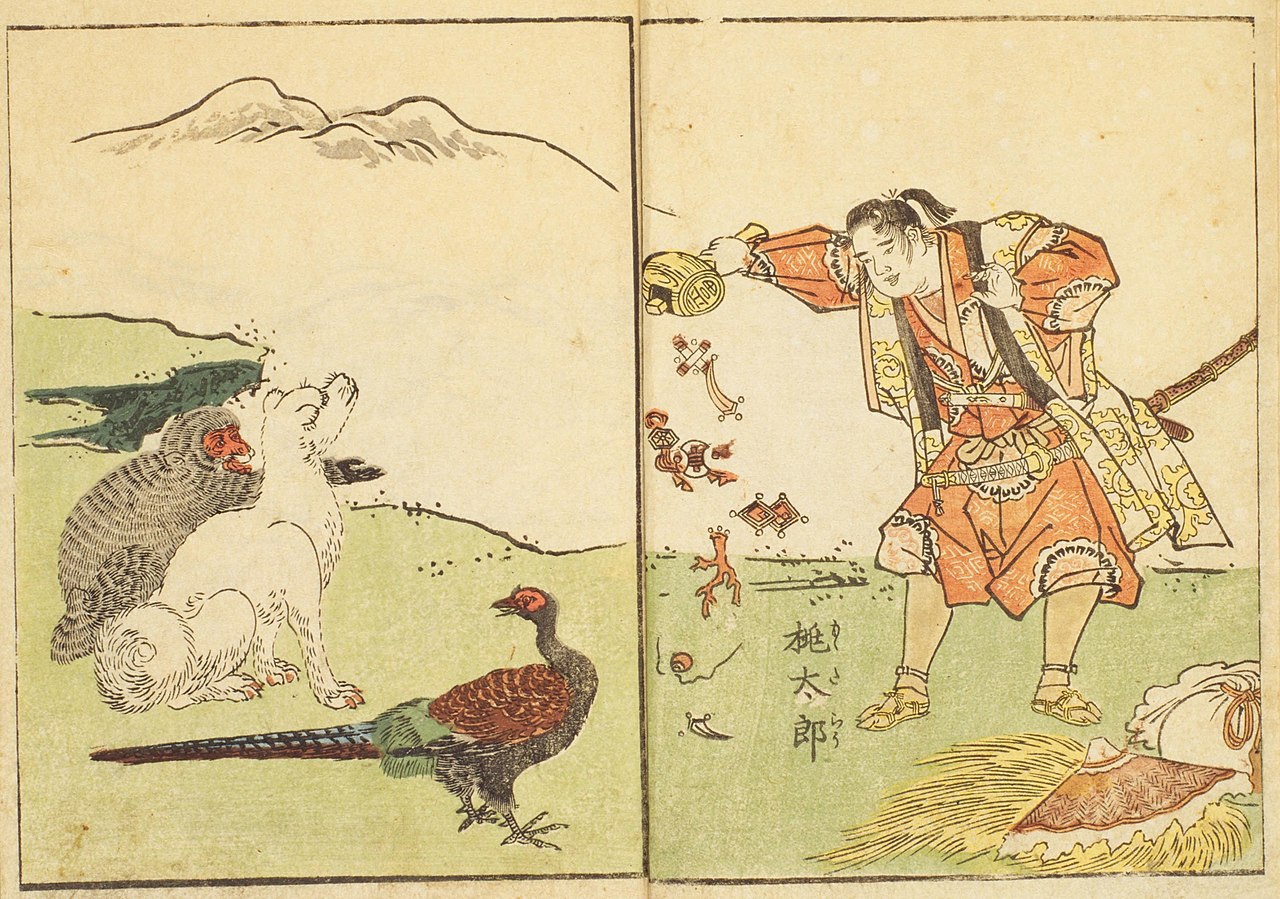
Another famous story featuring Uchide no kozuchi is Momotarō , or "The Peach Boy." Momotarō was born from a giant peach found by an old woman in a river. He grew into a strong and brave boy. Along with three loyal animal companions — a monkey, a rooster, and a dog — he sailed to Onigashima to defeat the oni that had been raiding their village.
On Onigashima, they fought the oni in a fierce battle. Momotarō and his friends managed to defeat the oni leader. As a reward, the oni handed over all their treasures, including Uchide no kozuchi , kakure mino , and kakure kasa . Momotarō brought these treasures back to the village, and the people lived in prosperity.
In modern adaptations, Momotarō uses the hammer to transform oni into harmless animals or even bring back the dead. This shows that the hammer is not just a tool for wealth, but also for revenge and transformation.
The Mystery Behind the Hammer: Symbol or Weapon?
Although Uchide no kozuchi is often depicted as a "magical hammer that grants any wish," there's an aspect that's rarely discussed: its origins may stem from ancient Japanese Shinto and animist beliefs. In Kojiki and Nihon Shoki , there's the concept of tama spirit that can be manipulated through objects. The hammer may symbolize the power to "strike" reality and change it.
Additionally, there's a theory that Uchide no kozuchi is a metaphor for hard work and skill. A well-timed strike can produce wealth — just like a skilled carpenter striking a nail to build a house or a farmer striking the earth to plant seeds.
However, it's certain that in Japanese culture, this hammer has become a symbol of good fortune and prosperity. Statues of Daikoku holding the hammer are often placed in shops and restaurants to attract customers. And in netsuke art, the small hammer is intricately carved to serve as a talisman.
A Warning from the Legend: The Dangers of Misusing Power
However, there's also a cautionary tale about the misuse of Uchide no kozuchi . In one folk tale, a greedy man stole the hammer from a shrine and struck it repeatedly to get gold. But the gold kept flowing, eventually flooding the house, village, and ultimately the man himself. This teaches us that uncontrolled wealth can lead to destruction.
In another version, a proud princess used the hammer to transform herself into a beauty, but each strike made her older and uglier. Eventually, she became a living skeleton that couldn't die. This warns us that magical power should not be used solely to satisfy one's ego.
Where Is the Hammer Now?
Today, Uchide no kozuchi does not exist as a physical object — it's only a legend. However, its spirit lives on in Japanese pop culture. In anime and video games, the hammer often appears as a weapon or item that can alter reality. For example, in the Doraemon series, the main character has a magical pocket that can produce various tools, including a concept similar to Uchide no kozuchi .
Perhaps, ultimately, Uchide no kozuchi is a symbol of human desire to control our own fate. We all want one strike that can change our lives. But, as the legend teaches us, bravery, simplicity, and responsibility are the true keys to using this power.
Conclusion: Strike Once, A Thousand Meanings
Uchide no kozuchi is not just a wooden hammer — it's a mirror to the human soul. For Issun-bōshi, it's a path to happiness. For Momotarō, it's a reward for bravery. For the oni, it's a symbol of greed. And for us, it's a warning that what we strike in life — whether it's hard work, relationships, or dreams — will determine what we achieve.
So, if you hold this magical hammer, what will you strike? And are you prepared for the consequences?