Introduction: The Mystery of the Human Mind
At one time, in a clinic in Germany, a man named Klaus Conrad sat at his desk, reviewing his patients' records. He was a psychiatrist known for his sharp observations of the human mind. However, in 1958, he discovered something that would change the way we understand human thinking: a phenomenon now known as 'apophenia'. It is the tendency to see meaningful connections between unrelated things. From there, began a journey that uncovered the secrets of our minds.
Klaus Conrad: The Founder of the Apophenia Theory
Klaus Conrad (1905–1961) was a German psychiatrist known for his research on schizophrenia. In his book 'Die beginnende Schizophrenie' (1958), he introduced the term 'Apophänie' from the Greek word 'apophaínein', meaning 'to reveal' or 'to make clear'. Conrad saw apophenia as an early step in the delusional process, where patients start seeing non-existent relationships between real sensory perceptions. He distinguished it from hallucinations because, in apophenia, patients do not create new realities but interpret reality in an illogical way.
Conrad spent years observing his patients and found that apophenia often appeared in the early stages of schizophrenia. Patients began to see 'signs' or 'links' between random events, such as associating the sound of footsteps with a conspiracy. Conrad called this phenomenon 'unmotivated seeing of connections' accompanied by an extraordinary sense of meaning. This was the starting point for a new understanding of mental disorders.
Apophenia in History: From Myths to Science
Before Conrad, humans had long sought meaning in the random world. In ancient times, societies used apophenia to explain natural phenomena: earthquakes, eclipses, or bad weather were considered signs from gods. In ancient Egypt, astronomers saw patterns in the stars as stories of the gods. Similarly, in ancient China, divination based on oracle bones and natural patterns was practiced.
However, Conrad was the first to provide a scientific framework for this phenomenon. He saw apophenia as part of the way the human brain functions: our minds are always searching for patterns to understand the world. This is a survival mechanism that helped our ancestors avoid predators, but in the modern context, it can be a source of problems such as delusions or paranoia.
Apophenia in Daily Life: Gambling, Mysticism, and Media
Apophenia is not only the domain of schizophrenic patients. It is part of our daily lives. Take gambling, for example: a gambler may see a 'pattern' in lottery numbers or casino games, believing that one number will win repeatedly. This is apophenia in action - seeking meaning in random data.
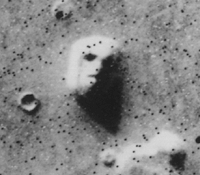
In the mystical world, apophenia explains why people see faces in clouds or hear messages from the supernatural in random sounds. Social media also plays a role: we often see 'trends' or 'signs' in news, but they are actually coincidences. From UFO conspiracies to prophecy theories, apophenia is a force shaping the way we think.
The Legacy of Klaus Conrad: Apophenia in Modern Psychiatry
Although Klaus Conrad died in 1961, his legacy continues to grow. The concept of apophenia is now used in various fields: from psychology to neuroscience, and even in studies of artificial intelligence. Researchers now understand that apophenia is part of the way the brain processes information - sometimes it helps, sometimes it misleads.
In modern psychiatry, apophenia is considered an early symptom of schizophrenia, but it is also seen in other disorders such as OCD and paranoia. With a deeper understanding, doctors can detect early signs and provide more effective treatment. Conrad has opened the door to a complex world of thought.
Conclusion: A Mystery That Never Fades
Apophenia is a mirror of the human soul. It shows how we are always seeking meaning, even in places where none exists. From ancient myths to modern conspiracy theories, this phenomenon reminds us that our mind is a mystery that remains unsolved. Klaus Conrad has given us the tools to understand a small aspect of this mystery - and it is a journey that will never end.
So, when you see a pattern in the clouds or hear whispers in random sounds, remember: that is apophenia in action. It is proof of how creative and complex the human mind is.
---
Reference: Apophenia — Wikipedia
From Human Mind to the World of Mystery: The Story of the Discovery of 'Apophenia'. What happens when our mind seeks meaning in random situations? This story begins in 1958, when a German psychiatrist, Klaus Conrad, discovered an unusual phenomenon: the human ability to see connections between unrelated things. From gambling to early schizophrenia, 'apophenia' opens the door to the mysteries of our mind.. Introduction: The Mystery of the Human Mind
At one time, in a clinic in Germany, a man named Klaus Conrad sat at his desk, reviewing his patients' records. He was a psychiatrist known for his sharp observations of the human mind. However, in 1958, he discovered something that would change the way we understand human thinking: a phenomenon now known as 'apophenia'. It is the tendency to see meaningful connections between unrelated things. From there, began a journey that uncovered the secrets of our minds.
Klaus Conrad: The Founder of the Apophenia Theory
Klaus Conrad 1905–1961 was a German psychiatrist known for his research on schizophrenia. In his book 'Die beginnende Schizophrenie' 1958 , he introduced the term 'Apophänie' from the Greek word 'apophaínein', meaning 'to reveal' or 'to make clear'. Conrad saw apophenia as an early step in the delusional process, where patients start seeing non-existent relationships between real sensory perceptions. He distinguished it from hallucinations because, in apophenia, patients do not create new realities but interpret reality in an illogical way.
Conrad spent years observing his patients and found that apophenia often appeared in the early stages of schizophrenia. Patients began to see 'signs' or 'links' between random events, such as associating the sound of footsteps with a conspiracy. Conrad called this phenomenon 'unmotivated seeing of connections' accompanied by an extraordinary sense of meaning. This was the starting point for a new understanding of mental disorders.
Apophenia in History: From Myths to Science
Before Conrad, humans had long sought meaning in the random world. In ancient times, societies used apophenia to explain natural phenomena: earthquakes, eclipses, or bad weather were considered signs from gods. In ancient Egypt, astronomers saw patterns in the stars as stories of the gods. Similarly, in ancient China, divination based on oracle bones and natural patterns was practiced.
However, Conrad was the first to provide a scientific framework for this phenomenon. He saw apophenia as part of the way the human brain functions: our minds are always searching for patterns to understand the world. This is a survival mechanism that helped our ancestors avoid predators, but in the modern context, it can be a source of problems such as delusions or paranoia.
Apophenia in Daily Life: Gambling, Mysticism, and Media
Apophenia is not only the domain of schizophrenic patients. It is part of our daily lives. Take gambling, for example: a gambler may see a 'pattern' in lottery numbers or casino games, believing that one number will win repeatedly. This is apophenia in action - seeking meaning in random data.
In the mystical world, apophenia explains why people see faces in clouds or hear messages from the supernatural in random sounds. Social media also plays a role: we often see 'trends' or 'signs' in news, but they are actually coincidences. From UFO conspiracies to prophecy theories, apophenia is a force shaping the way we think.
The Legacy of Klaus Conrad: Apophenia in Modern Psychiatry
Although Klaus Conrad died in 1961, his legacy continues to grow. The concept of apophenia is now used in various fields: from psychology to neuroscience, and even in studies of artificial intelligence. Researchers now understand that apophenia is part of the way the brain processes information - sometimes it helps, sometimes it misleads.
In modern psychiatry, apophenia is considered an early symptom of schizophrenia, but it is also seen in other disorders such as OCD and paranoia. With a deeper understanding, doctors can detect early signs and provide more effective treatment. Conrad has opened the door to a complex world of thought.
Conclusion: A Mystery That Never Fades
Apophenia is a mirror of the human soul. It shows how we are always seeking meaning, even in places where none exists. From ancient myths to modern conspiracy theories, this phenomenon reminds us that our mind is a mystery that remains unsolved. Klaus Conrad has given us the tools to understand a small aspect of this mystery - and it is a journey that will never end.
So, when you see a pattern in the clouds or hear whispers in random sounds, remember: that is apophenia in action. It is proof of how creative and complex the human mind is.
---
Reference: Apophenia — Wikipedia https://en.wikipedia.org/wiki/Apophenia