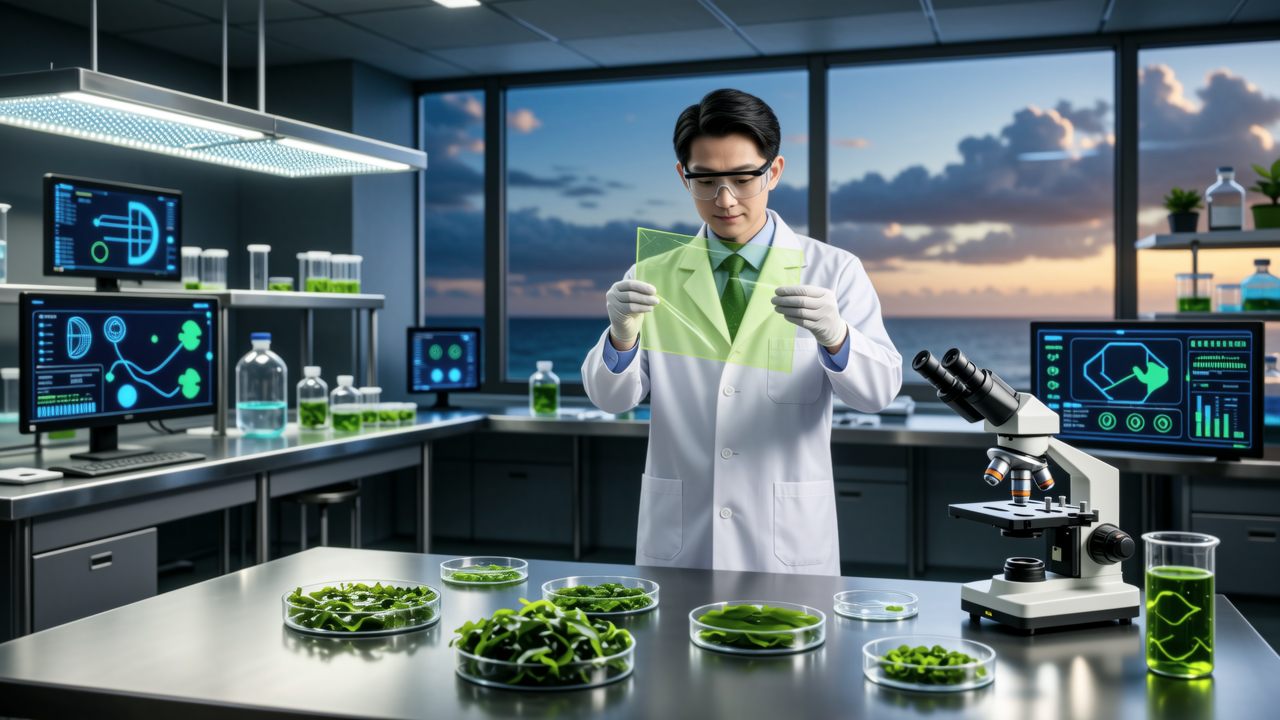
Sendai, June 24 — In a research laboratory at Tohoku University, Sendai, a team of young scientists is diligently studying a seemingly ordinary material — a roll of transparent plastic that looks no different from regular plastic. However, the material they are holding is fundamentally different: it is made from seaweed that thrives in Japan's coastal waters, and it will decompose completely within a few weeks when exposed to the natural environment.
The research team, led by Professor Yuki Tanaka, has spent over five years developing a process to produce a polymer material from seaweed that can match the mechanical and optical properties of conventional polyethylene plastics. This material, known as "SeaWrap," has successfully passed tests for durability, flexibility, transparency, and effectiveness as a barrier against moisture and oxygen, essential for food packaging.
Most importantly from an environmental perspective, SeaWrap decomposes completely within 6 to 8 weeks in marine or soil environments, leaving behind no harmful micro-plastics. This is a stark contrast to conventional plastics, which can persist in the environment for hundreds of years.
The production process for SeaWrap also has a significantly lower carbon footprint compared to petroleum-based plastics. The seaweed used as raw material absorbs carbon dioxide during its growth process, making it a nearly carbon-neutral raw material. Seaweed cultivation also does not require fertile land or fresh water like conventional agricultural crops, avoiding competition with food production.
Collaboration with the packaging industry has already begun, with several major Japanese food companies committing to switching to SeaWrap for a portion of their product lines. The price of SeaWrap is currently higher than conventional plastics, but the researchers are confident that with large-scale production, this price gap will significantly narrow.
This discovery has garnered significant international attention, with countries struggling against plastic pollution expressing interest in licensing this technology for local production.
Sustainable Packaging Innovation: Japan Develops Biodegradable Plastic from Seaweed. Japanese researchers have successfully developed a high-quality biodegradable packaging material made from seaweed, offering an eco-friendly alternative that could potentially replace conventional plastics.. Sendai, June 24 — In a research laboratory at Tohoku University, Sendai, a team of young scientists is diligently studying a seemingly ordinary material — a roll of transparent plastic that looks no different from regular plastic. However, the material they are holding is fundamentally different: it is made from seaweed that thrives in Japan's coastal waters, and it will decompose completely within a few weeks when exposed to the natural environment.
The research team, led by Professor Yuki Tanaka, has spent over five years developing a process to produce a polymer material from seaweed that can match the mechanical and optical properties of conventional polyethylene plastics. This material, known as "SeaWrap," has successfully passed tests for durability, flexibility, transparency, and effectiveness as a barrier against moisture and oxygen, essential for food packaging.
Most importantly from an environmental perspective, SeaWrap decomposes completely within 6 to 8 weeks in marine or soil environments, leaving behind no harmful micro-plastics. This is a stark contrast to conventional plastics, which can persist in the environment for hundreds of years.
The production process for SeaWrap also has a significantly lower carbon footprint compared to petroleum-based plastics. The seaweed used as raw material absorbs carbon dioxide during its growth process, making it a nearly carbon-neutral raw material. Seaweed cultivation also does not require fertile land or fresh water like conventional agricultural crops, avoiding competition with food production.
Collaboration with the packaging industry has already begun, with several major Japanese food companies committing to switching to SeaWrap for a portion of their product lines. The price of SeaWrap is currently higher than conventional plastics, but the researchers are confident that with large-scale production, this price gap will significantly narrow.
This discovery has garnered significant international attention, with countries struggling against plastic pollution expressing interest in licensing this technology for local production.