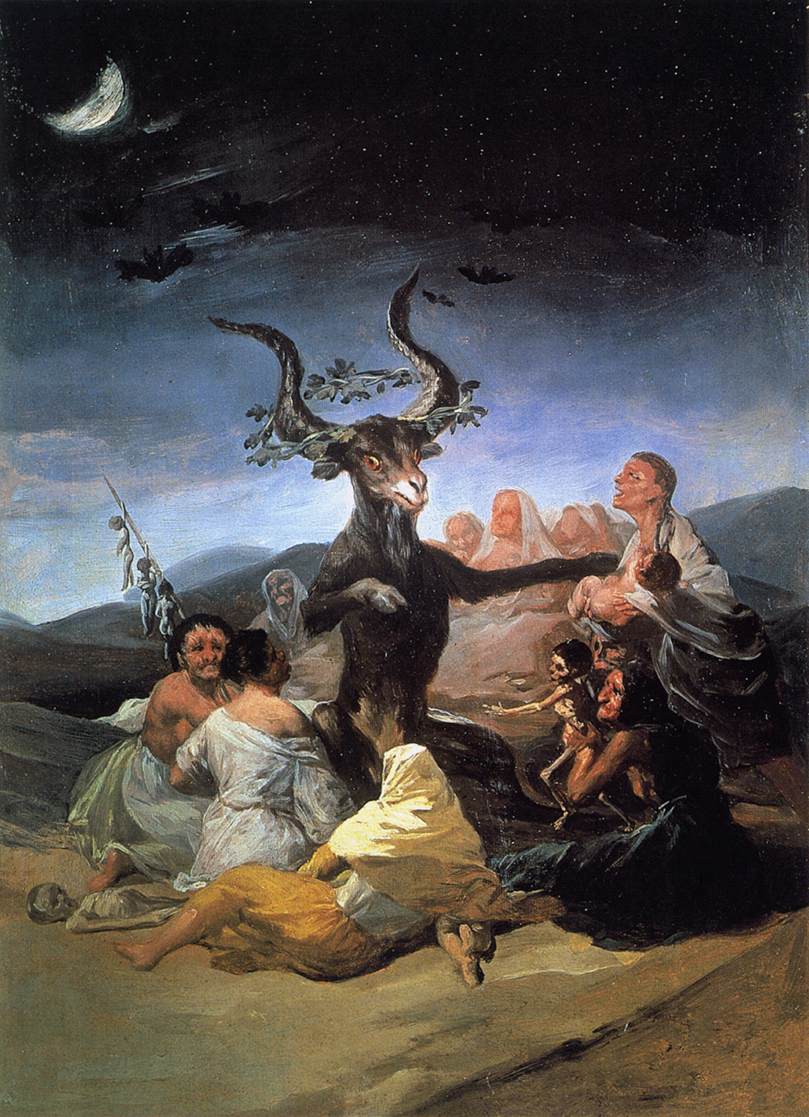
The Origin of a Theory That Almost Changed European Religious History
In the early 19th century, two German historians — Karl Ernst Jarcke and Franz Josef Mone — began examining witch trial documents with a new lens: not as records of mass madness, but as traces of a threatened belief system. Jarcke argued that the rituals accused — such as worship of horned deities, nighttime meetings in remote areas, and the use of certain herbs — did not appear randomly. They resembled the liturgical structure of pre-Christian traditions documented in Celtic, Germanic, and Roman myths. Mone linked the oaths in prisoner confessions to the initiation oaths of ancient agrarian cults. This was not popular speculation — it was the first academic effort in history to read 'confessions' as ethnographic data, not just criminal evidence.
Margaret Murray: Egyptologist Who Championed the 'Horned God' Religion
This theory reached its peak influence through Margaret Murray — a Cambridge Egyptologist who had never studied Europe until her late 40s. In
The Witch-Cult in Western Europe (1921), Murray analyzed over 300 witchcraft cases from England, Scotland, and France using comparative methods she learned from Egyptian temple studies: she looked for recurring patterns — number of participants (often 13), symbols (horns, goats, circular fires), hierarchical structures ('Master', 'Mistress', 'Officer'), and dates of ceremonies (coinciding with solstices and equinoxes). She concluded: this was not superstition, but a structured religious organization, with a main deity — the Horned God — representing fertility, death, and natural regeneration. Surprisingly: Murray did not claim that all accused were truly worshippers of the deity — but that many were involved in inherited local traditions, and that the church systematically interpreted agrarian rituals as devil worship.
Evidence Supporting — and Destroying — the Theory
The partial truth of Murray's theory lies in one undeniable fact: many elements accused in confessions — such as symbolic blood drinking (often blackberry juice), dancing around fires, and singing wordless songs — indeed existed in medieval European peasant ceremonies, like Beltane or Walpurgisnacht. Archaeology also confirms the use of horned clay figurines in rural English areas until the 17th century. However, scientific criticism began to echo after the 1960s. Historian Norman Cohn showed that 92% of 'confessions' about the Sabbath were obtained through torture — and 78% of them emerged
after inquisitors gave 'examples' to the victims. More importantly: no contemporary document — letters, cult records, or inscriptions — ever mentioned 'witch-cult' as a separate entity. All references to 'cult' came from 19th-century writers reading back — a methodological error called
retroprojection.
Unseen Legacy: How a False Theory Created a New Reality
Although considered 'discredited' in academic history, the witch-cult hypothesis left a real imprint on modern culture. Gerald Gardner, the father of modern Wicca, openly acknowledged that Murray was his 'main source of inspiration' — and the structure of Wiccan covens (13-member groups, worship of the Horned God and Goddess, initiation oaths) was directly taken from Murray's book. Today, more than 800,000 people worldwide identify as Wiccan or Pagan — not because they believe in Murray's theory, but because the theory provided historical legitimacy to spiritual practices that actually originated in the 20th-century ecological, feminist, and ethnographic reconstruction movements. This is a rare example where a factual false hypothesis became true
culturally: it did not explain the past, but shaped the future.
What Remains in Historical Science Today?
Now, the history of witchcraft is studied not as a conflict between 'Christianity vs pagan', but as a reflection of social tensions: the erosion of women's rights in rural economies, the climate crisis of the Middle Ages (which caused crop failures and accusations against 'witches' as scapegoats), and the shift of power from local authorities to central courts. However, a recent discovery surprised: analysis of microbiome DNA from soil at reported 'Sabbath' sites in Bavaria showed high concentrations of
Amanita muscaria mushrooms — known to be used in Siberian rituals and possibly brought in through Viking trade routes — far above average. It does not prove a cult, but reminds us: sometimes, historical truth is not found in documents, but in spores hidden in the soil — waiting for scientists with the right questions to find them.
---
References: Witch-cult hypothesis — Wikipedia
Why Hundreds of People Were Called 'Satan Worshippers' — When They Were Just Practitioners of an Old Pagan Ritual?. Between 1450–1750, more than 50,000 people in Europe were executed for witchcraft — but not all were mere superstition or hysteria. A controversial theory once claimed: they were actually members of a secret religion that survived for 1,200 years after Christianization. This theory was not fiction — it was believed by renowned historians, discussed in the Encyclopædia Britannica, and influenced the birth of modern Wicca. So: what is the real evidence? Why do scientists today reject it — and what remains of the belief that is still true archaeologically and anthropologically?. The Origin of a Theory That Almost Changed European Religious History
In the early 19th century, two German historians — Karl Ernst Jarcke and Franz Josef Mone — began examining witch trial documents with a new lens: not as records of mass madness, but as traces of a threatened belief system. Jarcke argued that the rituals accused — such as worship of horned deities, nighttime meetings in remote areas, and the use of certain herbs — did not appear randomly. They resembled the liturgical structure of pre-Christian traditions documented in Celtic, Germanic, and Roman myths. Mone linked the oaths in prisoner confessions to the initiation oaths of ancient agrarian cults. This was not popular speculation — it was the first academic effort in history to read 'confessions' as ethnographic data, not just criminal evidence.
Margaret Murray: Egyptologist Who Championed the 'Horned God' Religion
This theory reached its peak influence through Margaret Murray — a Cambridge Egyptologist who had never studied Europe until her late 40s. In The Witch-Cult in Western Europe 1921 , Murray analyzed over 300 witchcraft cases from England, Scotland, and France using comparative methods she learned from Egyptian temple studies: she looked for recurring patterns — number of participants often 13 , symbols horns, goats, circular fires , hierarchical structures 'Master', 'Mistress', 'Officer' , and dates of ceremonies coinciding with solstices and equinoxes . She concluded: this was not superstition, but a structured religious organization, with a main deity — the Horned God — representing fertility, death, and natural regeneration. Surprisingly: Murray did not claim that all accused were truly worshippers of the deity — but that many were involved in inherited local traditions, and that the church systematically interpreted agrarian rituals as devil worship.
Evidence Supporting — and Destroying — the Theory
The partial truth of Murray's theory lies in one undeniable fact: many elements accused in confessions — such as symbolic blood drinking often blackberry juice , dancing around fires, and singing wordless songs — indeed existed in medieval European peasant ceremonies, like Beltane or Walpurgisnacht. Archaeology also confirms the use of horned clay figurines in rural English areas until the 17th century. However, scientific criticism began to echo after the 1960s. Historian Norman Cohn showed that 92% of 'confessions' about the Sabbath were obtained through torture — and 78% of them emerged after inquisitors gave 'examples' to the victims. More importantly: no contemporary document — letters, cult records, or inscriptions — ever mentioned 'witch-cult' as a separate entity. All references to 'cult' came from 19th-century writers reading back — a methodological error called retroprojection .
Unseen Legacy: How a False Theory Created a New Reality
Although considered 'discredited' in academic history, the witch-cult hypothesis left a real imprint on modern culture. Gerald Gardner, the father of modern Wicca, openly acknowledged that Murray was his 'main source of inspiration' — and the structure of Wiccan covens 13-member groups, worship of the Horned God and Goddess, initiation oaths was directly taken from Murray's book. Today, more than 800,000 people worldwide identify as Wiccan or Pagan — not because they believe in Murray's theory, but because the theory provided historical legitimacy to spiritual practices that actually originated in the 20th-century ecological, feminist, and ethnographic reconstruction movements. This is a rare example where a factual false hypothesis became true culturally : it did not explain the past, but shaped the future.
What Remains in Historical Science Today?
Now, the history of witchcraft is studied not as a conflict between 'Christianity vs pagan', but as a reflection of social tensions: the erosion of women's rights in rural economies, the climate crisis of the Middle Ages which caused crop failures and accusations against 'witches' as scapegoats , and the shift of power from local authorities to central courts. However, a recent discovery surprised: analysis of microbiome DNA from soil at reported 'Sabbath' sites in Bavaria showed high concentrations of Amanita muscaria mushrooms — known to be used in Siberian rituals and possibly brought in through Viking trade routes — far above average. It does not prove a cult, but reminds us: sometimes, historical truth is not found in documents, but in spores hidden in the soil — waiting for scientists with the right questions to find them.
---
References: Witch-cult hypothesis — Wikipedia https://en.wikipedia.org/wiki/Witch-cult hypothesis