Humans only get two sets of teeth in their lifetime — baby teeth and permanent teeth. If the permanent teeth are damaged or fall out, no more replacements will grow. This is what makes shark teeth so amazing: they never run out of teeth.
Sharks are polyphyodonts — animals that can grow new teeth repeatedly throughout their lives. New shark teeth grow to replace the old or lost ones every 1-2 weeks. Throughout their life, a shark can use between 20,000 to 30,000 teeth — or even more for some long-lived species.
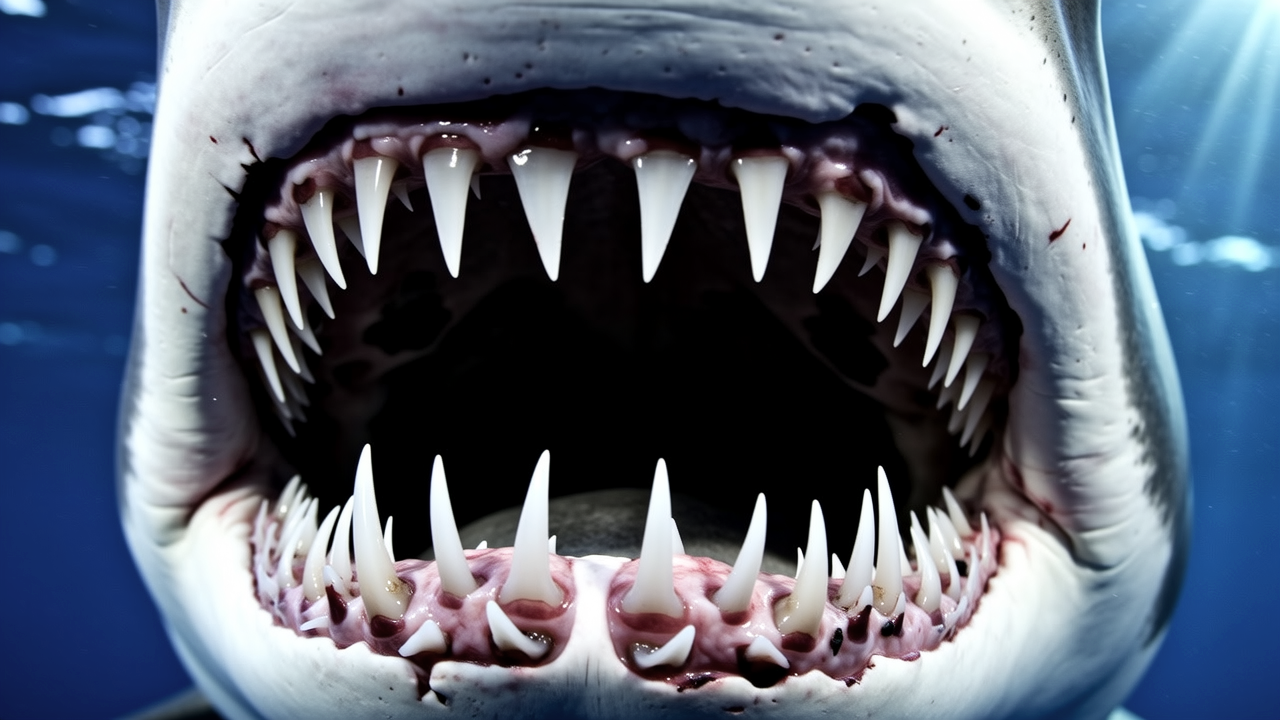
Shark teeth are arranged in rows inside the mouth. A species like the tiger shark can have 5-7 active rows of teeth at any time, with new rows of teeth constantly developing behind. When the front row teeth are lost or broken, the teeth from the next row move forward to take their place — like a conveyor belt of teeth.
Shark teeth do not grow from the jawbone like mammalian teeth — they grow from modified skin tissue in the gums, evolutionarily related to shark scales (dermal denticles). The anatomy of shark teeth is actually more similar to scales than to mammalian teeth.
In archaeology and paleontology, shark teeth are among the most commonly found fossils because they are hard and numerous. Ancient megalodon shark teeth, ancestors of sharks that lived 23-3.6 million years ago, are sometimes found in fossil form in astonishing sizes, as large as a human hand — reflecting a giant animal that was estimated to be 15-18 meters long.
🔬 Science Facts #38: Shark Teeth Never Stop Growing — They Can Replace Their Teeth 30,000 Times in a Lifetime. Sharks are polyphyodonts — animals that can replace their teeth repeatedly. New shark teeth grow every 1-2 weeks, and a shark can use up to 30,000 teeth during its lifetime.. Humans only get two sets of teeth in their lifetime — baby teeth and permanent teeth. If the permanent teeth are damaged or fall out, no more replacements will grow. This is what makes shark teeth so amazing: they never run out of teeth.
Sharks are polyphyodonts — animals that can grow new teeth repeatedly throughout their lives. New shark teeth grow to replace the old or lost ones every 1-2 weeks. Throughout their life, a shark can use between 20,000 to 30,000 teeth — or even more for some long-lived species.
Shark teeth are arranged in rows inside the mouth. A species like the tiger shark can have 5-7 active rows of teeth at any time, with new rows of teeth constantly developing behind. When the front row teeth are lost or broken, the teeth from the next row move forward to take their place — like a conveyor belt of teeth.
Shark teeth do not grow from the jawbone like mammalian teeth — they grow from modified skin tissue in the gums, evolutionarily related to shark scales dermal denticles . The anatomy of shark teeth is actually more similar to scales than to mammalian teeth.
In archaeology and paleontology, shark teeth are among the most commonly found fossils because they are hard and numerous. Ancient megalodon shark teeth, ancestors of sharks that lived 23-3.6 million years ago, are sometimes found in fossil form in astonishing sizes, as large as a human hand — reflecting a giant animal that was estimated to be 15-18 meters long.