These ships are not from a movie — they come with a stench of rotting seaweed and bones
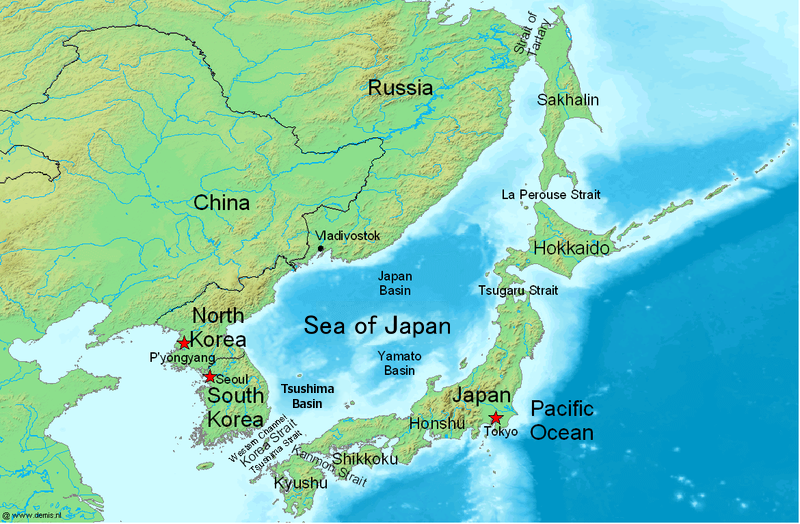
Imagine you're walking along the coast of Akita Prefecture, Japan, on a cool November morning. Calm waves. Air smells of salt and moss. Suddenly, something dark appears stuck between the rocks — not ordinary wood, but a cracked wooden ship's hull, covered in salt crust and dark green moss. On top? No engine noise. No SOS signal. No human voice. Just one: a human skeleton sitting by the helm, still holding a frayed rope.
This is not a scene from The Ring. It is an official report from the Japan Coast Guard — and this happens more than 70 times a year. Since 2013, an average of 54–72 'ghost ships' from North Korea have washed up on Japanese shores. In 2022, the record was 79 ships. And in 30% of them, authorities found bodies — mostly men aged 40–60, thin and emaciated, sometimes still wearing gray fisherman uniforms, with frostbite scars on their fingers and ears.
Why do North Korean fishermen dare to sail into the open sea — even though their ships can't withstand 3-meter waves?
We always imagine North Korea as a country with a large army, nuclear weapons, and grand propaganda. But few know that it is also one of the most dependent countries on fish as a main source of protein — more than 70% of animal protein for its people comes from the sea. And here, the tragedy begins.
Since the early 2000s, Chinese fishing vessels — large, diesel-powered, equipped with sonar and trawls — began flooding North Korea's Exclusive Economic Zone (EEZ). Not just 'passing through'. They caught up to 800,000 metric tons of fish per year in Pyongyang's waters — a number exceeding the total annual catch of North Korea itself (around 300,000 tons). The result? Fish like anchovies, sardines, and rays — the main source for local fishermen — disappeared from their coastal areas within less than a decade.
So what choice did the fishermen have? Wait in the port until their children starved? No. They boarded wooden ships that were 20–30 years old — without GPS, without satellite radio, without enough floats — and sailed eastward toward the Sea of Japan, sometimes as far as 300–500 km from land. That distance is equivalent to Kuala Lumpur to Penang... but on a boat without an engine or navigation system.
'Ghost' ships are not empty — they carry documents that make Japanese diplomats uneasy
When Japanese authorities examined these ships, they didn't find only bones. They found: logbooks written with blue pencils ('Day 17: no fish. Only 2 liters of water left.'), letters from wives at home ('Your son can now write your name'), and fisherman identification cards marked 'South Hamgyong Province Fishermen's Cooperative'.
Most surprising? In 12 of the ships studied by Hokkaido University (2021–2023), 9 had an official stamp from the North Korean Ministry of Oceans on the hull — not a fake stamp, but an actual metal stamp, hand-stamped. This means: this is not an illegal activity or smuggling. This is an official operation — directed from above — even though the ships were not seaworthy.
And yes, there were also ships carrying fish — but not fresh fish. Dried, rotten fish wrapped in black, mossy plastic. To sell or to eat? We never found out. Because their owners had already become part of the sand and waves.
Why is North Korea silent — and why can't Japan send the ships back?
Legally, Japan
can send the ships back — but it can't. Why? Because North Korea is not a country that recognizes international maritime agreements. There is no emergency hotline. No diplomatic mission in Tokyo. And if Japan tried to send the ships back with a 'note accompanying', it would be considered as de facto recognition of Pyongyang's sovereignty — something Tokyo avoids since the 2006 UN sanctions.
Therefore, the ships are buried — literally. Bodies are buried in Japanese soil (with special permission from the Ministry of Justice), ships are burned or recycled, and records are kept in secret archives of the Japan Coast Guard. No media broadcast. No official announcement. Only internal reports stating: 'Incident No. 47 — wooden ship without identity, 3 bodies, 24 days at sea.'
This is not about ships — this is about people lost between two diplomatic lines
The exact number of North Korean fishermen who have disappeared at sea has never been announced. However, based on Interpol data and NGOs such as HRNK (Committee for Human Rights in North Korea), a conservative estimate is
over 1,200 people missing since 2014. Not died in war. Not executed. But died
from hunger, cold, and losing direction — in the same sea that once filled their dining tables.
And the saddest part? Some of the ships found last year still had plastic water bottles labeled 'Kim Il-sung University' — bottles used by students of Pyongyang's elite university. This means: some had received higher education, had dreamed of becoming scientists or teachers… but ended up as fishermen — not by choice, but because their country had no fish near the coast.
So next time you hear news about 'North Korean tensions', don't immediately think about rockets and nuclear tests. Look again towards the sea. Anywhere, an old wooden ship might be sailing — silently, without lights, without sound — carrying not a threat, but a question that has never been answered: If the sea is empty, what else is left to sail?
— The Equator Editors, writing from the edge of an ever-restless ocean.
---
Références: North Korean ghost ships — Wikipedia
Why 72 North Korean Ghost Ships Washed Ashore Last Year — and No One Survived?. Every year, dozens of old wooden ships from North Korea appear on Japanese shores — empty, rusty, and often carrying corpses. Not a ghost story. This is a real story of hunger, violent waves, and a fishing policy never mentioned at the UN. What actually forced fishermen to sail to the point of no return?. These ships are not from a movie — they come with a stench of rotting seaweed and bones
Imagine you're walking along the coast of Akita Prefecture, Japan, on a cool November morning. Calm waves. Air smells of salt and moss. Suddenly, something dark appears stuck between the rocks — not ordinary wood, but a cracked wooden ship's hull, covered in salt crust and dark green moss. On top? No engine noise. No SOS signal. No human voice. Just one: a human skeleton sitting by the helm, still holding a frayed rope.
This is not a scene from The Ring . It is an official report from the Japan Coast Guard — and this happens more than 70 times a year . Since 2013, an average of 54–72 'ghost ships' from North Korea have washed up on Japanese shores. In 2022, the record was 79 ships. And in 30% of them, authorities found bodies — mostly men aged 40–60, thin and emaciated, sometimes still wearing gray fisherman uniforms, with frostbite scars on their fingers and ears.
Why do North Korean fishermen dare to sail into the open sea — even though their ships can't withstand 3-meter waves?
We always imagine North Korea as a country with a large army, nuclear weapons, and grand propaganda. But few know that it is also one of the most dependent countries on fish as a main source of protein — more than 70% of animal protein for its people comes from the sea. And here, the tragedy begins.
Since the early 2000s, Chinese fishing vessels — large, diesel-powered, equipped with sonar and trawls — began flooding North Korea's Exclusive Economic Zone EEZ . Not just 'passing through'. They caught up to 800,000 metric tons of fish per year in Pyongyang's waters — a number exceeding the total annual catch of North Korea itself around 300,000 tons . The result? Fish like anchovies, sardines, and rays — the main source for local fishermen — disappeared from their coastal areas within less than a decade.
So what choice did the fishermen have? Wait in the port until their children starved? No. They boarded wooden ships that were 20–30 years old — without GPS, without satellite radio, without enough floats — and sailed eastward toward the Sea of Japan, sometimes as far as 300–500 km from land. That distance is equivalent to Kuala Lumpur to Penang... but on a boat without an engine or navigation system.
'Ghost' ships are not empty — they carry documents that make Japanese diplomats uneasy
When Japanese authorities examined these ships, they didn't find only bones. They found: logbooks written with blue pencils 'Day 17: no fish. Only 2 liters of water left.' , letters from wives at home 'Your son can now write your name' , and fisherman identification cards marked 'South Hamgyong Province Fishermen's Cooperative'.
Most surprising? In 12 of the ships studied by Hokkaido University 2021–2023 , 9 had an official stamp from the North Korean Ministry of Oceans on the hull — not a fake stamp, but an actual metal stamp, hand-stamped. This means: this is not an illegal activity or smuggling. This is an official operation — directed from above — even though the ships were not seaworthy.
And yes, there were also ships carrying fish — but not fresh fish. Dried, rotten fish wrapped in black, mossy plastic. To sell or to eat? We never found out. Because their owners had already become part of the sand and waves.
Why is North Korea silent — and why can't Japan send the ships back?
Legally, Japan can send the ships back — but it can't. Why? Because North Korea is not a country that recognizes international maritime agreements. There is no emergency hotline. No diplomatic mission in Tokyo. And if Japan tried to send the ships back with a 'note accompanying', it would be considered as de facto recognition of Pyongyang's sovereignty — something Tokyo avoids since the 2006 UN sanctions.
Therefore, the ships are buried — literally. Bodies are buried in Japanese soil with special permission from the Ministry of Justice , ships are burned or recycled, and records are kept in secret archives of the Japan Coast Guard. No media broadcast. No official announcement. Only internal reports stating: 'Incident No. 47 — wooden ship without identity, 3 bodies, 24 days at sea.'
This is not about ships — this is about people lost between two diplomatic lines
The exact number of North Korean fishermen who have disappeared at sea has never been announced. However, based on Interpol data and NGOs such as HRNK Committee for Human Rights in North Korea , a conservative estimate is over 1,200 people missing since 2014 . Not died in war. Not executed. But died from hunger, cold, and losing direction — in the same sea that once filled their dining tables.
And the saddest part? Some of the ships found last year still had plastic water bottles labeled 'Kim Il-sung University' — bottles used by students of Pyongyang's elite university. This means: some had received higher education, had dreamed of becoming scientists or teachers… but ended up as fishermen — not by choice, but because their country had no fish near the coast.
So next time you hear news about 'North Korean tensions', don't immediately think about rockets and nuclear tests. Look again towards the sea. Anywhere, an old wooden ship might be sailing — silently, without lights, without sound — carrying not a threat, but a question that has never been answered: If the sea is empty, what else is left to sail?
— The Equator Editors, writing from the edge of an ever-restless ocean.
---
Références: North Korean ghost ships — Wikipedia https://en.wikipedia.org/wiki/North Korean ghost ships