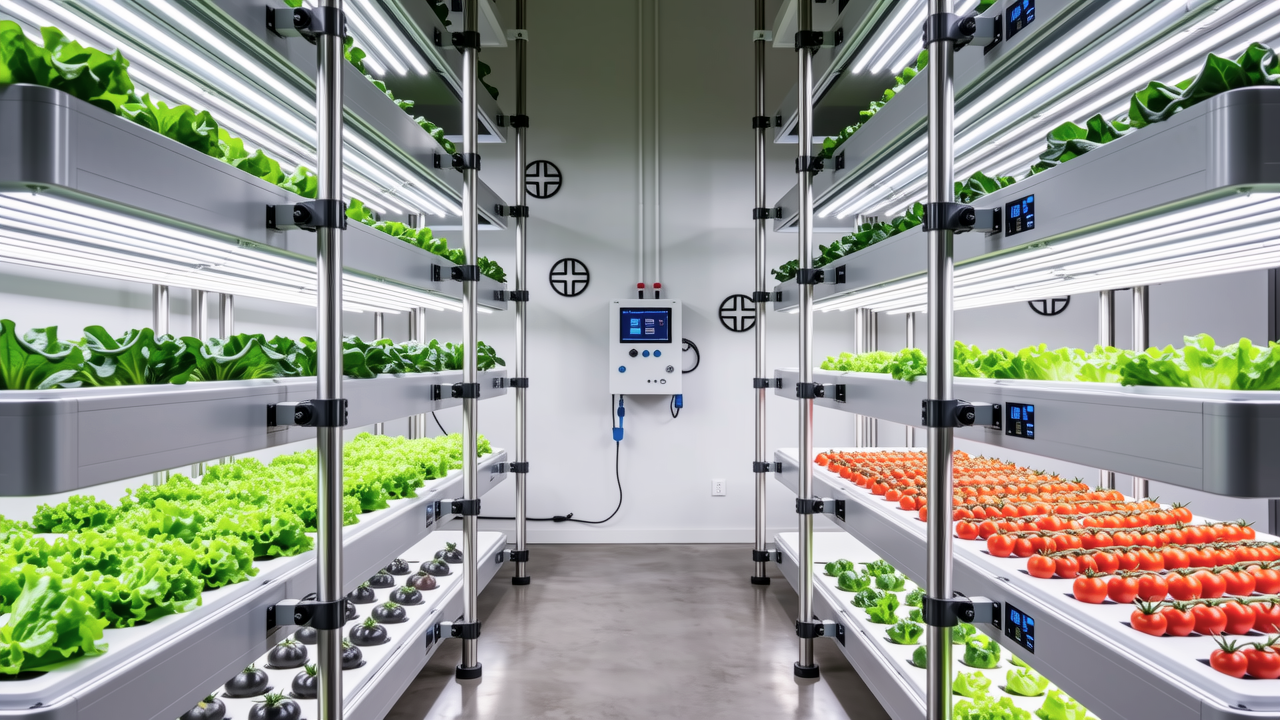
Seoul, June 24 — Inside an office building that looks ordinary in the Mapo district of Seoul, something extraordinary is hidden in the basement and several upper floors: a sophisticated vertical farm that produces more than 30 types of fresh vegetables and herbs every day, without any soil, rain, or natural sunlight. This is part of an expanding network of vertical farms in Seoul, reflecting the capital city's commitment to becoming a more sustainable and self-reliant food supply city.
The technology used in South Korean vertical farms is among the most advanced in the world. The LED lighting system called "growth lights" is designed to mimic the spectrum of sunlight required for optimal photosynthesis for each type of plant, with lighting schedules automatically controlled by computers to simulate the most suitable day and night cycles.
The irrigation system uses aeroponics — plant roots are suspended in the air and sprayed periodically with nutrient solutions — which has been found to be the most efficient in terms of water and nutrient usage compared to conventional hydroponic methods. Data collected by more than 500 sensors installed in each farm is analyzed by an AI system that continuously optimizes every environmental parameter to maximize crop yield and product quality.
The main value of these vertical farms to Seoul is the ability to provide truly fresh vegetables — harvested and delivered to supermarkets or restaurants within just a few hours. This differs from imported vegetables from rural farms that require transportation for one to three days and often require long-term storage in cold rooms.
The increasingly popular business model is the "farm in a restaurant" where part of the restaurant space is used to grow herbs and vegetables used directly in the restaurant's cuisine. This concept is very popular among premium restaurants that want the freshest ingredients and want to tell their customers the story of the origin of their food.
South Korean Vertical Farming: LED Hydroponic Technology Produces Fresh Vegetables in the Midst of Seoul. Seoul is developing a series of vertical farms within the city that use cutting-edge technology to produce high-quality fresh vegetables, reducing reliance on external supplies.. Seoul, June 24 — Inside an office building that looks ordinary in the Mapo district of Seoul, something extraordinary is hidden in the basement and several upper floors: a sophisticated vertical farm that produces more than 30 types of fresh vegetables and herbs every day, without any soil, rain, or natural sunlight. This is part of an expanding network of vertical farms in Seoul, reflecting the capital city's commitment to becoming a more sustainable and self-reliant food supply city.
The technology used in South Korean vertical farms is among the most advanced in the world. The LED lighting system called "growth lights" is designed to mimic the spectrum of sunlight required for optimal photosynthesis for each type of plant, with lighting schedules automatically controlled by computers to simulate the most suitable day and night cycles.
The irrigation system uses aeroponics — plant roots are suspended in the air and sprayed periodically with nutrient solutions — which has been found to be the most efficient in terms of water and nutrient usage compared to conventional hydroponic methods. Data collected by more than 500 sensors installed in each farm is analyzed by an AI system that continuously optimizes every environmental parameter to maximize crop yield and product quality.
The main value of these vertical farms to Seoul is the ability to provide truly fresh vegetables — harvested and delivered to supermarkets or restaurants within just a few hours. This differs from imported vegetables from rural farms that require transportation for one to three days and often require long-term storage in cold rooms.
The increasingly popular business model is the "farm in a restaurant" where part of the restaurant space is used to grow herbs and vegetables used directly in the restaurant's cuisine. This concept is very popular among premium restaurants that want the freshest ingredients and want to tell their customers the story of the origin of their food.