AI
Kandungan Ditaja (Sponsored)
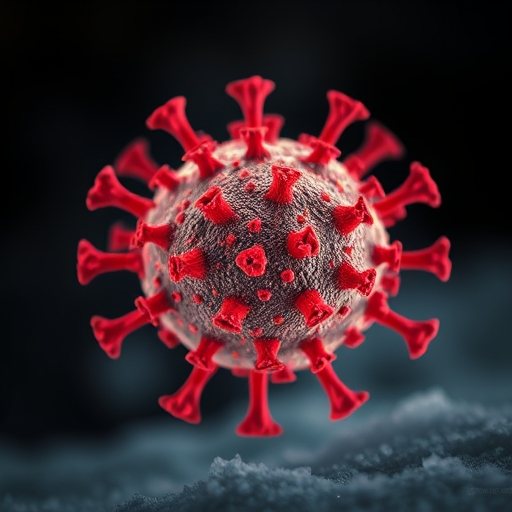
Ancient Giant Virus Revived from Siberian Permafrost: A Hidden Threat of Global Warming. Researchers from Aix-Marseille University, France, have successfully revived a 30,000-year-old giant virus trapped in Siberian permafrost. The virus, named Mollivirus sibericum, remains infectious after millennia of freezing, raising concerns about other ancient pathogens that could be released due to global warming-induced permafrost thaw. The study, published in the journal Proceedings of the National Academy of Sciences (PNAS), challenges the assumption that viruses cannot survive over geological timescales and opens new questions about hidden biological risks in polar regions.. Introduction: A Shock from the Depths of the Ice Age
In the world of science, discoveries that challenge our understanding of life and its persistence often come from the most unexpected places. Recently, a team of researchers led by Professor Jean-Michel Claverie from Aix-Marseille University in France has successfully revived a giant virus that had been trapped in the Siberian permafrost for over 30,000 years. This discovery, published in the journal Proceedings of the National Academy of Sciences PNAS , has not only surprised the scientific community but also raised serious questions about the biological threats that may arise from the accelerating thaw of permafrost due to climate change.
Study Methodology: Hunting for Viruses in Ancient Ice Cores
The research team collected permafrost core samples from a depth of approximately 30 meters in the Chukotka region of northeastern Siberia. These samples were then analyzed using electron microscopy and molecular biology techniques to detect the presence of viral particles. They discovered a giant virus named Mollivirus sibericum meaning 'soft virus from Siberia' . This virus has a diameter of about 0.6 micrometers, making it one of the largest viruses ever discovered. To test if the virus was still viable, the researchers exposed it to a culture of Acanthamoeba castellanii amoeba in the laboratory. The results were astonishing: the virus began to infect and multiply within the amoeba, indicating that it was still biologically active despite being frozen for thousands of years.
Unique Characteristics of Mollivirus sibericum
Mollivirus sibericum belongs to a group of giant viruses known as Megavirales . Unlike typical small viruses, these giant viruses possess very large genomes—in this case, over 600,000 base pairs—and are capable of producing proteins necessary for their own replication. One of its most fascinating features is the presence of a lipid layer protecting its genome, allowing it to survive extreme conditions such as prolonged freezing temperatures. The study also found that this virus is not harmful to humans or other animals, as it only infects amoebas. However, its successful revival proves that other, more dangerous ancient pathogens might also be able to survive in permafrost.
Implications for Public Health and Climate Change
This discovery has profound implications for global public health. Permafrost in the Arctic and Siberia contains organic remains from prehistoric times, including ancient animal and human carcasses that may have been infected with extinct viruses or bacteria. Global warming is causing permafrost to thaw at an accelerating rate, releasing these organic materials into the environment. Although Mollivirus sibericum is harmless to humans, scientists warn that other, more pathogenic viruses or bacteria—such as ancient smallpox or influenza viruses—could also be trapped in the ice and potentially released. This poses a risk of disease outbreaks unknown to modern immune systems.
Comparison with Previous Discoveries
This is not the first time ancient viruses have been revived. In 2014, the same team successfully revived Pithovirus sibericum , a 30,000-year-old giant virus also found in Siberian permafrost. However, Mollivirus sibericum is smaller and has a different structure, suggesting that the diversity of ancient viruses in permafrost may be greater than anticipated. This discovery also underscores the need for further research into the microbial ecology of polar regions, especially in the context of rapid climate change.
Challenges and Controversies in Research
While this discovery is fascinating, it also raises controversy. Some scientists are concerned that reviving ancient viruses in a laboratory setting could be risky, even with high-level biosafety measures BSL-3 in place. Professor Claverie, however, insists that such studies are crucial for understanding potential biological threats that could emerge naturally. He also emphasizes that the real risk is not from viruses revived in a lab, but from the large-scale release of ancient pathogens due to uncontrolled permafrost thaw.
Conclusion: A Warning from the Past
The discovery of Mollivirus sibericum serves as a reminder that the Earth holds ancient secrets that may have remained hidden for millennia but are now beginning to be exposed due to human activity. Although this particular virus is harmless, it opens the door to more concerning possibilities. Scientists are now calling for more research to map the permafrost microbiome and assess potential risks. In the era of global warming, we may need to prepare for not only climate challenges but also unexpected biological threats from a frozen past.
Tags: