AI
Kandungan Ditaja (Sponsored)
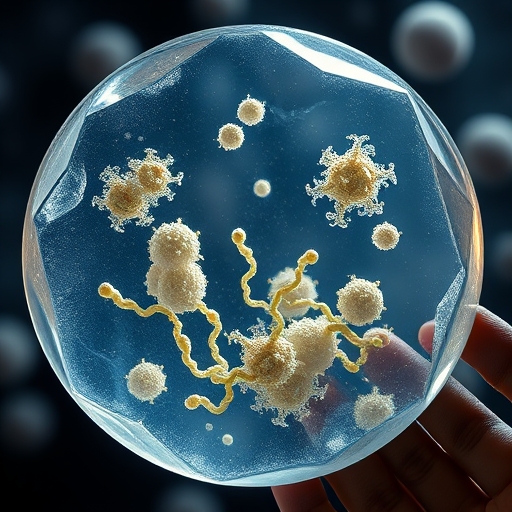
Ancient Bacteria Revived from 250 Million-Year-Old Crystal Salt: Challenging the Limits of Life and Evolution. A team of researchers from West Chester University and other institutions successfully revived ancient bacteria trapped in 250 million-year-old crystal salt. The bacteria, identified as spores of Bacillus, showed metabolic activity after an exceptionally long period of dormancy, challenging our understanding of the limits of life and an organism's ability to survive in extreme conditions. This discovery was published in the Journal of Applied Microbiology and opens new perspectives in astrobiology and the search for life on other planets.. Discovery in New Mexico Desert: Ancient Spores in Crystal Salt
In 2000, a team of researchers led by Dr. Russell Vreeland from West Chester University made a groundbreaking discovery. They successfully isolated and revived bacteria trapped in crystal salt halite found in the New Mexico Desert, USA. The crystal salt was estimated to be 250 million years old, dating back to the Permian era, long before the era of dinosaurs. The identified species of Bacillus existed in a dormant spore form, waiting for suitable conditions to become active again. This discovery not only shocked the scientific community due to its exceptional age but also challenged the dogma that life cannot survive for such a long geological period without any metabolism.
Activation Methodology: A Cautious Process to Avoid Contamination
To ensure that the revived bacteria were truly ancient and not modern contamination, the research team employed a very strict protocol. The crystal salt was sterilized on its surface with acid and ethanol, then broken down in a sterile environment. A sample from within the crystal was cultured in a nutrient-rich medium. After several weeks, bacterial colonies began to appear. Genetic analysis showed that these bacteria had a unique DNA sequence and were different from modern Bacillus species. Further testing using radiometric dating and geochemical analysis confirmed that the crystal salt was indeed 250 million years old, and the bacteria had been trapped since the formation of the crystal.
Implications for Astrobiology: Life on Other Planets
This discovery has profound implications for astrobiology, the study of the possibility of life beyond Earth. If ancient bacterial spores can survive for 250 million years in crystal salt on Earth, there is a possibility that similar microorganisms can survive in extreme environments on other planets, such as Mars or Jupiter's moon Europa. Crystal salt has also been found on Mars, and if spores can remain dormant for such a long time, space missions may need to be more cautious to avoid back contamination when bringing samples from other planets to Earth. This study also supports the theory of panspermia, which suggests that life can be spread between planets through meteorites containing dormant spores.
Controversy and Scientific Debate
Although this discovery is intriguing, it has not been without controversy. Some scientists question whether the bacteria were truly 250 million years old. They argue that there may have been contamination from the surrounding environment or that the spores may have originated from a younger era that seeped into the crystal salt through microscopic cracks. However, the Vreeland team defended their findings by showing that geochemical analysis of the crystal salt showed no signs of modern water or organic matter. Further studies by other teams have successfully replicated the experiment with older salt samples from different locations, supporting the original discovery. The debate continues, but it has driven further research into the mechanisms of dormancy and the limits of life.
Mechanism of Dormancy: How Spores Can Survive for Millions of Years
Bacterial spores like Bacillus have an extraordinary ability to enter a dormant state called sporulation. In this state, spores have a thick protective layer, extremely low water content, and nearly halted metabolism. They also have special enzymes that repair DNA damage over time. However, a period of 250 million years is far beyond the known lifespan of spores, which is typically tens of thousands of years. Scientists still do not fully understand how these spores can survive for so long. Recent theories suggest that the crystal salt provided a highly stable environment, free from oxygen and UV radiation, and protected the spores from physical damage. Additionally, spores may use an extremely efficient DNA repair mechanism that only becomes active when conditions become suitable.
Impact on Evolution and Our Understanding of Life
The discovery of ancient bacteria also challenges our understanding of evolution. If bacteria from 250 million years ago can be revived and still show metabolic activity, this means that evolution may not be as rapid as previously thought. These bacteria may represent 'living fossils' that have remained almost unchanged for millions of years. Genetic studies of these bacteria can provide insights into how early life on Earth functioned and how it adapted to changing environments. Furthermore, it opens the possibility that other species thought to be extinct may still exist in a dormant state in extreme environments, waiting to be rediscovered.
Applications in Biotechnology and Medicine
The ability of spores to survive for extremely long periods has potential applications in biotechnology. For example, scientists can use spores as 'time capsules' to store genetic information or important enzymes for long periods. In the field of medicine, understanding the mechanism of dormancy can help in the development of more stable vaccines or treatments for diseases involving dormant cells, such as tuberculosis or cancer. Ancient bacteria may also bring new genes that can be used to produce durable enzymes for industry.
Conclusion: A Window to the Past and Future
The discovery of bacteria revived from 250 million-year-old crystal salt is a groundbreaking scientific achievement. It not only opens a window to the Earth's geological past but also provides a glimpse into the possibility of life on other planets. Although controversy still surrounds the discovery, this study has driven new research into the limits of life, mechanisms of dormancy, and the potential for panspermia. For us in Malaysia, this discovery reminds us that life on Earth is far more resilient and mysterious than we thought. Science continues to surprise us with evidence that life can survive in the most extreme conditions.
Tags: